


Chat for Best Price
Unlock exclusive offers & much more
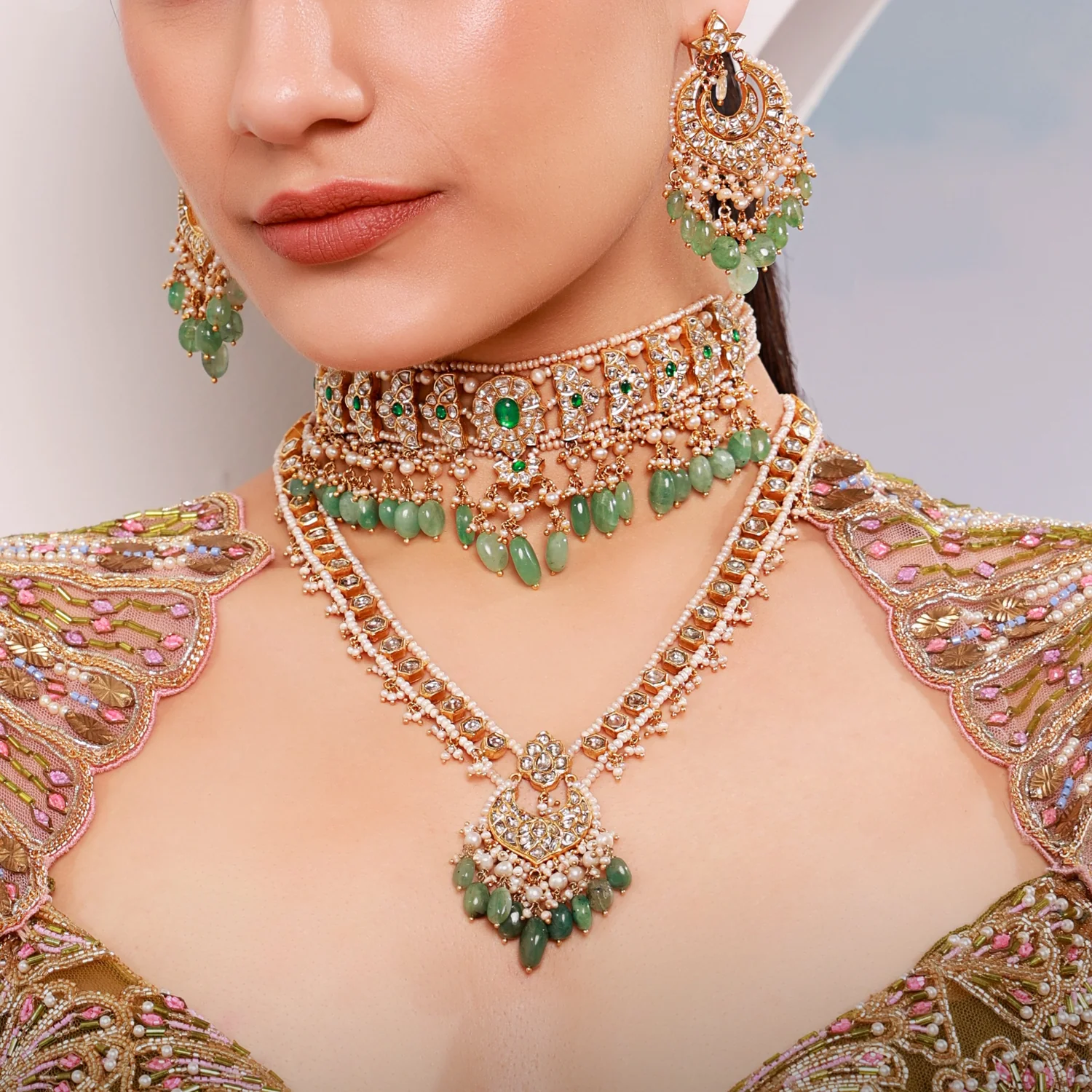
A traditional Indian bridal look is never just about the lehenga. It is the jewellery that frames the face, follows the neckline, moves with every gesture, and brings a sense of occasion to the entire ensemble. And when that jewellery is Polki, the result can feel especially regal. With its distinctive uncut diamond character, intricate craftsmanship, and connection to Indian jewellery heritage, Polki has a way of making bridal dressing feel both timeless and deeply personal.
But creating your dream Polki bridal look does not necessarily mean wearing every elaborate piece you can find. The most memorable bridal jewellery looks have a sense of balance. A beautifully detailed choker can become the foundation, a Rani Haar can add dramatic length, while Jhumkas, Chandbalis, a Maang Tikka, bangles, and a statement ring can each contribute something different to the story.
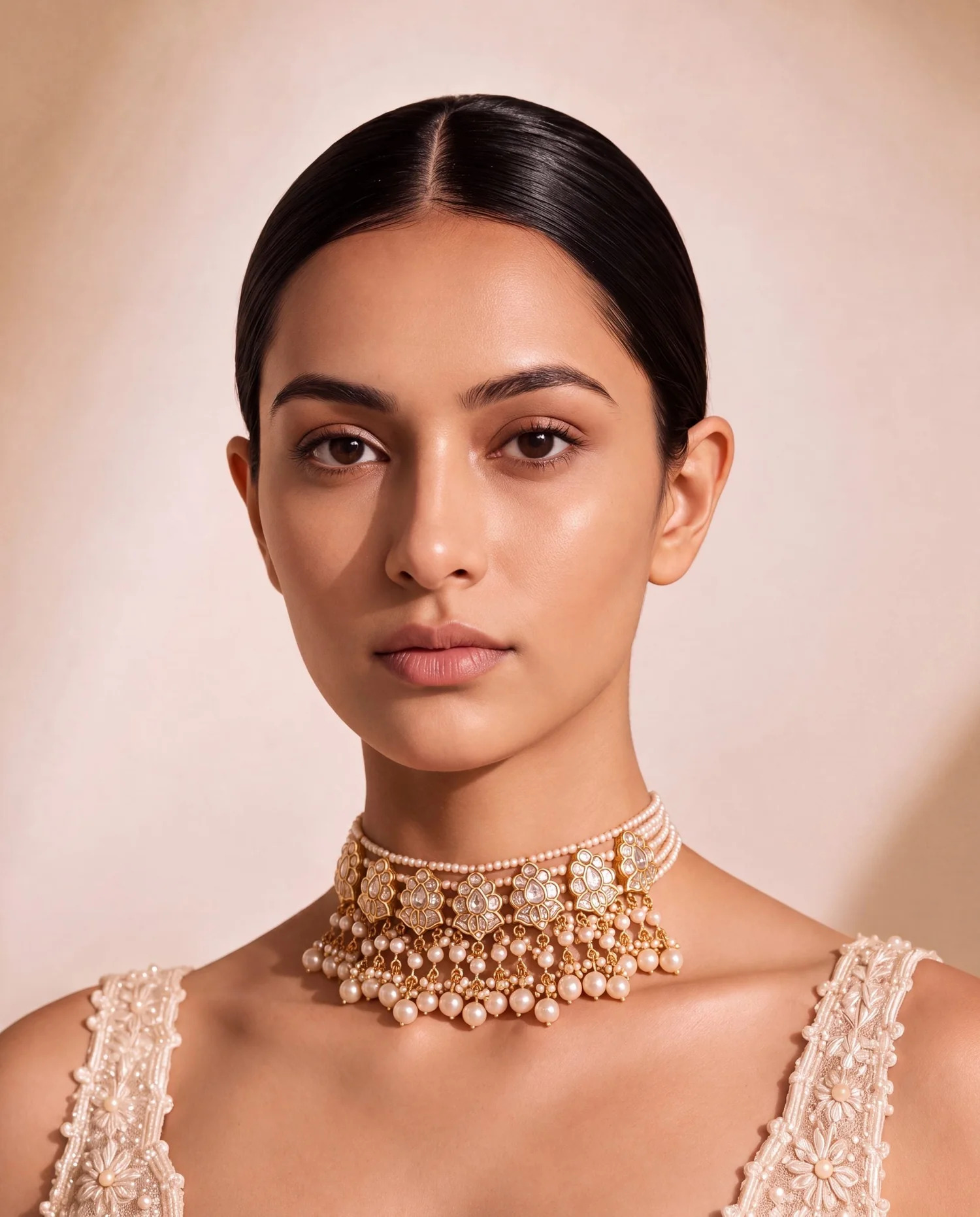
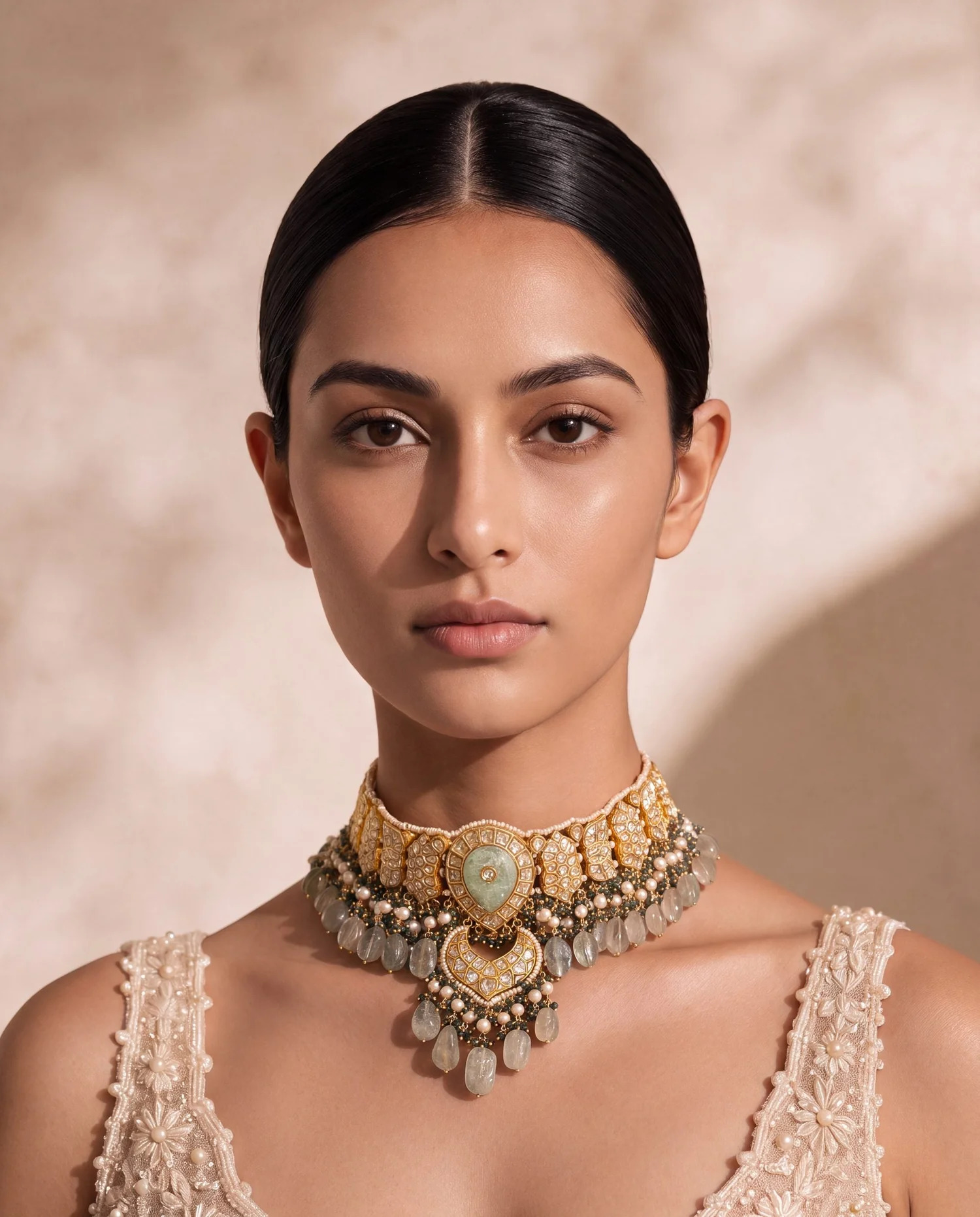
A Polki choker can instantly establish the mood of a traditional bridal look. Sitting close to the neckline, it draws attention towards the face while creating that unmistakable sense of bridal grandeur. Whether your wedding outfit is a classic red lehenga, a richly embroidered saree, or a contemporary interpretation of traditional bridalwear, a beautifully crafted Polki choker can anchor the entire jewellery ensemble.
The neckline of your blouse should play an important role in your choice. A deep or open neckline can give a statement choker plenty of space to stand out, while a higher neckline may call for a more refined design. You can also think about proportion: if your lehenga is heavily embellished, a choker with carefully balanced detailing can complement it without competing for attention.
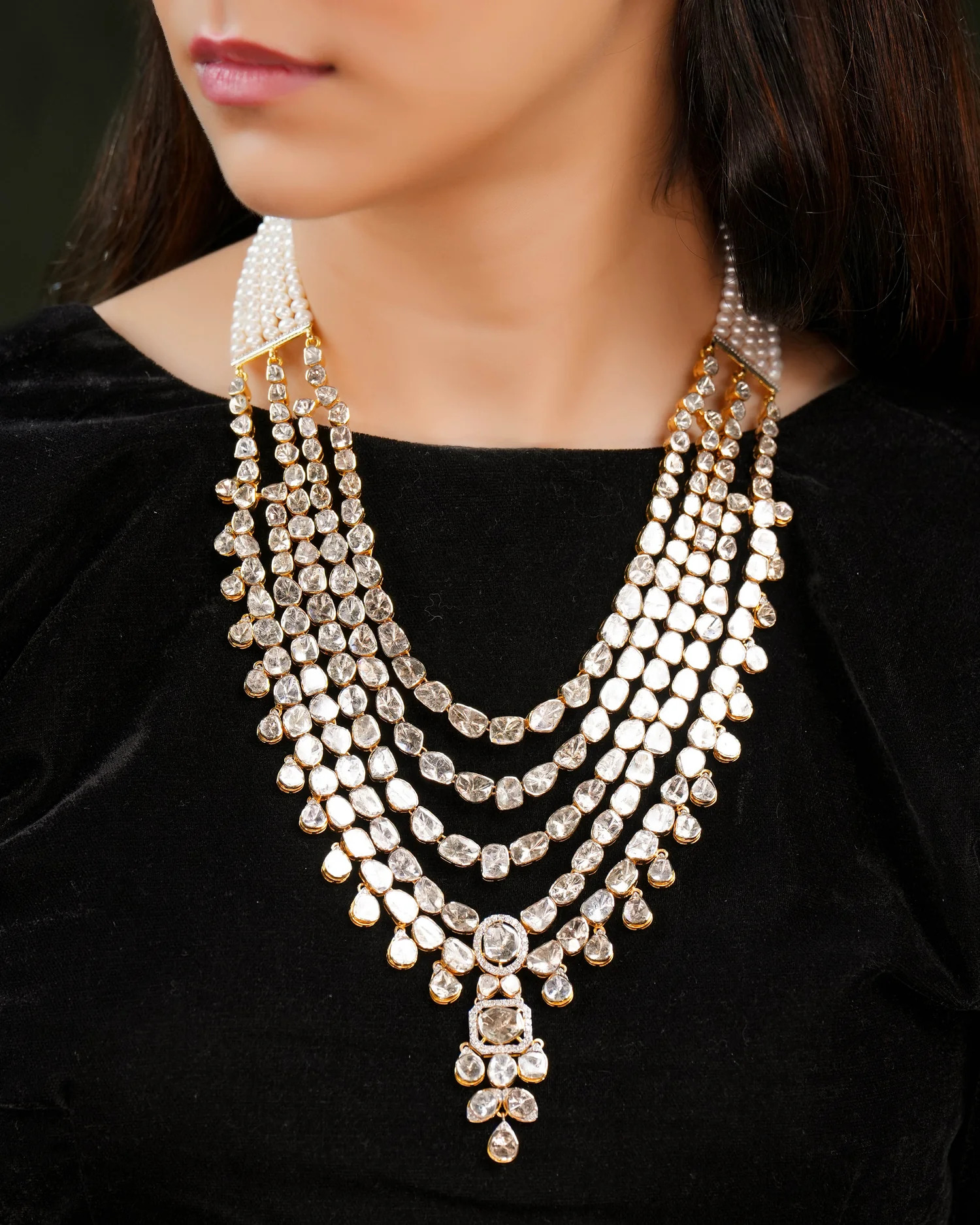
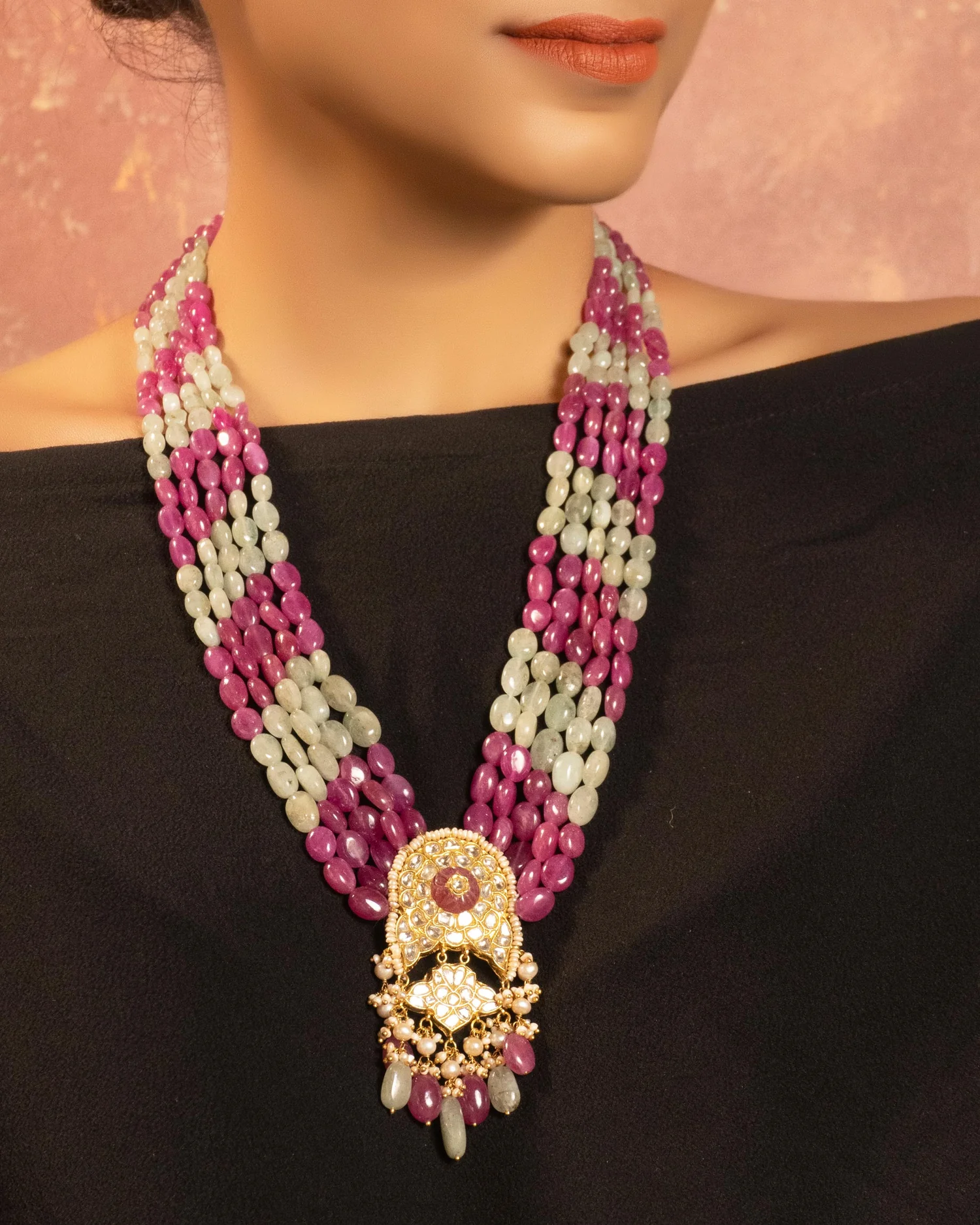
If the choker establishes the neckline, the Rani Haar brings drama to the entire silhouette. Its long, graceful structure draws the eye downward and creates the layered richness that is often associated with traditional Indian bridal jewellery.
A Rani Haar works particularly beautifully when paired with a shorter Polki necklace because the difference in length creates dimension. Instead of allowing two necklaces to compete, you are creating a deliberate progression from the neckline towards the centre of the bridal outfit. This can look especially striking against a richly embroidered lehenga or traditional silk saree.
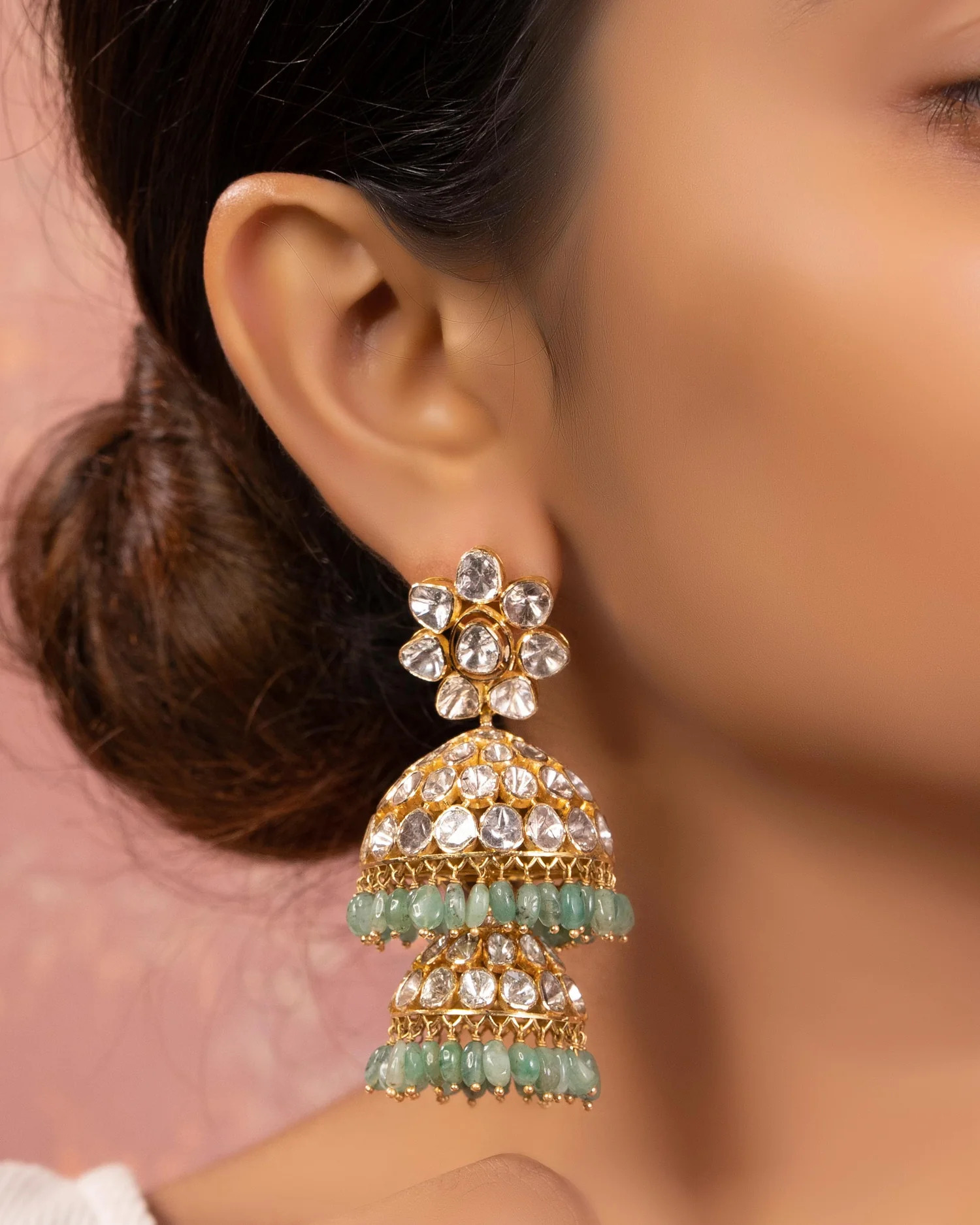
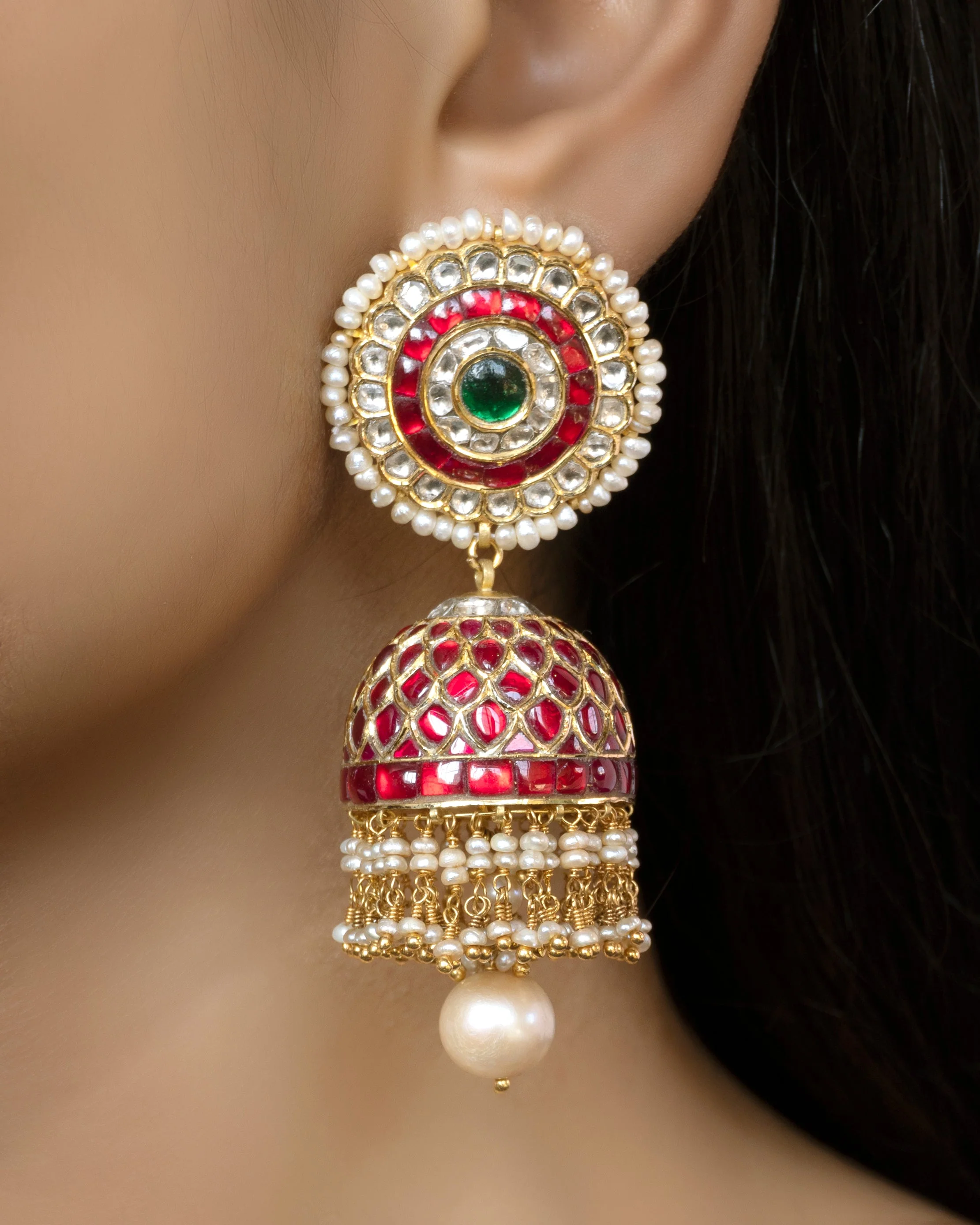
Few earrings capture the spirit of an Indian bridal look quite like Jhumkas. Their rounded silhouette, graceful movement, and unmistakably traditional character make them a natural companion to Polki.
Polki Jhumkas bring another dimension to the face because they combine the heritage of the classic Jhumka with the luminous character of Polki. They can be especially beautiful with traditional sarees, lehengas, and other Indian bridal silhouettes where the jewellery is intended to feel rich and celebratory.
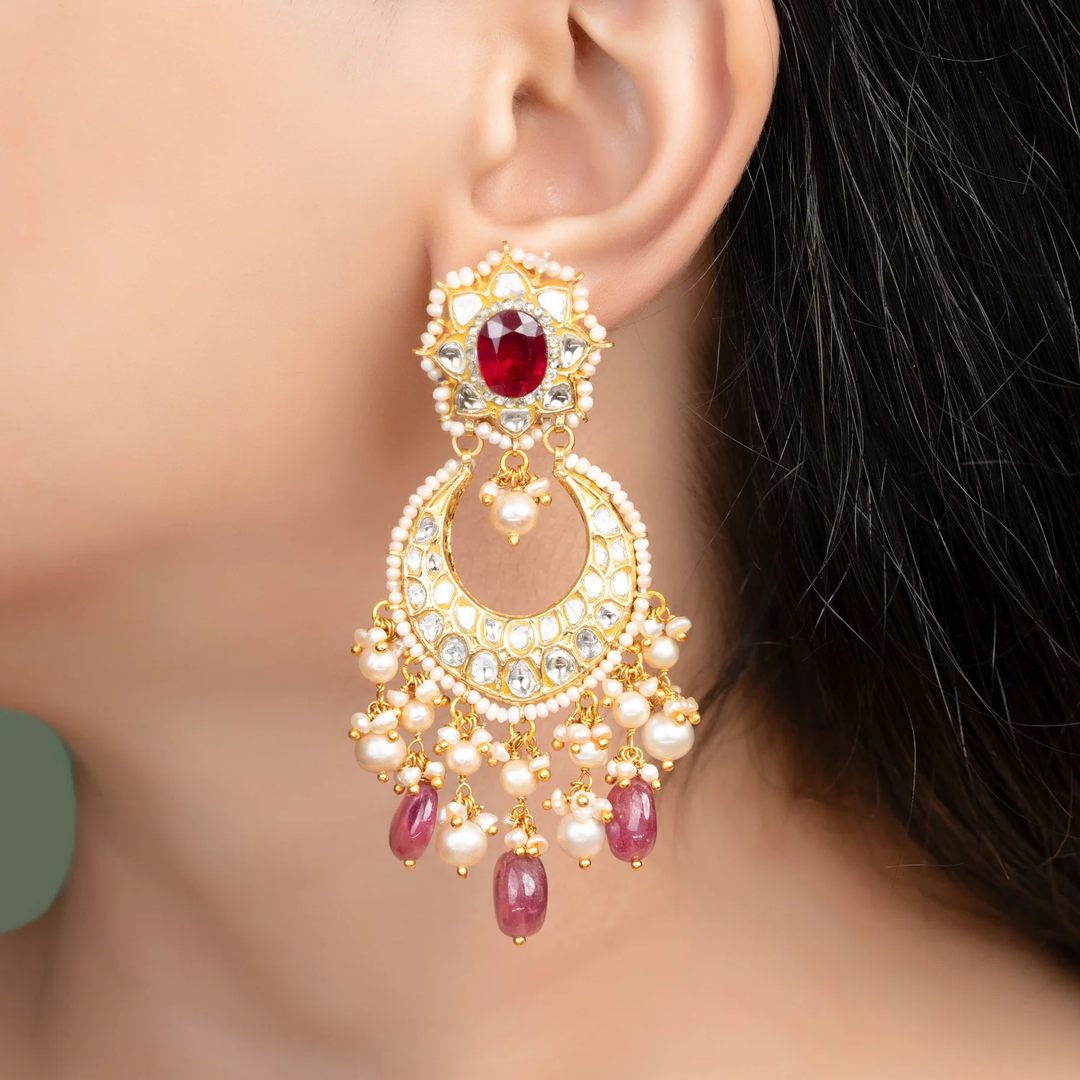
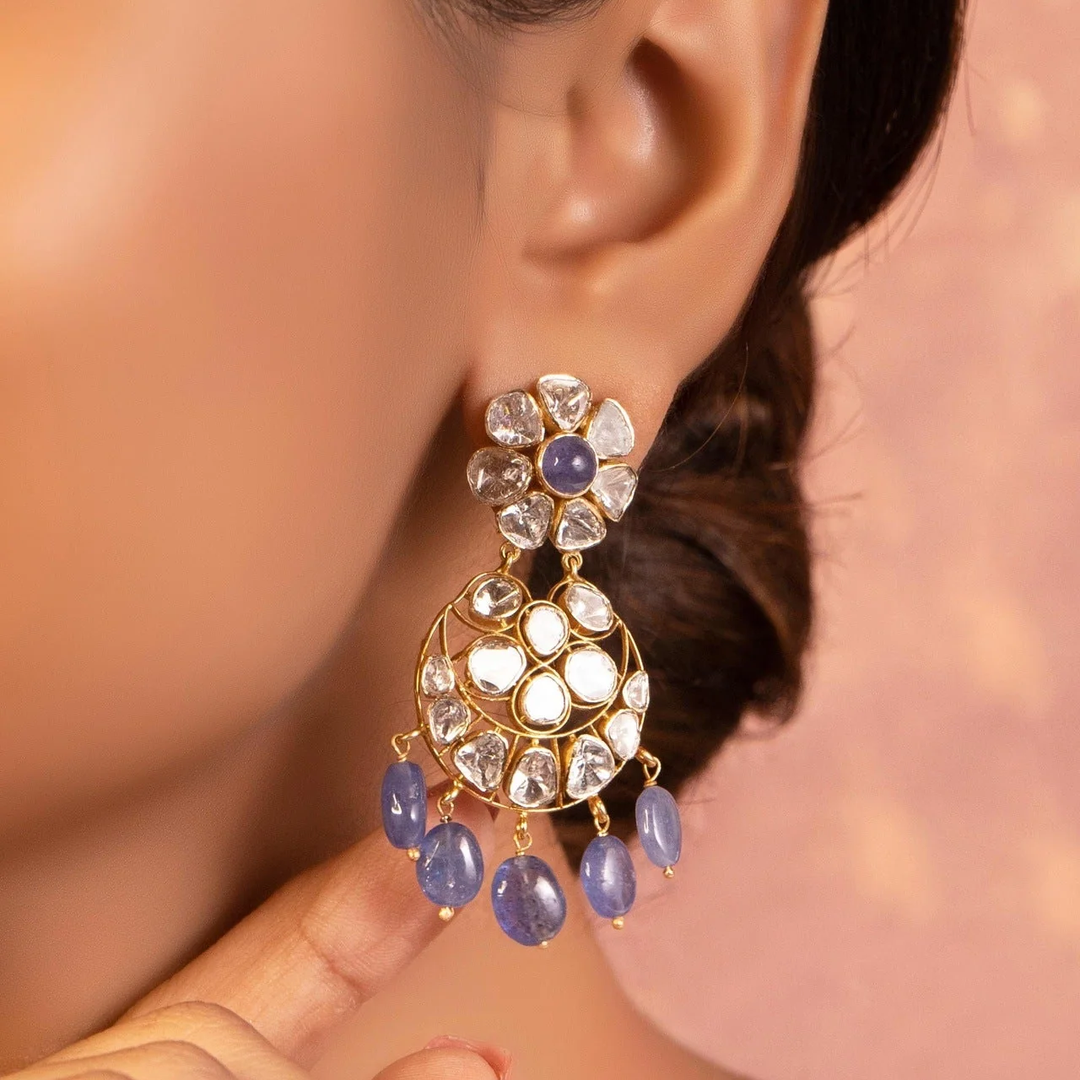
For the bride who wants her earrings to make an entrance, Polki Chandbalis offer a beautifully dramatic alternative to Jhumkas. The distinctive crescent-shaped silhouette naturally frames the face and can bring an almost architectural quality to traditional bridal styling.
Chandbalis work particularly well when you want the earrings to become one of the defining elements of your look. They can be paired with a saree, lehenga, sharara, or even a contemporary bridal ensemble. Their shape also creates an interesting contrast with straight, structured necklines and richly embroidered fabrics.
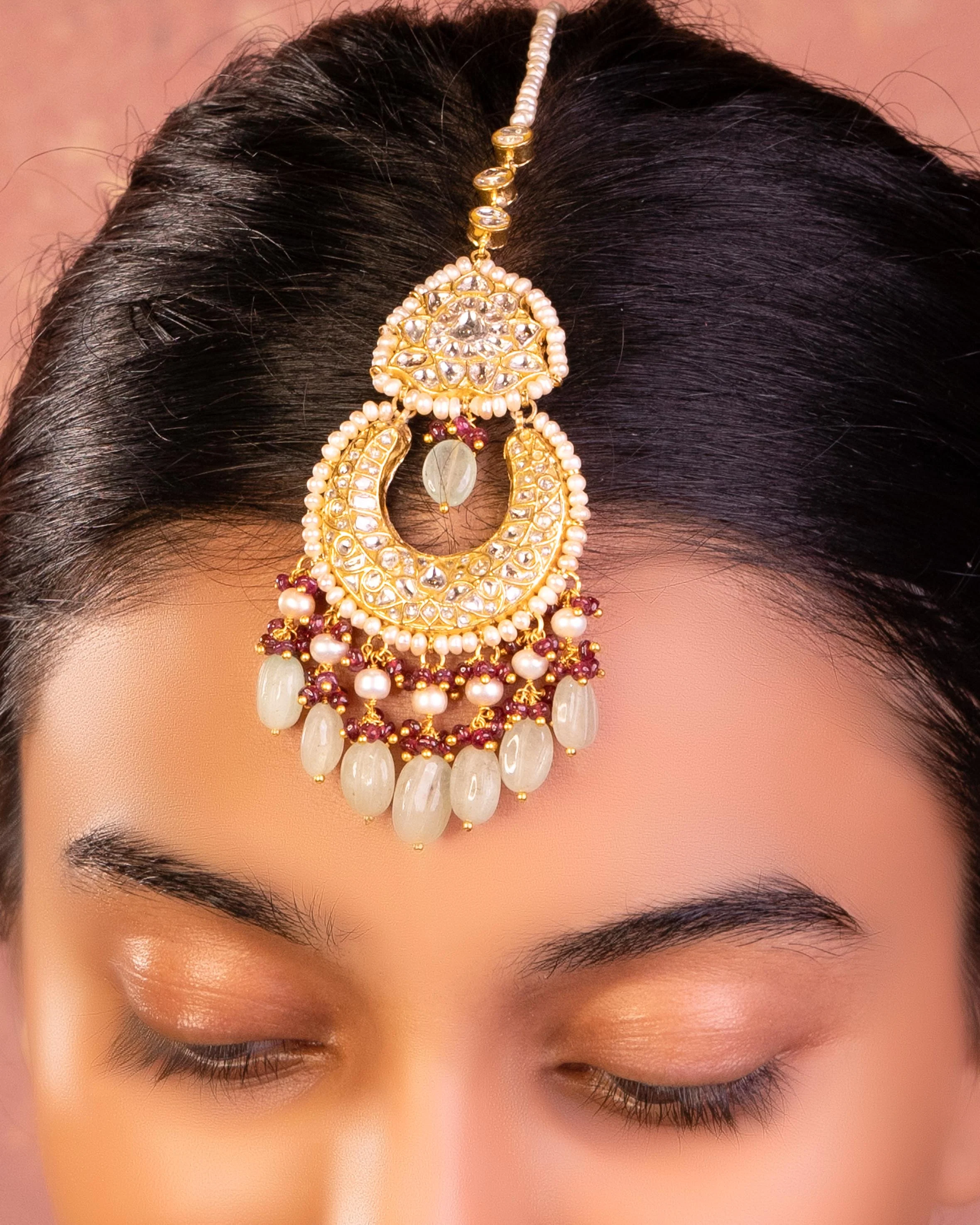
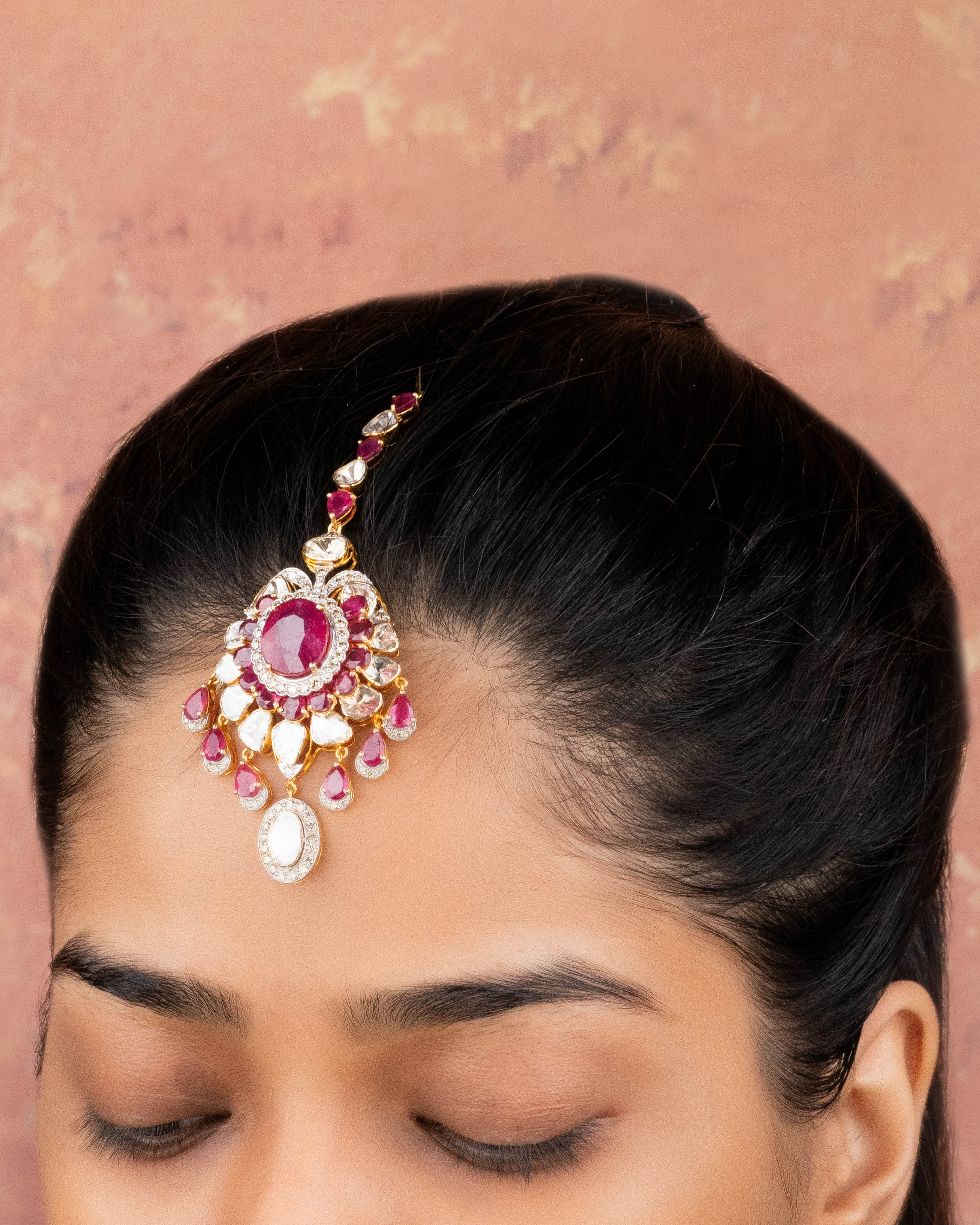
There is a reason the Maang Tikka has remained such an important part of Indian bridal jewellery. Positioned at the centre of the forehead, it connects the jewellery around the face with the bride's hairstyle and overall bridal styling.
A Polki Maang Tikka can bring continuity to your jewellery story without requiring every piece to look identical. If your necklace features Polki and your earrings carry the same heritage-inspired character, a complementary Tikka can bring the elements together beautifully.
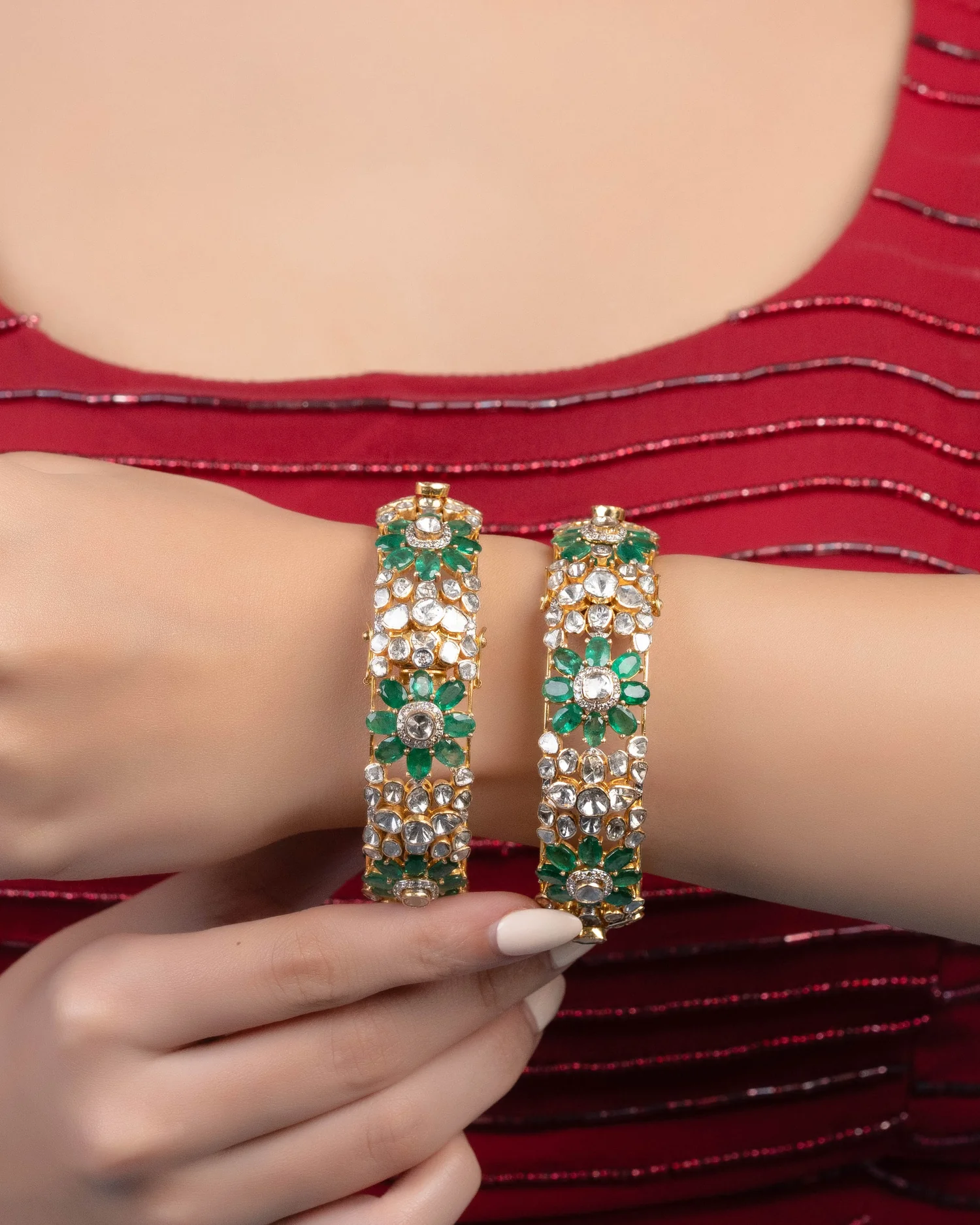
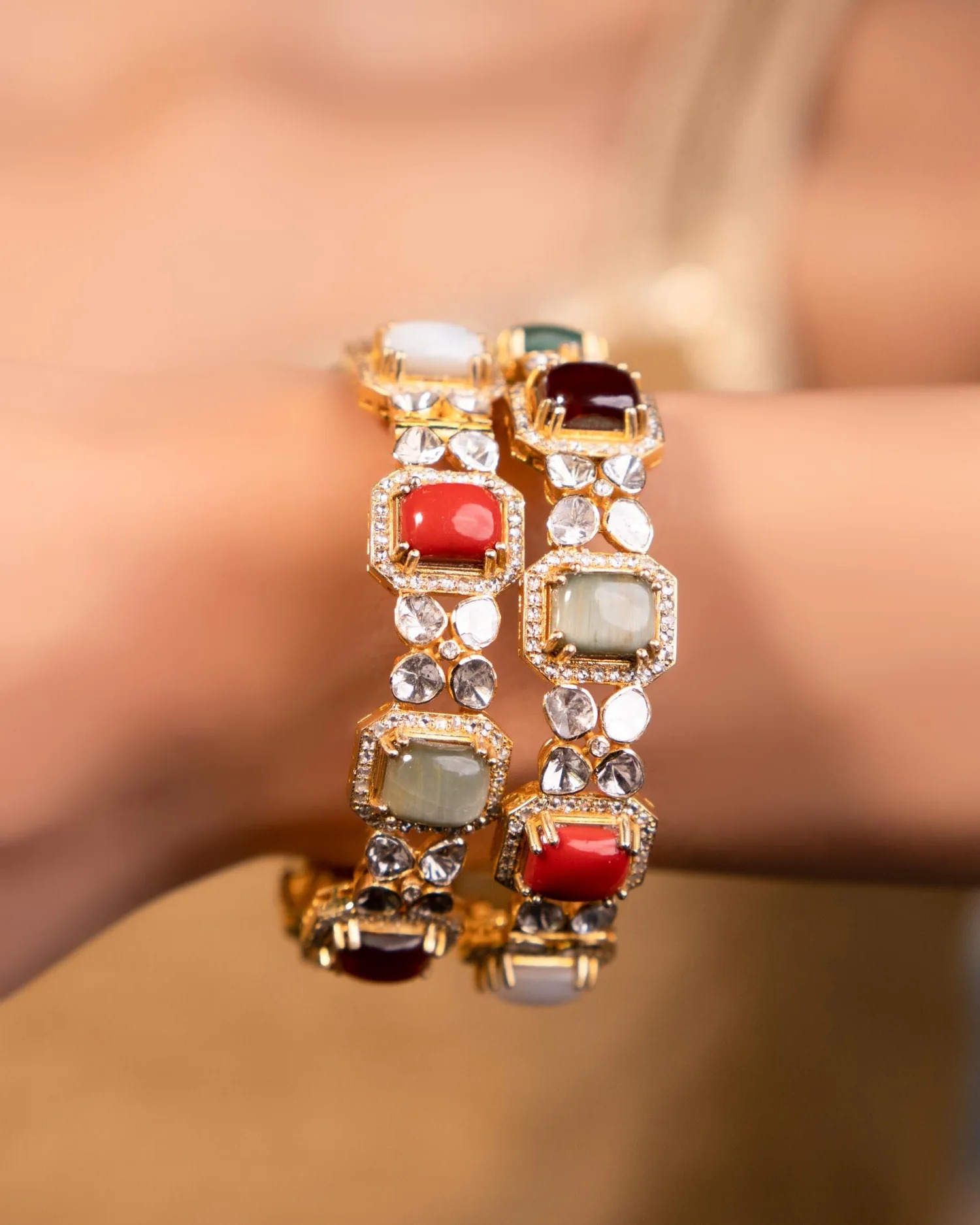
A bridal jewellery look can feel incomplete when all the attention is concentrated around the face and neckline. Bangles and Kadas bring that richness down to the wrists, adding movement and detail every time you lift your hands, adjust your dupatta, exchange garlands, or pose for photographs.
Polki bangles can be styled alongside traditional gold bangles to create a layered effect with different textures and proportions. You do not have to make every bangle match perfectly. In fact, combining different finishes and silhouettes can make the stack feel more personal and collected.
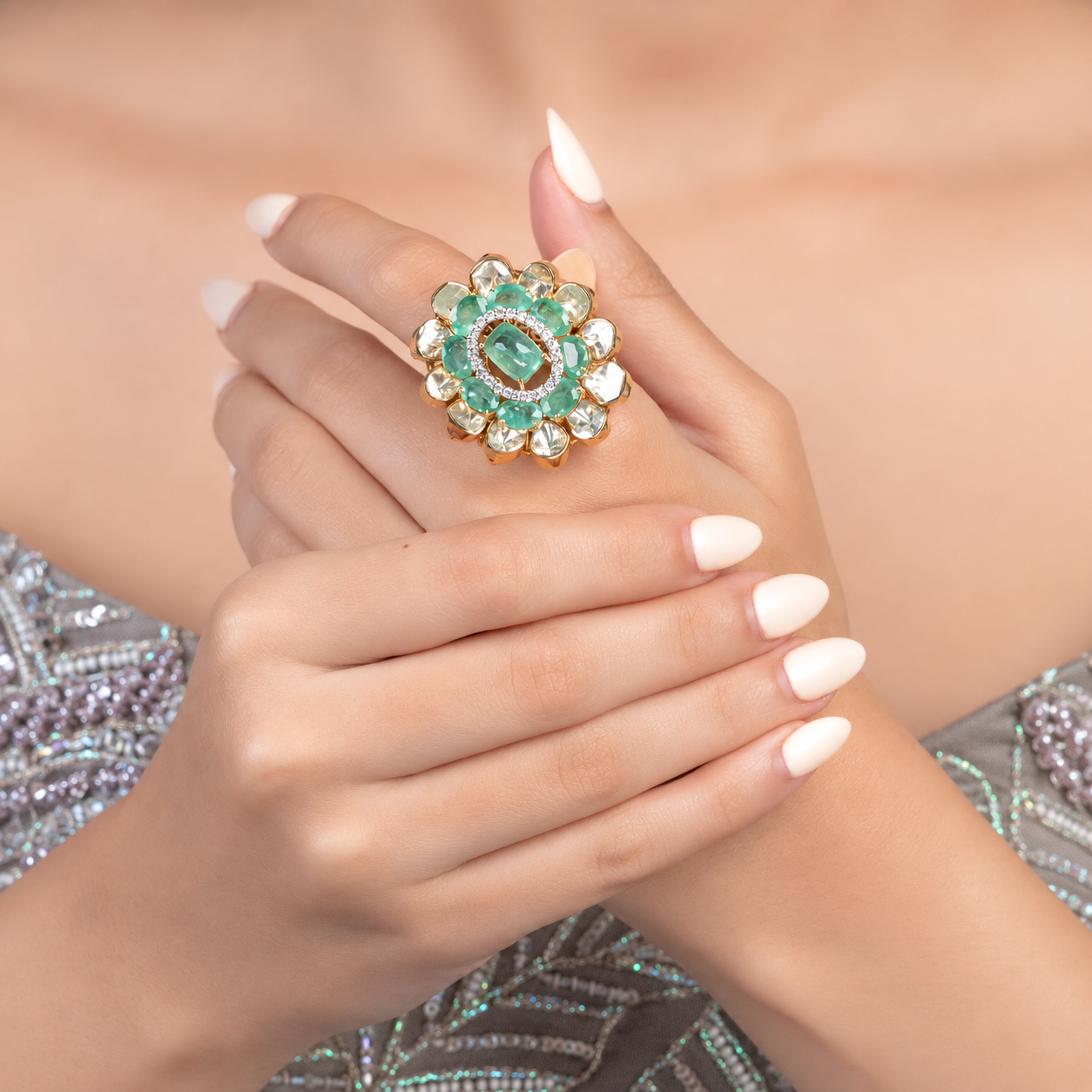
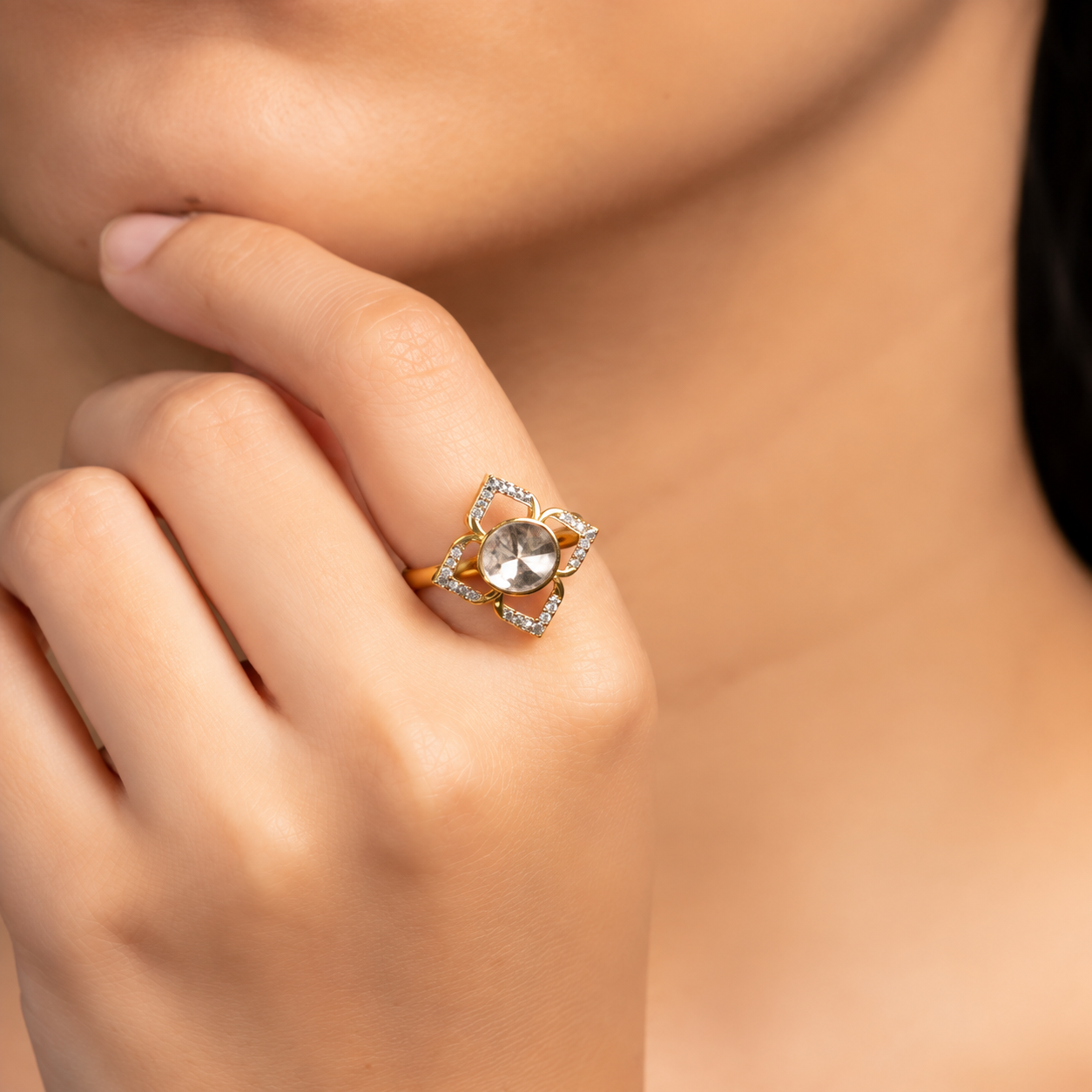
A ring may be smaller than a necklace or pair of earrings, but it can become one of the most personal details in your bridal jewellery collection. Your hands feature prominently throughout a wedding-from holding the bouquet or dupatta to exchanging rings and posing for photographs-so the right Polki ring can add a beautiful finishing touch.
A statement Polki ring can work particularly well when your bangles are relatively understated. If your wrists are already layered with elaborate jewellery, a more refined ring can provide balance without making the hands feel crowded.
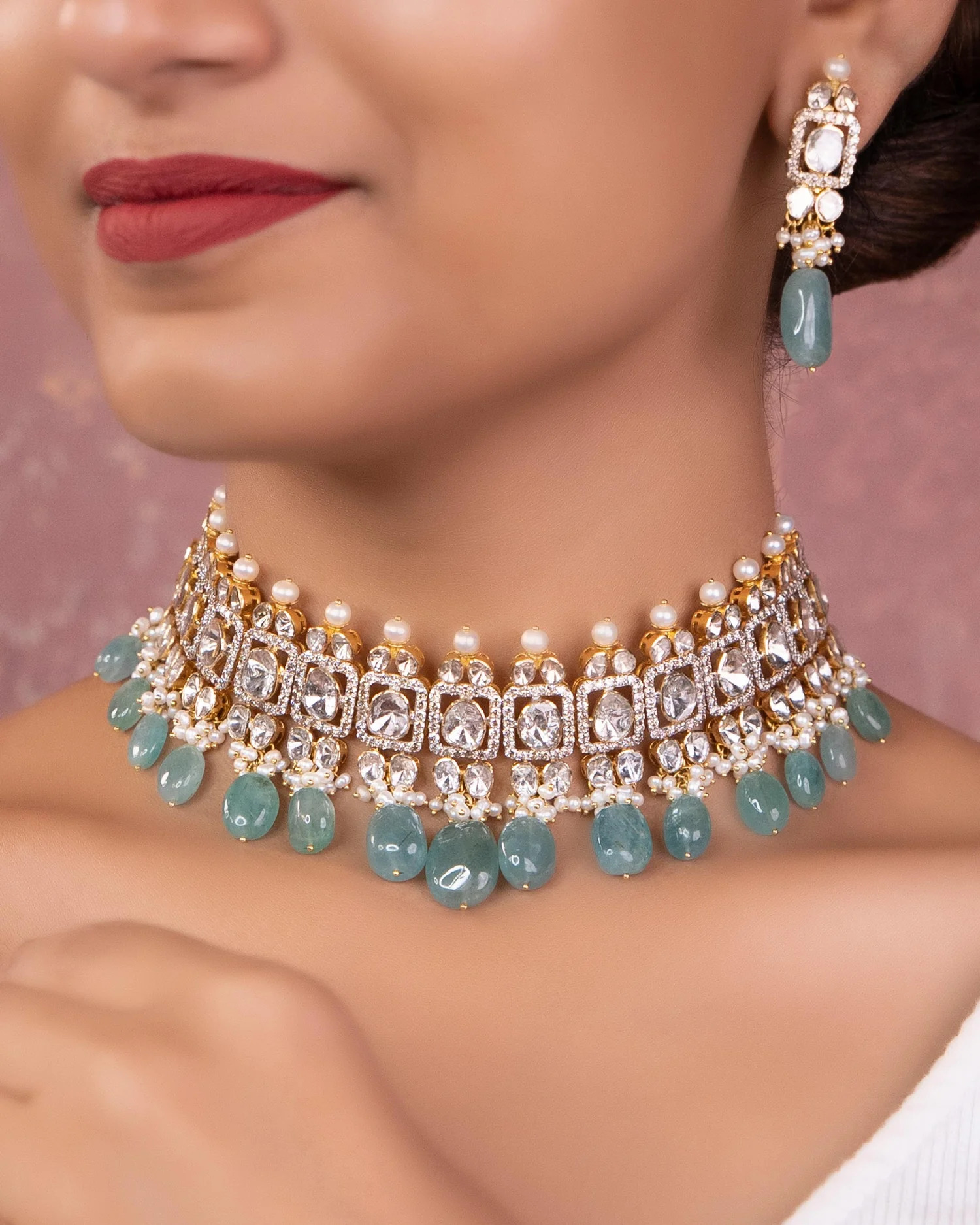
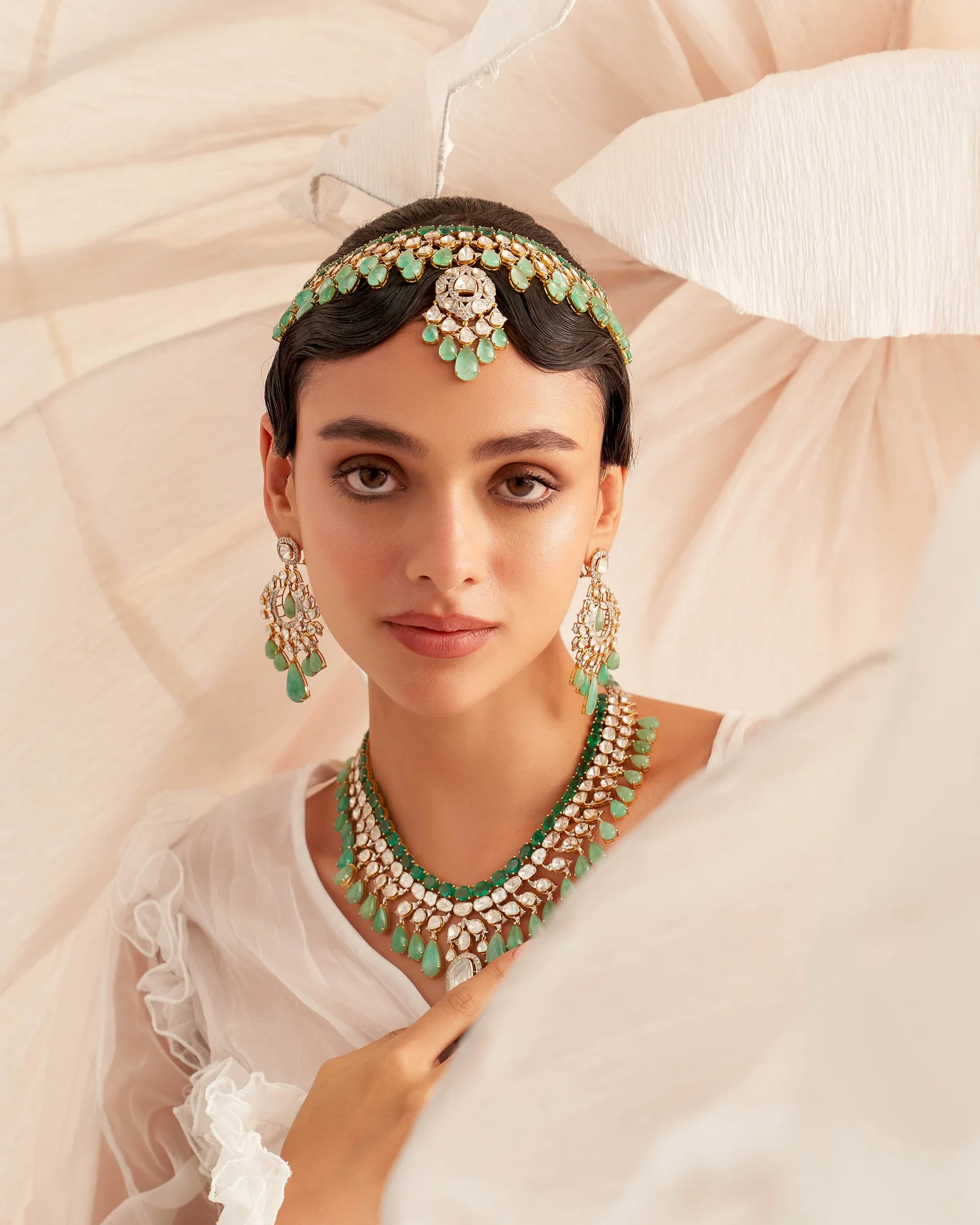
If you are wearing a traditional red bridal lehenga, classic Polki can create a beautifully regal effect. A Polki choker paired with a Rani Haar can establish the foundation, while Jhumkas or Chandbalis frame the face and a Maang Tikka completes the traditional bridal composition. If your outfit contains other colours, gemstone accents within the jewellery can create subtle connections without requiring an exact colour match.
For pastel bridal outfits, consider allowing the softer colour palette to remain visible. Polki with delicate gemstone accents or pearl details can add richness without overpowering blush, ivory, champagne, or other muted tones. The contrast between the understated outfit and detailed jewellery can create a particularly sophisticated bridal look.
If you are wearing a traditional silk saree, you can lean further into heritage styling. Polki Jhumkas, a layered necklace, bangles, and a Maang Tikka can create a timeless Indian aesthetic. With a heavily embroidered outfit, however, restraint can be just as powerful. You might choose statement earrings and a refined necklace rather than layering every major piece together.
The modern bride can also reinterpret these traditional combinations. A Polki Chandbali worn without a necklace, a statement ring paired with a restrained bangle stack, or a traditional Polki choker styled with a contemporary blouse can give heritage jewellery a completely new personality.
Your dream bridal look does not have to come from following a fixed formula. It comes from choosing pieces that make you feel beautiful, connected to tradition, and completely yourself.
At Tyaani, Polki is an invitation to experience that heritage for yourself. Explore the craftsmanship, discover silhouettes that speak to your personality, and build a jewellery story that does not end when the wedding does. Because the most special bridal jewellery is not simply what you wear on one unforgettable day-it is what you continue to treasure long after it.
Yes, a Polki choker and Rani Haar can create one of the most traditional and regal bridal combinations. The difference in length gives the jewellery layers definition and allows each necklace to remain visible.
Both can create a beautiful traditional bridal look, but they give the face a different character. Polki Jhumkas have a classic, rounded silhouette with a distinctly Indian feel, while Chandbalis create a wider, more dramatic frame around the face.
Yes, layering Polki necklaces can create a magnificent bridal look when the proportions are carefully considered. A shorter choker or necklace can establish the neckline while a longer Rani Haar adds length and dimension.
Your blouse neckline should guide the proportion and shape of your choker. Open and deeper necklines can provide space for a more elaborate design, while higher necklines may work better with a refined silhouette.
Red and Polki create a timeless combination because the warmth of the bridal colour provides a beautiful backdrop for the luminous character of the jewellery.
Start by deciding which piece you want to be the main focal point. If your necklace combination is elaborate, you can choose more restrained earrings and wrist jewellery.
Polki combines distinctive diamond character with traditional Indian craftsmanship, giving it a strong connection to heritage jewellery. A thoughtfully chosen Polki piece can also transcend a single bridal outfit because it can be styled differently for anniversaries, festive celebrations, family occasions, and future generations.