


Chat for Best Price
Unlock exclusive offers & much more
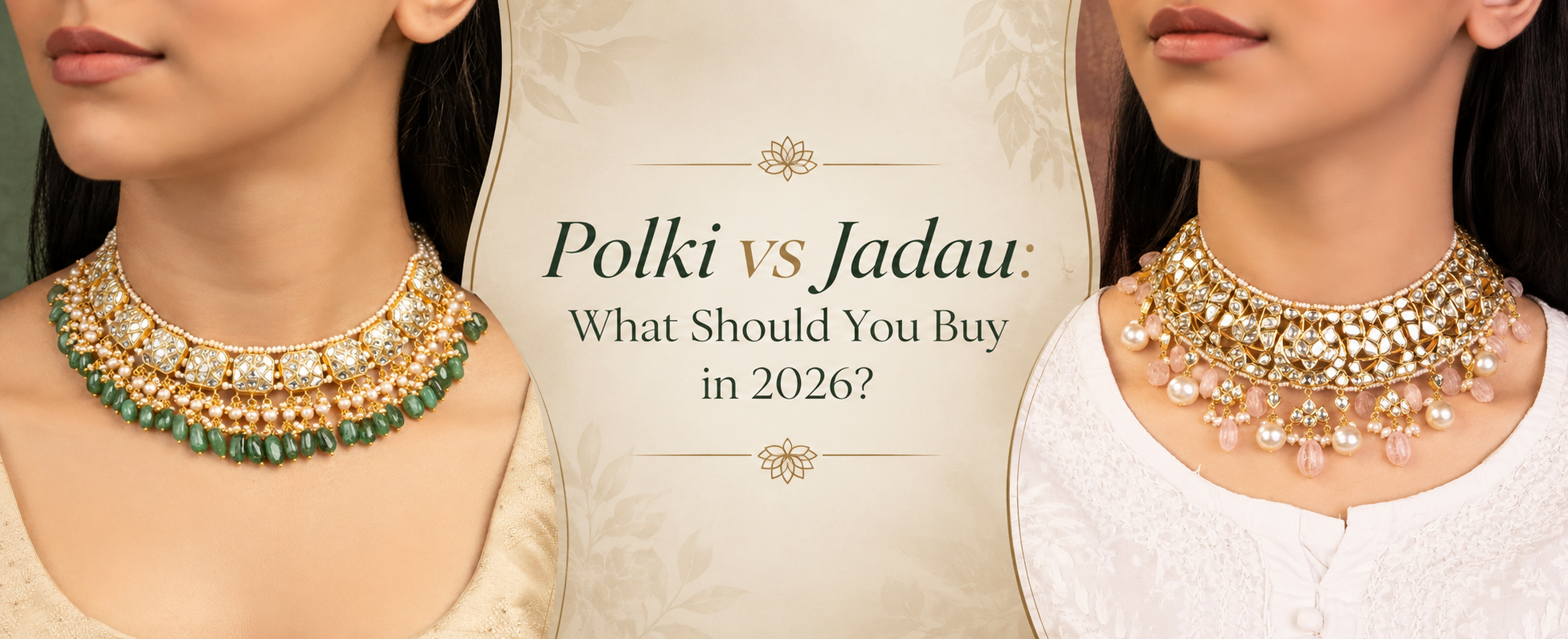
You walk into a jewellery store looking for something timeless, and suddenly two names keep catching your eye: Polki and Jadau. Both look regal, both carry centuries of Indian craftsmanship, and both can make a simple outfit feel extraordinary. So, how do you decide which one actually belongs in your jewellery box?
The answer isn't simply about which one is more traditional or more luxurious. Polki and Jadau have different visual personalities, craftsmanship traditions, and styling possibilities. In 2026, when jewellery is increasingly being chosen for versatility as much as occasion dressing, understanding that difference can make your purchase far more meaningful.
At Tyaani, this is where the experience of exploring Polki becomes especially exciting. Instead of looking at heritage jewellery as something reserved for a bridal trousseau, you can discover how uncut diamonds, gemstones, and contemporary silhouettes can create pieces that feel rooted in tradition while fitting naturally into modern wardrobes.
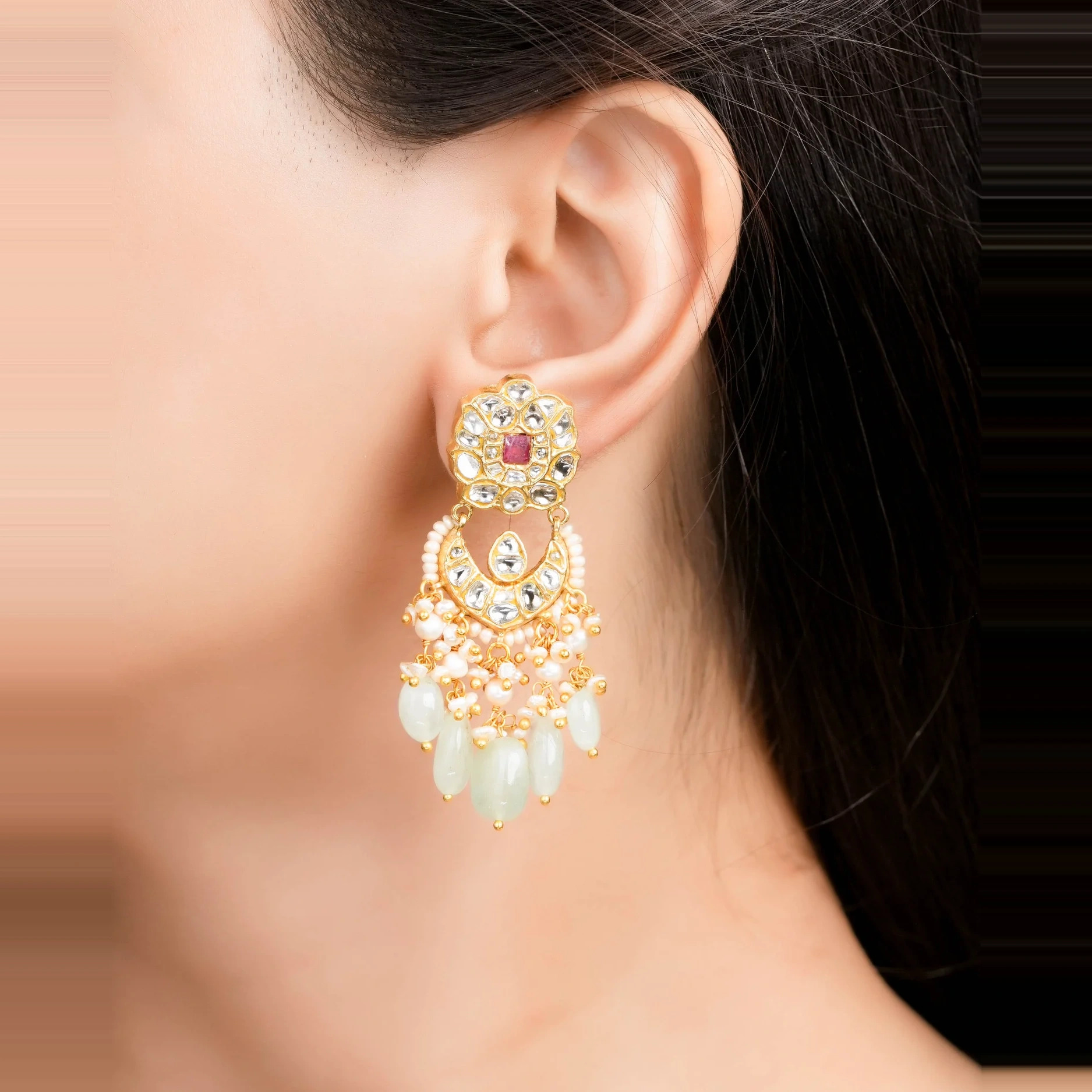
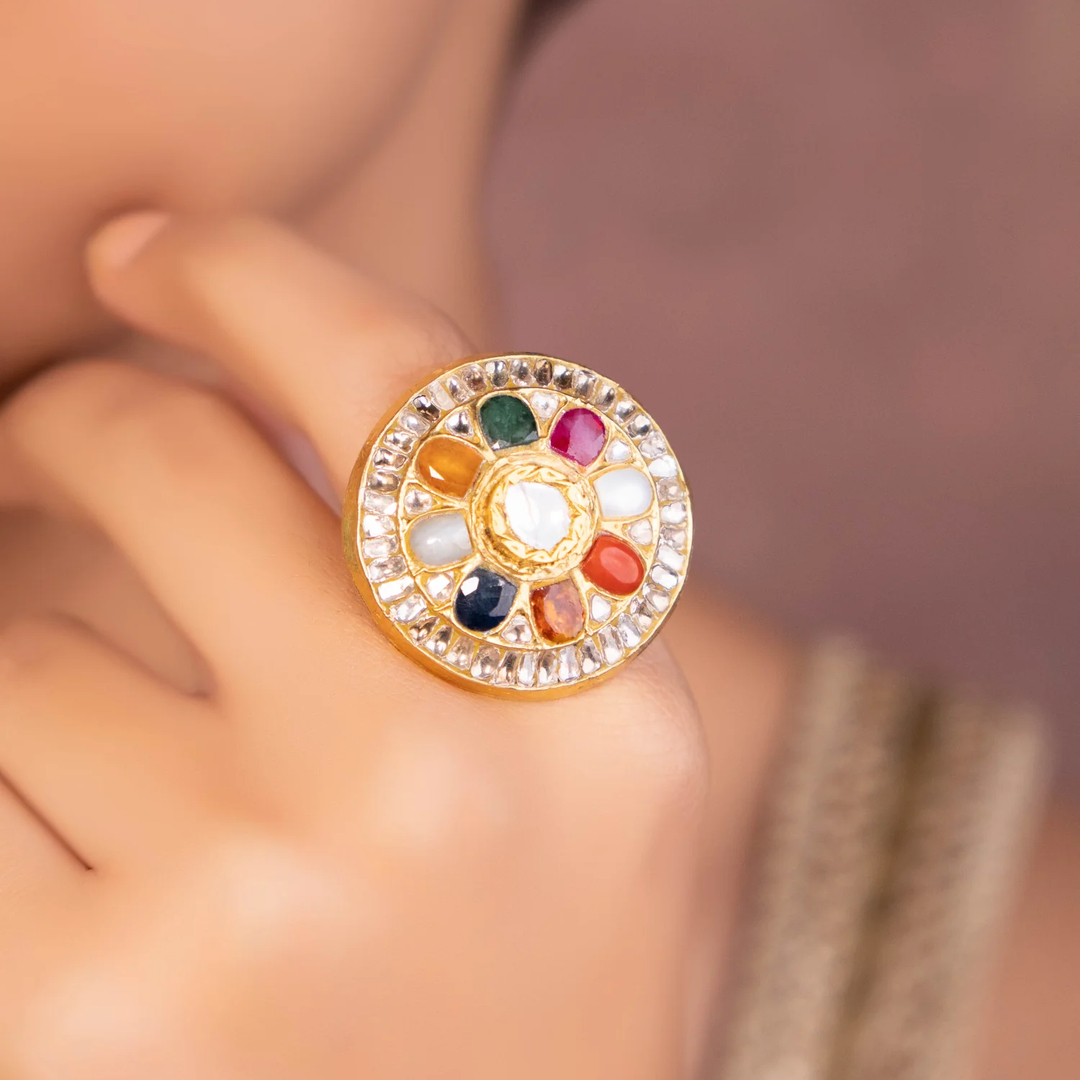
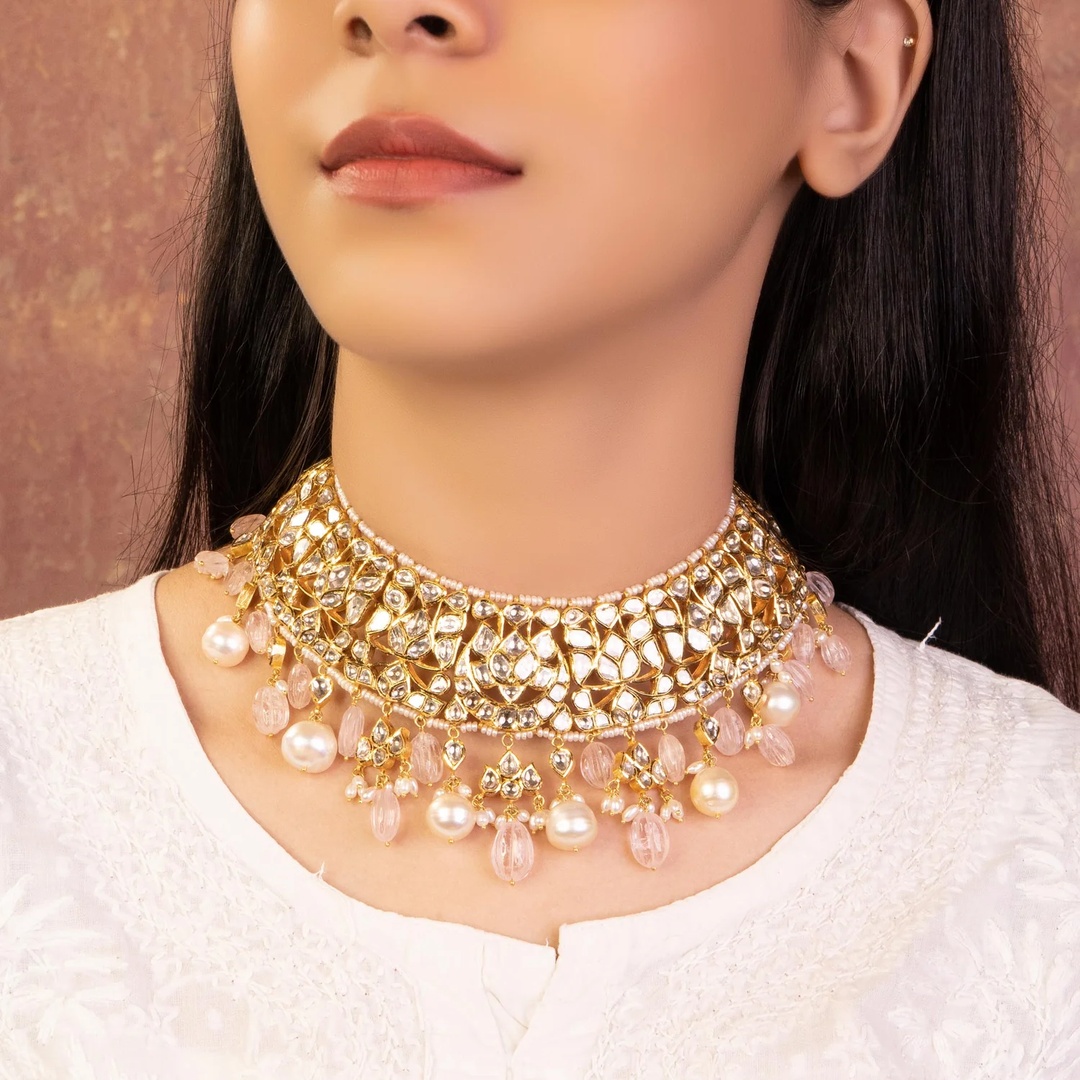
Polki jewellery is traditionally characterised by uncut, minimally polished diamonds that retain much of their natural shape. Unlike precisely faceted diamonds designed for maximum brilliance, Polki has a softer, more organic way of reflecting light, giving it the distinctive old-world glow that makes it so recognisable.
Its appeal goes beyond the diamonds themselves. Gold craftsmanship, intricate settings, pearls and coloured gemstones can all contribute to the character of a Polki piece. This is why Polki can look completely different from one design to another, ranging from elaborate bridal necklaces to delicate pendants, statement earrings and contemporary rings.
That versatility is part of what makes Polki particularly interesting today. A traditional Polki necklace can create a regal bridal statement, while a refined Polki pendant can sit beautifully with a contemporary wardrobe. At Tyaani, exploring these different interpretations allows you to see how the same heritage can take on very different personalities.
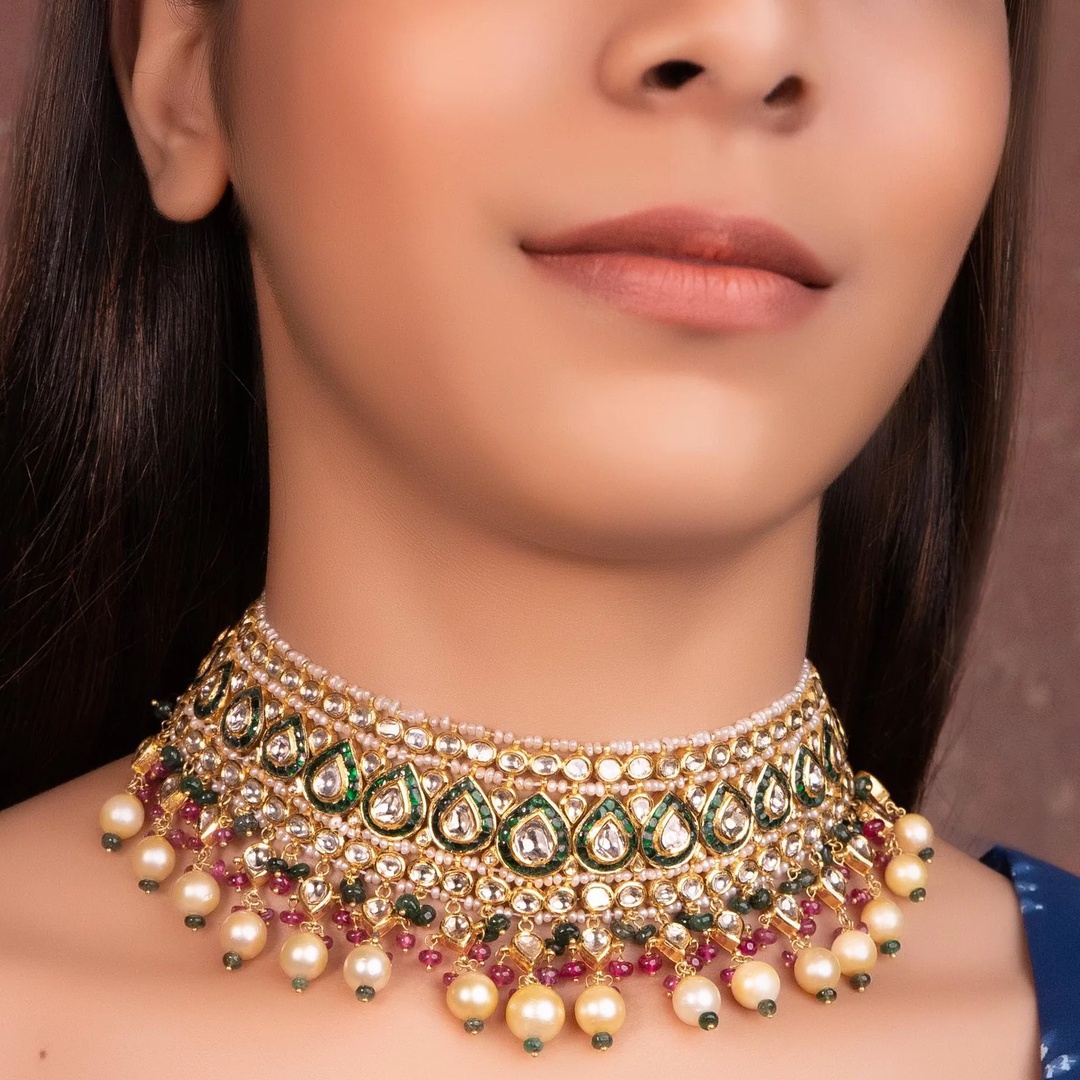
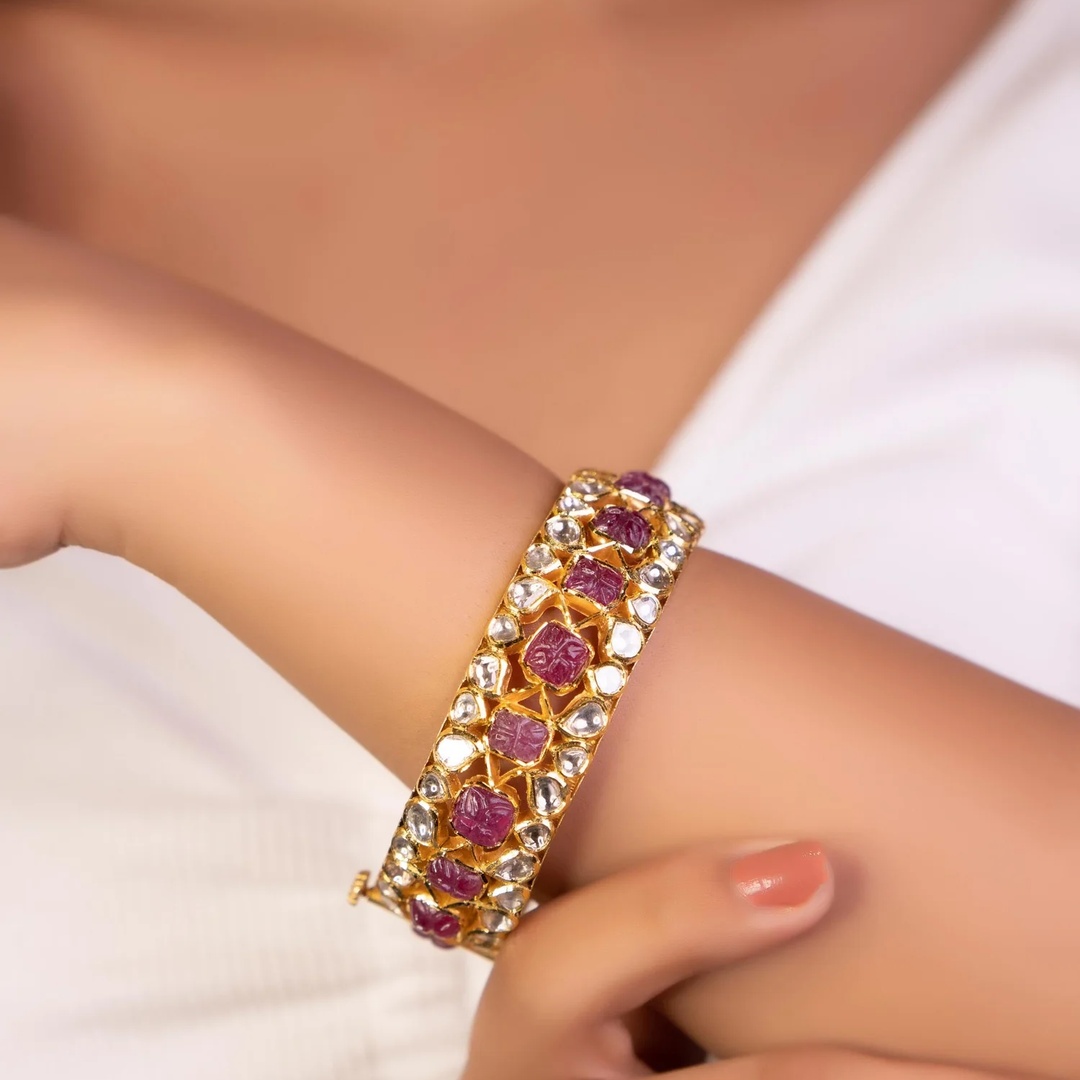
Jadau is best understood as a traditional jewellery-making technique rather than simply a type of stone. The technique involves setting gemstones and other decorative elements into a specially prepared gold base, creating richly detailed pieces that are strongly associated with India's royal jewellery traditions.
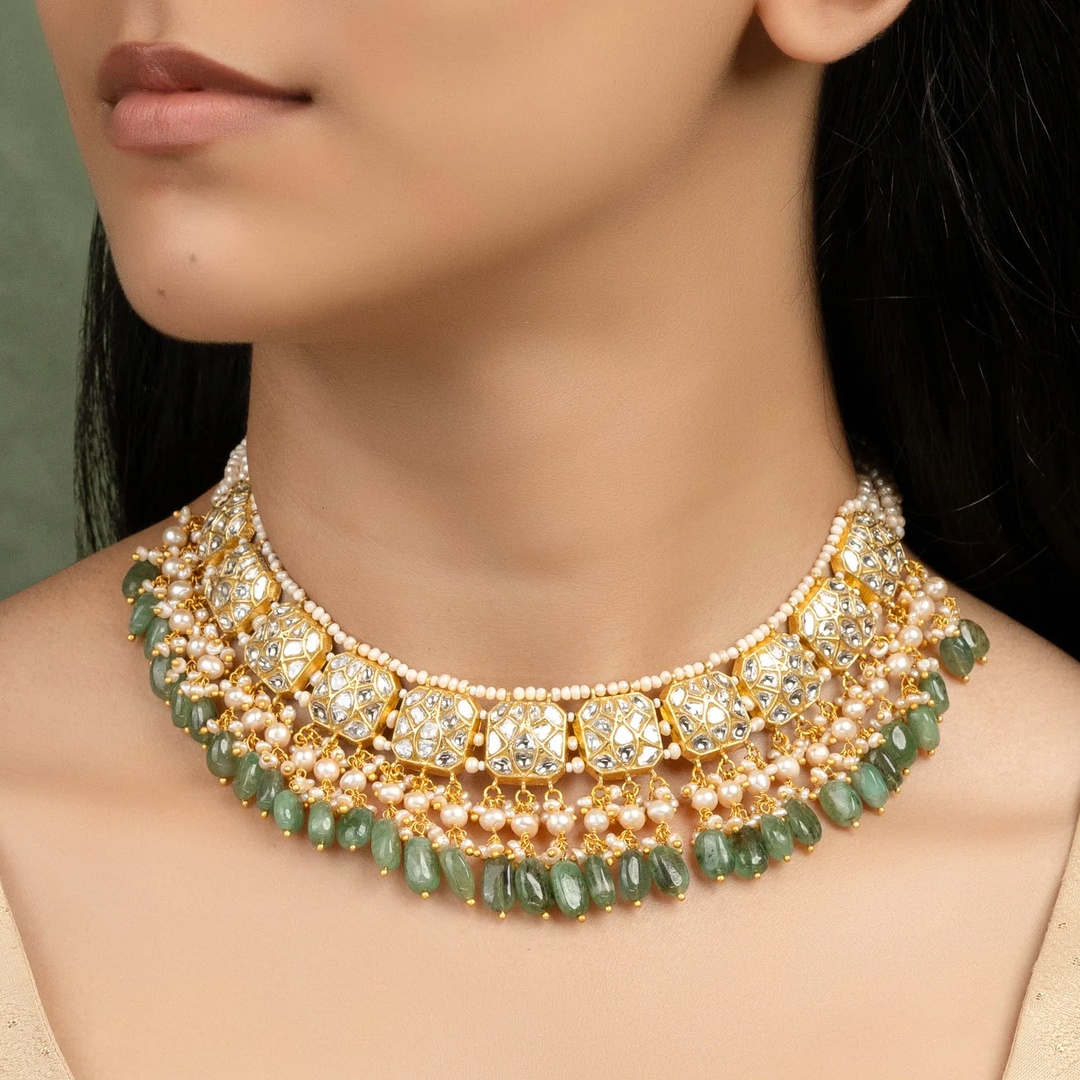
The craftsmanship is what gives Jadau its distinctive identity. Intricate gold work, colourful gemstones and detailed surfaces can create jewellery with considerable depth and visual richness. Many Jadau pieces are particularly striking from both the front and reverse, reflecting the importance traditionally given to craftsmanship throughout the piece.
Jadau is often associated with elaborate necklaces, earrings, bangles and bridal jewellery, although contemporary interpretations can be more wearable. Its naturally ornate character makes it especially appealing when you want jewellery that feels unmistakably traditional.
The confusion is understandable because Polki and Jadau can appear together in the same piece of jewellery. A necklace may feature uncut diamonds while also using Jadau craftsmanship to set gemstones and decorative elements. In that case, Polki describes an important part of the jewellery's material character, while Jadau describes the technique used in its creation.
This means Polki and Jadau aren't always competing categories. They can overlap, complement one another, and sometimes exist within the same heritage-inspired design.
For a buyer, this distinction is useful because it changes the question from "Which one is better?" to "What exactly am I drawn to-the character of uncut diamonds, the intricacy of the craftsmanship, the colour of gemstones, or the complete combination?" Once you know that, choosing becomes much easier.
There isn't one universal winner. The better choice depends on the kind of jewellery you want to own, how you dress, and whether you want your piece to make a traditional statement or move comfortably between different styles.
If you're drawn to the natural glow and distinctive character of uncut diamonds, Polki can be an excellent choice. It has a regal quality, but contemporary Polki designs can also feel remarkably relaxed when paired with simple clothing.
If what attracts you most is elaborate craftsmanship, rich colour and a strongly traditional aesthetic, Jadau may feel more naturally suited to you. Its intricate detailing can make it particularly powerful for traditional celebrations and occasions where you want the jewellery to feel like an heirloom.
In 2026, versatility is also becoming an important part of the buying conversation. Instead of choosing a piece solely because it looks spectacular in a showroom, think about whether you can imagine wearing it with your sarees, festive outfits, evening wardrobe, and even more contemporary looks.
Modernity often has less to do with the material and more to do with the silhouette. A traditional jewellery technique can look completely contemporary when it is interpreted through a cleaner, more edited design.
Polki naturally lends itself to this approach because it can be found in everything from delicate pendants to refined earrings and statement rings. Pairing a traditional Polki piece with a minimalist saree, structured blouse, or Western silhouette can create a striking contrast without taking away from its heritage.
Jadau can also look modern when styled thoughtfully. Instead of pairing an elaborate piece with equally elaborate clothing, wear it against a clean silhouette and allow its intricate craftsmanship to become the focal point. A richly detailed Jadau necklace with a simple saree, for example, can feel much more contemporary than a heavily layered traditional look.
The 2026 approach is therefore less about making heritage jewellery "less traditional" and more about giving it a new setting. Let the craftsmanship remain authentic while allowing your clothing and styling to provide the modern context.
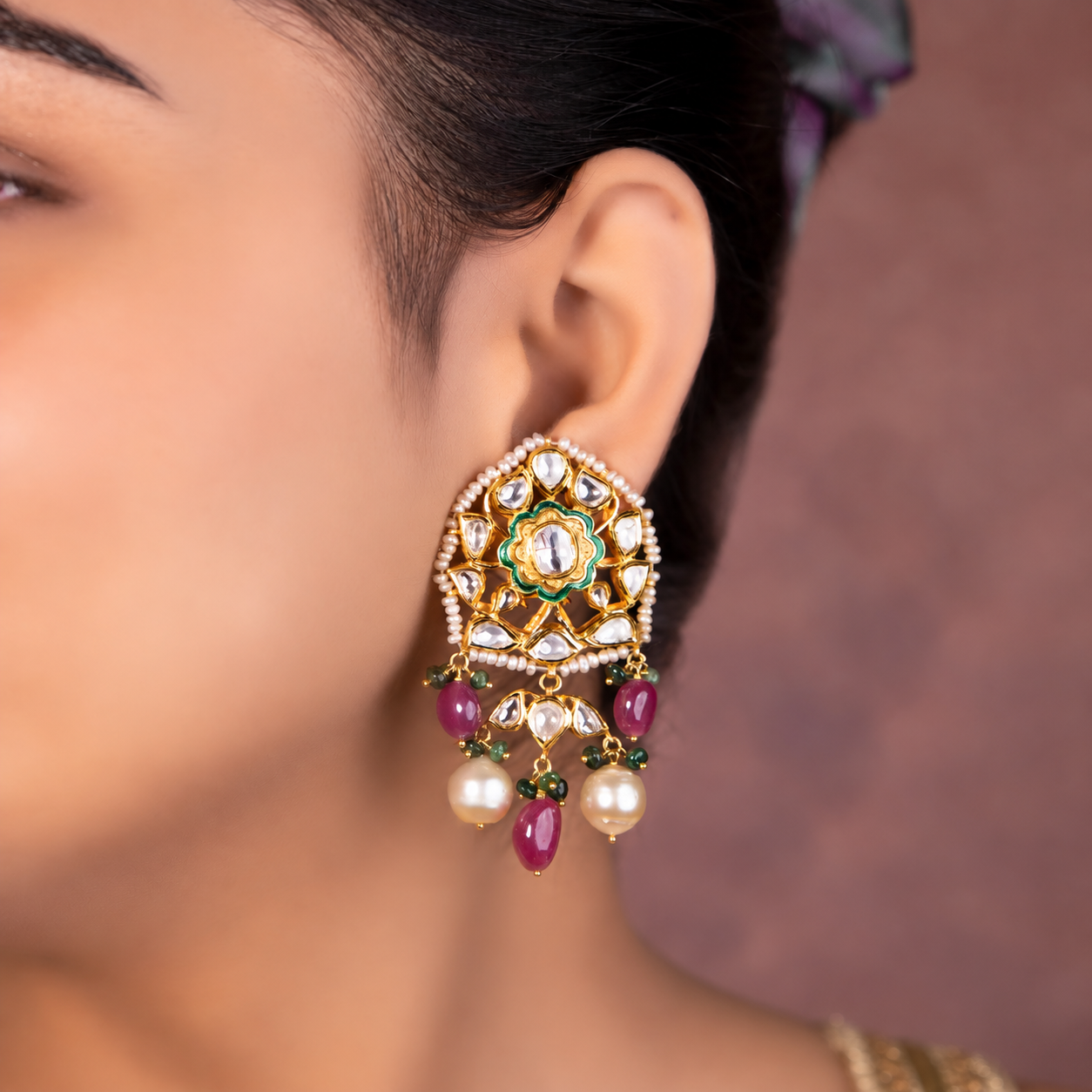
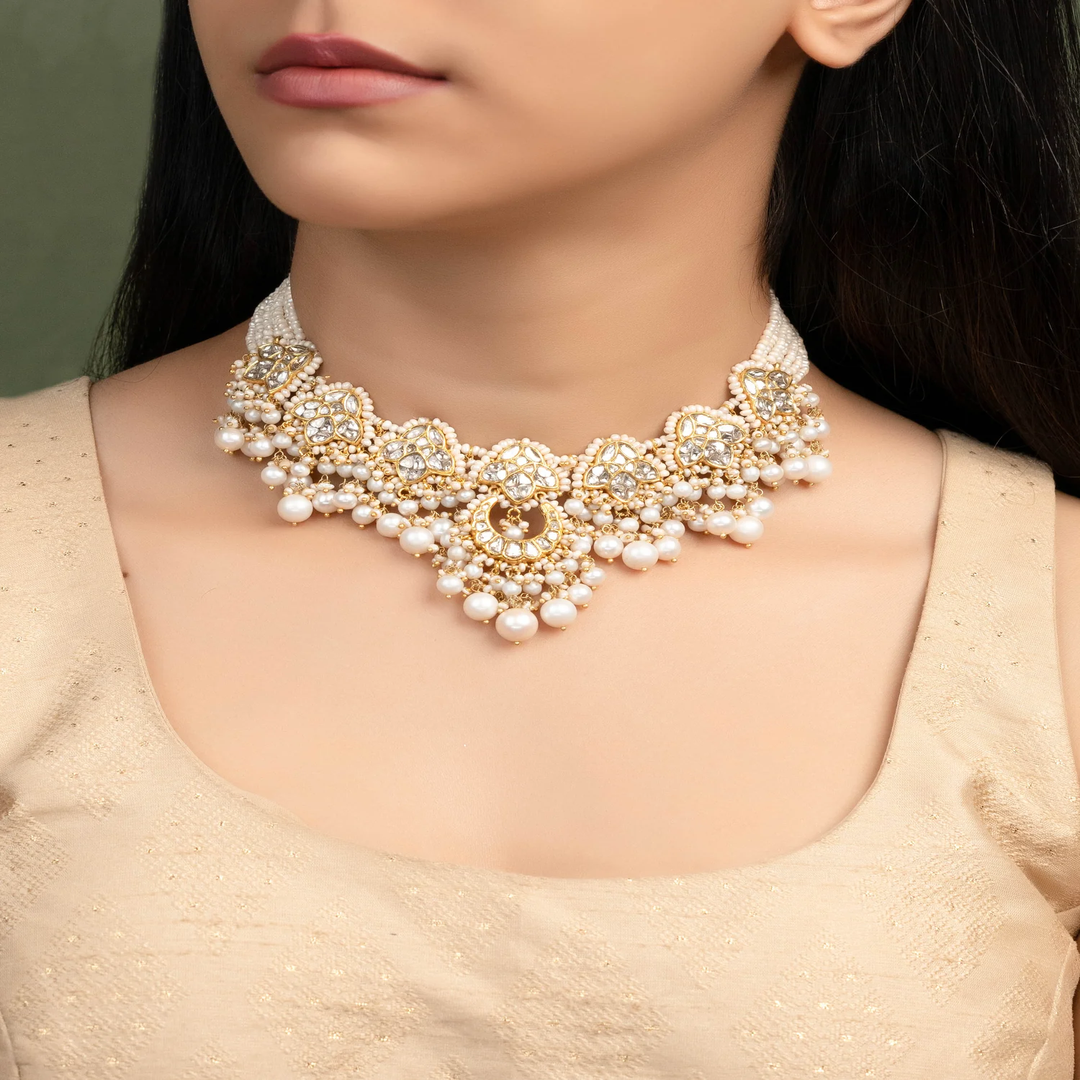
Both Polki and Jadau can create spectacular bridal looks. Polki works beautifully when you want an elegant, luminous, and regal aesthetic, while elaborate Jadau can deliver a richer, more intricate traditional statement.
The decision often comes down to the mood you want your bridal jewellery to create. A statement Polki choker or layered necklace can become the centre of a bridal look, while Jadau can be especially compelling when you want a deeply traditional aesthetic.
Both styles can move beautifully into festive dressing. A medium-sized Polki necklace, colourful gemstone piece, or statement earrings can elevate a festive saree or lehenga without requiring a complete jewellery set.
Jadau can create a similarly rich effect, particularly when paired with traditional fabrics and silhouettes. The key is to match the scale of the jewellery to the occasion rather than automatically reaching for the heaviest piece.
Polki can have an advantage when you want heritage jewellery to feel more understated. A statement ring, refined necklace, or pair of Polki earrings can add character to an evening outfit without making the entire look feel bridal.
Jadau can also work beautifully for evening dressing when you choose one hero piece. Let its craftsmanship provide the drama while keeping your outfit relatively clean.
Smaller Polki pieces can be particularly easy to introduce into everyday wardrobes. A delicate pendant, refined studs, or an understated ring can bring a touch of heritage to otherwise simple clothing.
Jadau is often more naturally associated with occasion dressing, although smaller contemporary pieces can certainly be styled beyond weddings.
Polki and Jadau both tell extraordinary stories, but they speak in different visual languages. Polki celebrates the distinctive beauty of uncut diamonds and can move effortlessly between traditional grandeur and contemporary styling. Jadau celebrates intricate craftsmanship, rich detail, and the opulence of India's jewellery heritage.
So rather than asking which one is universally better, ask which one feels more like you. If you're drawn to the luminous character of Polki and want jewellery that can evolve with your wardrobe, explore the many interpretations of Polki at Tyaani. If elaborate craftsmanship and richly traditional design capture your imagination, Jadau may be the direction that feels right.
And if you find yourself drawn to both, that's perfectly fine. The most interesting jewellery collections aren't built around rules. They're built around pieces you love enough to wear, restyle, and eventually associate with your own stories.
No. Polki generally refers to jewellery featuring uncut diamonds, while Jadau refers primarily to a traditional jewellery-making technique. The two can overlap, and a single piece may feature Polki diamonds alongside Jadau craftsmanship.
The simplest distinction is that Polki describes the character and use of uncut diamonds, whereas Jadau describes a traditional method of setting gemstones and decorative elements into gold. They can therefore exist separately or together in heritage jewellery.
There is no universal price difference because the cost depends on factors such as the materials used, diamond and gemstone content, gold weight, craftsmanship, design, and scale. A highly elaborate piece in either category can command a significant price.
Both can create a beautiful bridal look. Polki can offer a luminous, regal appearance, while Jadau can provide an intricate and strongly traditional aesthetic. Your lehenga, saree, personal style, and desired level of grandeur should guide the choice.
Polki can be particularly versatile because it is available in both elaborate traditional designs and contemporary silhouettes. Smaller Polki earrings, pendants, and rings can transition into festive, evening, and selected everyday looks.
Yes. Since the two can overlap in traditional jewellery, combining them can create a cohesive heritage-inspired look. Because both can be detailed, choose one hero piece and keep the supporting jewellery more restrained.
Absolutely. One of the easiest ways to modernise Jadau is to pair a detailed piece with a clean, contemporary outfit. A statement Jadau necklace with a simple saree or a striking pair of earrings with a modern silhouette can create an elegant contrast.
Yes, particularly in smaller and more refined designs. Delicate pendants, studs, rings and bracelets can introduce the character of Polki without the scale associated with traditional bridal jewellery.
Resale value depends on several factors, including the gold and gemstone content, craftsmanship, condition, provenance, and prevailing market demand. It is best not to assume that the original purchase price will directly determine the future resale value.
Jadau can incorporate a range of precious and coloured gemstones, depending on the design. Diamonds, emeralds, rubies, sapphires, pearls, and other gemstones can be used to create the rich, detailed appearance associated with many traditional Jadau pieces.
Both can complement a saree beautifully. Polki can create a refined, regal look, while Jadau can add a more intricate and traditional character. Consider the saree's fabric, embroidery, colour, and neckline before choosing the scale of your jewellery.
Both are excellent choices, depending on the aesthetic of the lehenga. Polki works particularly well with both traditional and contemporary bridal styles, while Jadau can be especially striking with richly embroidered or heritage-inspired lehengas.