


Chat for Best Price
Unlock exclusive offers & much more
There’s something undeniably powerful about the color red - it commands attention, symbolizes love, and radiates confidence. Now imagine that same emotion captured in stone. That’s what a ruby does. Whether set in a regal choker or a delicate pendant, rubies exude a kind of energy that no other gemstone can match. And yet, many jewellery lovers find themselves wondering - why do some rubies glow with fiery intensity while others look flat or dark?
The secret lies in their origin, colour tone, and craftsmanship - and at Tyaani, each ruby is handpicked to ensure it embodies not just beauty, but soul. So let’s journey into the radiant world of rubies - where history, artistry, and passion meet. What Makes a Ruby So Special? Rubies are not just gemstones - they are legends. Known as the “King of Gemstones,” rubies have adorned emperors, queens, and spiritual leaders for centuries.
A member of the corundum family, rubies owe their fiery red hue to traces of chromium, a rare element that creates that unmistakable glow known as “pigeon blood” red. In fact, rubies are so revered that ancient civilizations believed they carried the flame of eternal life. In Indian culture, rubies (manik) are symbols of love, success, and divine energy - said to bring warmth to the heart and clarity to the mind.
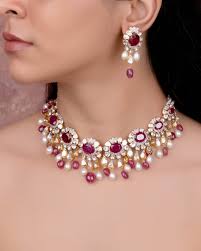
Every ruby tells a different story depending on its birthplace. While all rubies share the same fiery core, their tones range from pinkish red to deep crimson - each shade a whisper of the soil it came from.
The most prized rubies in the world, Burmese rubies are known for their vivid pigeon-blood color, a glowing crimson with a touch of blue. Found in the Mogok Valley, these gems are revered for their unmatched brilliance and saturation.
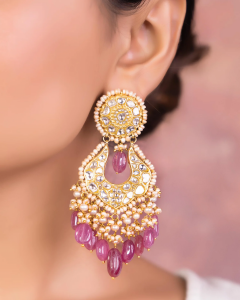
Thai rubies exhibit a deep, garnet-like tone with hints of brown or burgundy. Their darker body colour gives them an intense, dramatic appeal, making them ideal for evening wear and vintage designs.
Mozambique rubies have taken the world by storm in recent years. Known for their vivid red color and excellent transparency, they often rival Burmese stones in brilliance but come at a slightly more accessible price.
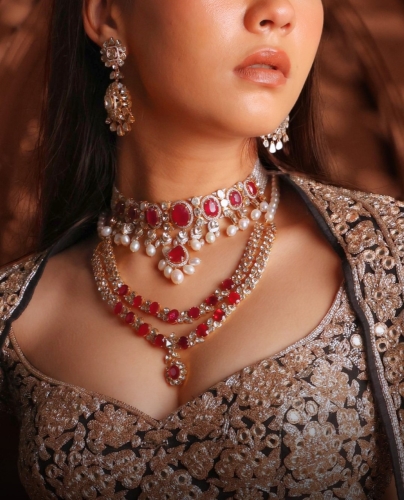
Indian rubies, primarily found in Odisha and Karnataka, carry a softer, pinkish-red hue. Though not as transparent as Burmese rubies, their charm lies in their warmth and traditional connection.
Often lighter and slightly more pink, Cambodian rubies have a delicate radiance that appeals to modern minimalists. Their cheerful glow makes them perfect for casual and everyday jewellery.
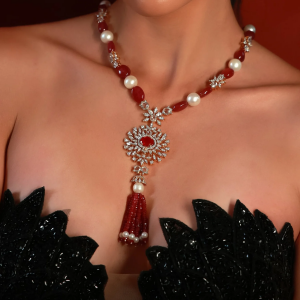
True rubies are instantly recognizable by their color, clarity, and inner glow. Here’s how experts evaluate the best:
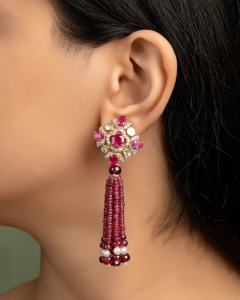
Rubies are more than gemstones - they are emotion incarnate. They carry centuries of history, the energy of passion, and the elegance of legacy. At Tyaani, every ruby is chosen not just for its color but for its character. Whether it’s a bold polki choker for a bride or a delicate pendant for daily wear, our designs bridge heritage craftsmanship with modern confidence.
A ruby is a red variety of the mineral corundum, colored by chromium. It’s one of the most precious gemstones in the world, celebrated for its rich red hue, durability, and symbolism of love and strength.
Because of their unmatched color, rarity, and symbolism. Rubies were believed to protect warriors, bring success, and inspire passion. Their fiery glow earned them the title “Ratnaraj” - Sanskrit for “King of Gems.”
The three key factors are color, clarity, and cut. The ideal ruby displays a pure red tone with vivid brightness, minimal inclusions, and perfect proportioning to enhance its internal fire.
The most famous types include Burmese (Myanmar), Thai, Mozambique, Indian, Cambodian, and Sri Lankan rubies. Each origin has its unique color intensity and crystal structure.
Yes, though Burmese rubies dominate the luxury market, Thai rubies remain loved for their deep, mysterious tone that looks stunning in vintage and antique-style jewellery.
Indian rubies usually have a softer pinkish-red hue and are often used in polki and kundan settings. They may not have the same clarity as Burmese rubies but offer unique warmth and cultural authenticity.
Inclusions are tiny natural markings formed during crystal growth - they’re a sign of authenticity. A completely flawless ruby is likely synthetic. Moderate inclusions are normal and often enhance the gem’s inner glow.
The most coveted shade is pigeon-blood red - a rich, deep crimson with a subtle blue undertone. However, lighter rubies with pinkish tones also hold beauty and charm, especially in contemporary designs.
Both are corundum minerals, but when the color is red, it’s classified as a ruby. If the hue shifts toward pink, orange, or purple, it’s considered a sapphire. The intensity of red distinguishes the two.
Because of their rarity and color purity. High-quality rubies - especially untreated Burmese ones - are rarer than diamonds, making them among the most valuable gemstones on earth.
In Indian tradition, rubies symbolize love, power, and spiritual enlightenment. They are linked to the Sun, representing vitality and leadership. Wearing a ruby is believed to attract prosperity and positivity.
Rubies are second only to diamonds in hardness, making them durable enough for daily wear. A ruby engagement ring represents passion, loyalty, and eternal love - a beautiful twist on tradition.
Clean rubies gently using lukewarm water, mild soap, and a soft cloth. Avoid ultrasonic cleaners and extreme heat. Store separately to prevent scratching against other gemstones.
Color plays the most crucial role. A small ruby with perfect color can be more valuable than a larger, duller stone. However, size does add rarity when the color and clarity remain exceptional.
A synthetic ruby is lab-created but chemically identical to a natural one. An imitation ruby, on the other hand, is simply a lookalike made from glass or other materials.