


What Is Polki Jewellery? 5 Things You Should Know Before Buying
You know that feeling when you open your jewellery box looking for “something special” and somehow everything feels a little too familiar? The diamonds are beautiful, the gold is timeless, but you want a piece with more character-something that feels luxurious without looking like it was made simply to sparkle.
That is often where Polki catches the eye.
With its uncut diamond character, intricate gold craftsmanship, and unmistakable Indian heritage, Polki has a personality that is difficult to replicate. It does not always shine in the perfectly uniform way of contemporary diamond jewellery. Instead, it has a softer, more organic glow that makes you want to look closer.
For generations, Polki has been associated with bridal jewellery, royal-inspired designs, and pieces treasured across families. Yet today, it is moving beyond the traditional jewellery box. Delicate Polki earrings can be worn with workwear, a fine pendant can elevate a simple dress, and a statement ring can bring heritage into an otherwise contemporary wardrobe.
But before you buy your first piece, there is more to understand than simply knowing that Polki uses uncut diamonds. The stone, craftsmanship, materials, design, and way the jewellery is made all contribute to what makes a Polki piece special.
What Is Polki?
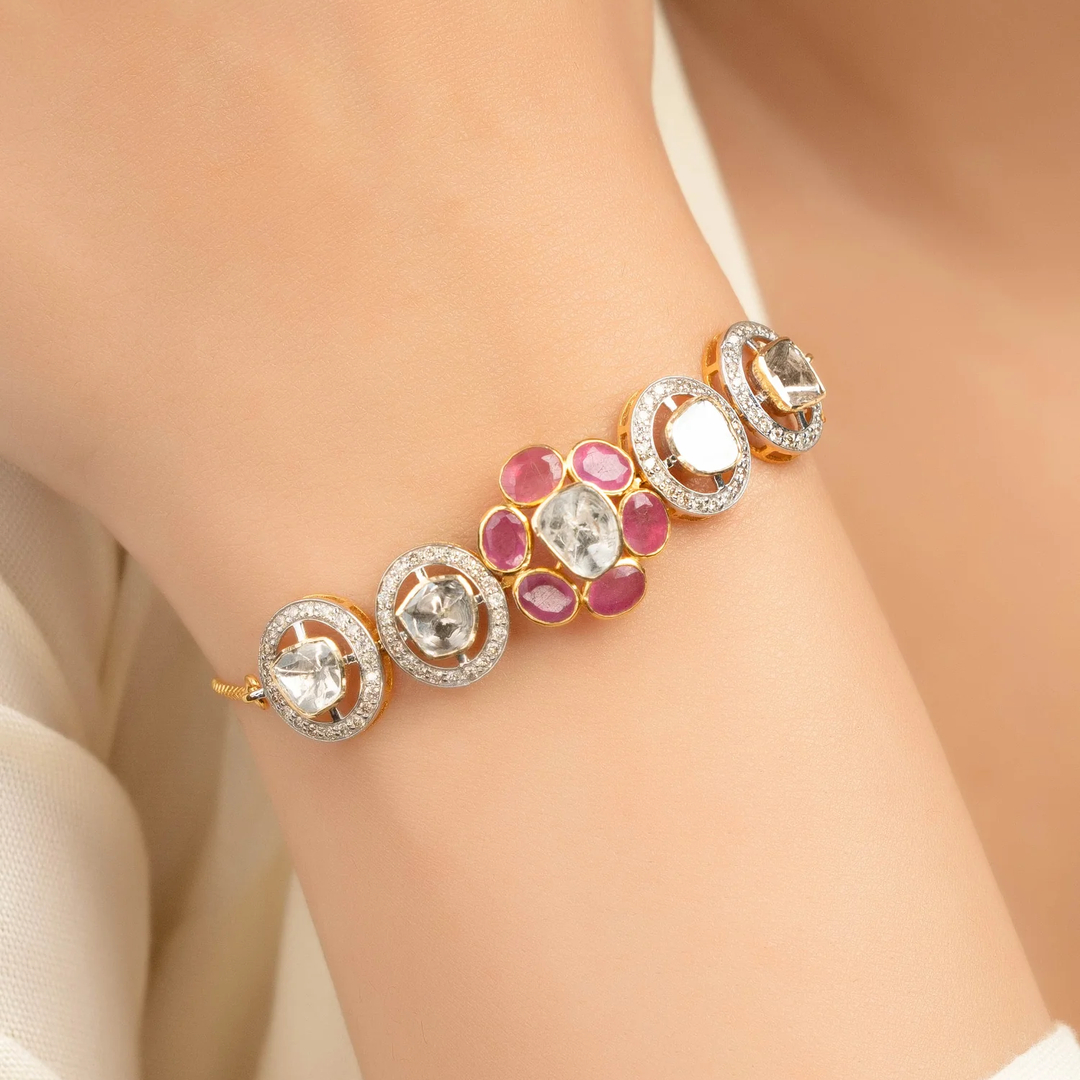
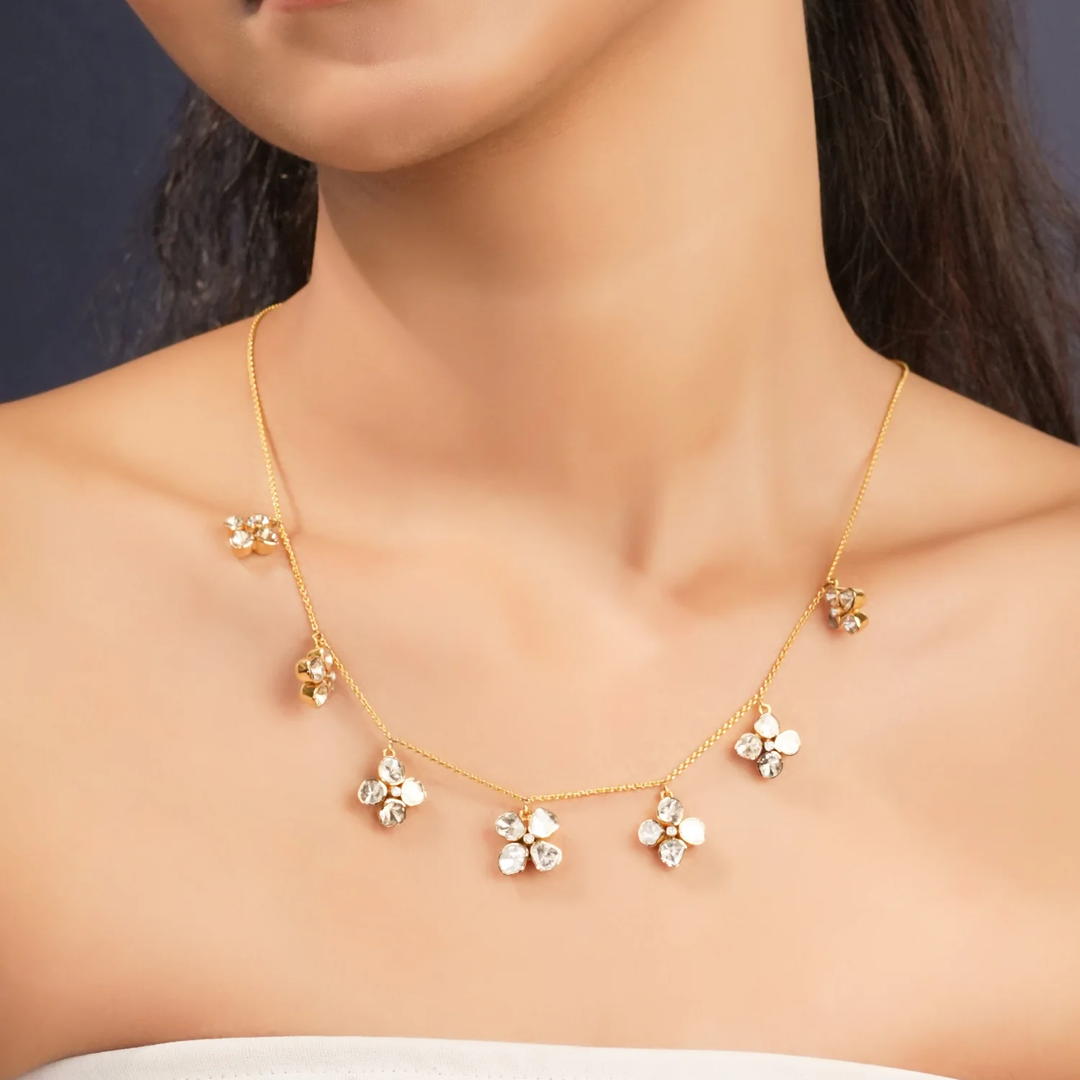
Polki traditionally refers to jewellery made using uncut diamonds. Unlike modern brilliant-cut diamonds, which are precisely faceted to create a particular pattern of sparkle, Polki diamonds generally retain more of their natural form.
This gives Polki its distinctive visual character. Instead of perfectly uniform facets reflecting light in a highly controlled way, uncut diamonds can have variations in shape, size, and reflection. The result is often a softer, more diffused glow that feels organic and beautifully individual.
But Polki is not simply about the diamond. The craftsmanship surrounding the stones is an equally important part of the jewellery. Gold settings, intricate detailing, gemstone accents, and traditional techniques can all contribute to the finished design.
5 Things You Should Know Before Buying Polki Jewellery
Polki Is Known for Its Uncut Diamond Character
The first thing to appreciate about Polki is that its beauty does not come from looking exactly like a conventional diamond. Its charm lies in the natural character of uncut or minimally processed diamonds.
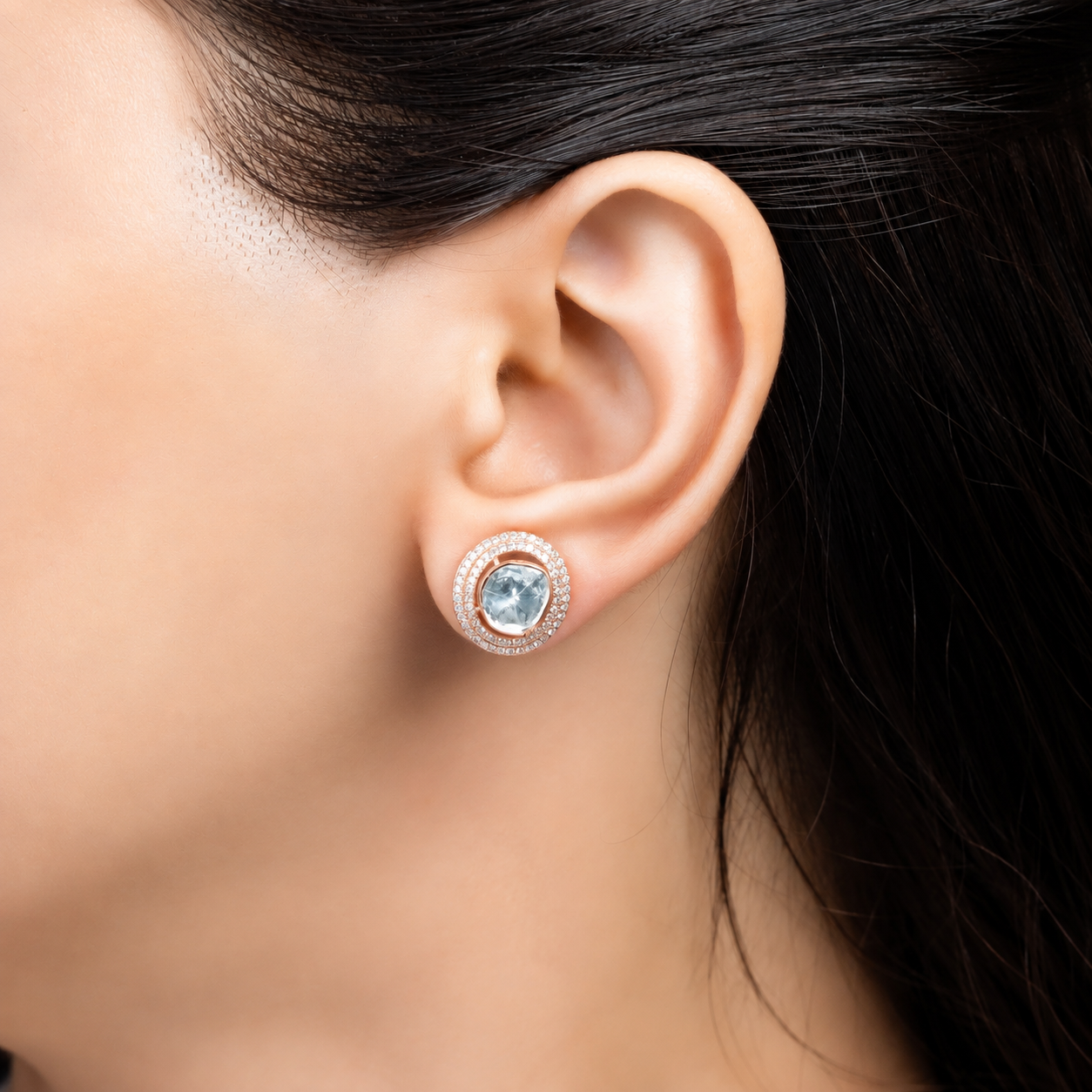
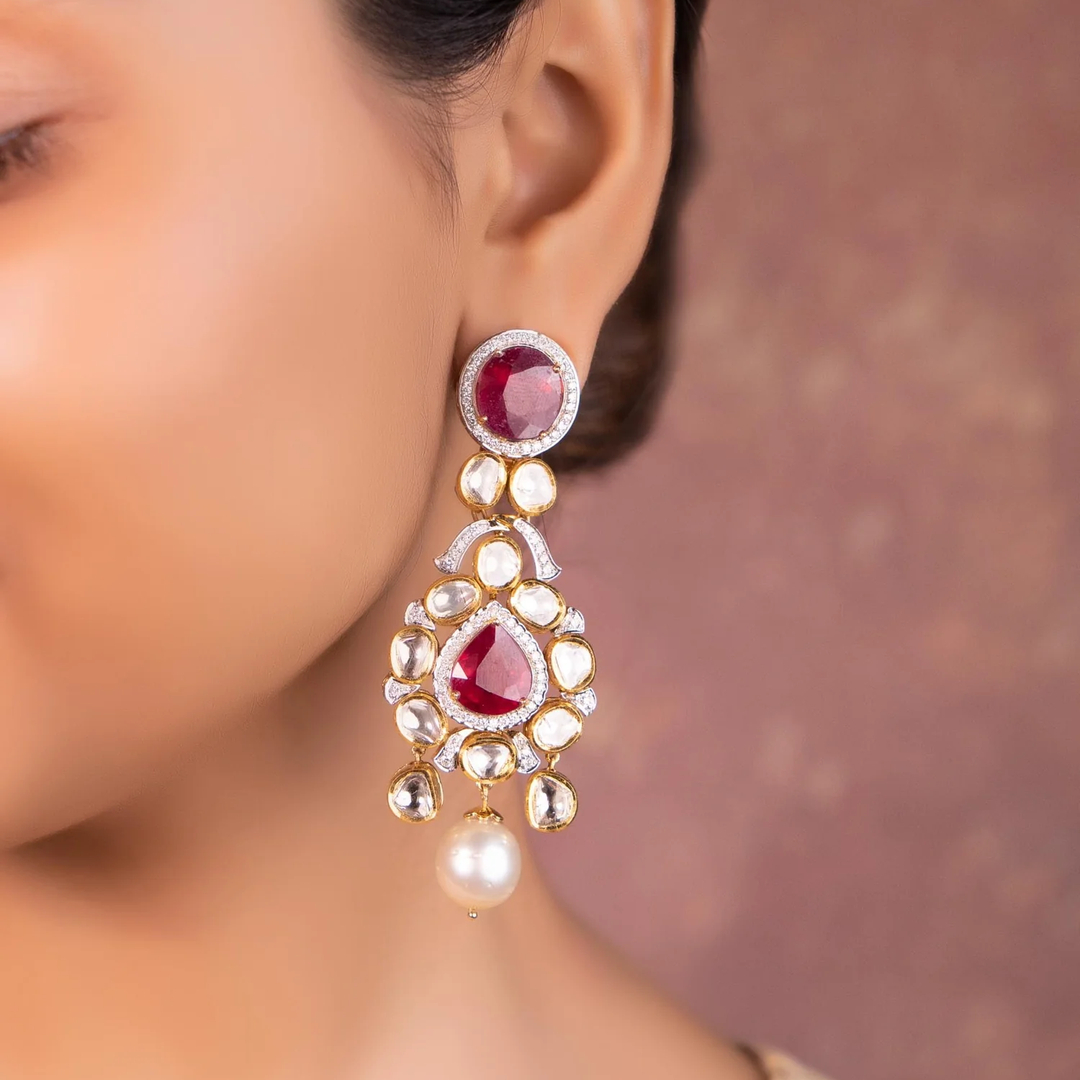
Look closely at a Polki piece, and you may notice that the stones do not all reflect light in precisely the same way. Some may appear brighter, while others offer a softer glow. Their shapes can also have subtle variations. This is not necessarily something that needs to be corrected; it is part of the aesthetic that gives Polki its distinctive identity.
For someone accustomed to brilliant-cut diamond jewellery, this can initially feel different. But once you understand the appeal, the irregularity becomes part of the attraction. Polki invites you to appreciate character rather than uniformity.
Every Polki Piece Has Its Own Personality
Imagine two Polki earrings sitting beside each other. They may belong to the same pair, yet individual stones can still have subtle differences in shape, size, and reflection. That variation contributes to the feeling that Polki is crafted rather than mass-produced.
This individuality is one of its most beautiful qualities. Instead of every stone looking perfectly identical, there is a sense of movement and natural character across the design.
It also means that choosing Polki can be a very personal experience. You may be drawn to a particular combination of stones, the way the gold frames them, or the way a design catches light when you move.
Craftsmanship Matters as Much as the Stones
When you first see Polki, it is natural to focus on the diamonds. But look a little closer, and you will realise that the real story extends far beyond the stones.
How the diamonds are positioned, how they are secured, how the gold is shaped and finished, and how the different elements come together can dramatically affect the appearance of the final piece. In elaborate jewellery, even the smallest details can influence the overall sense of refinement.
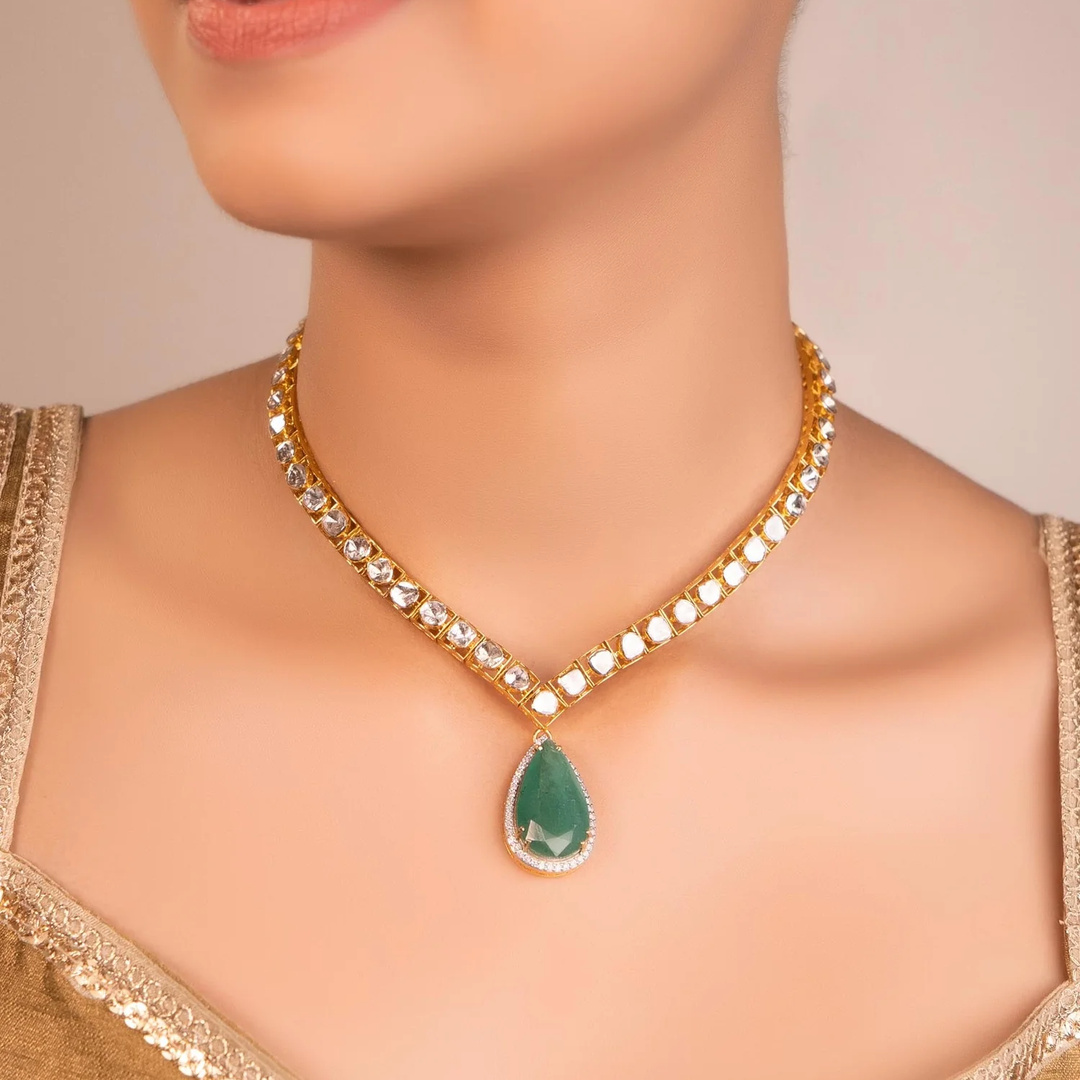
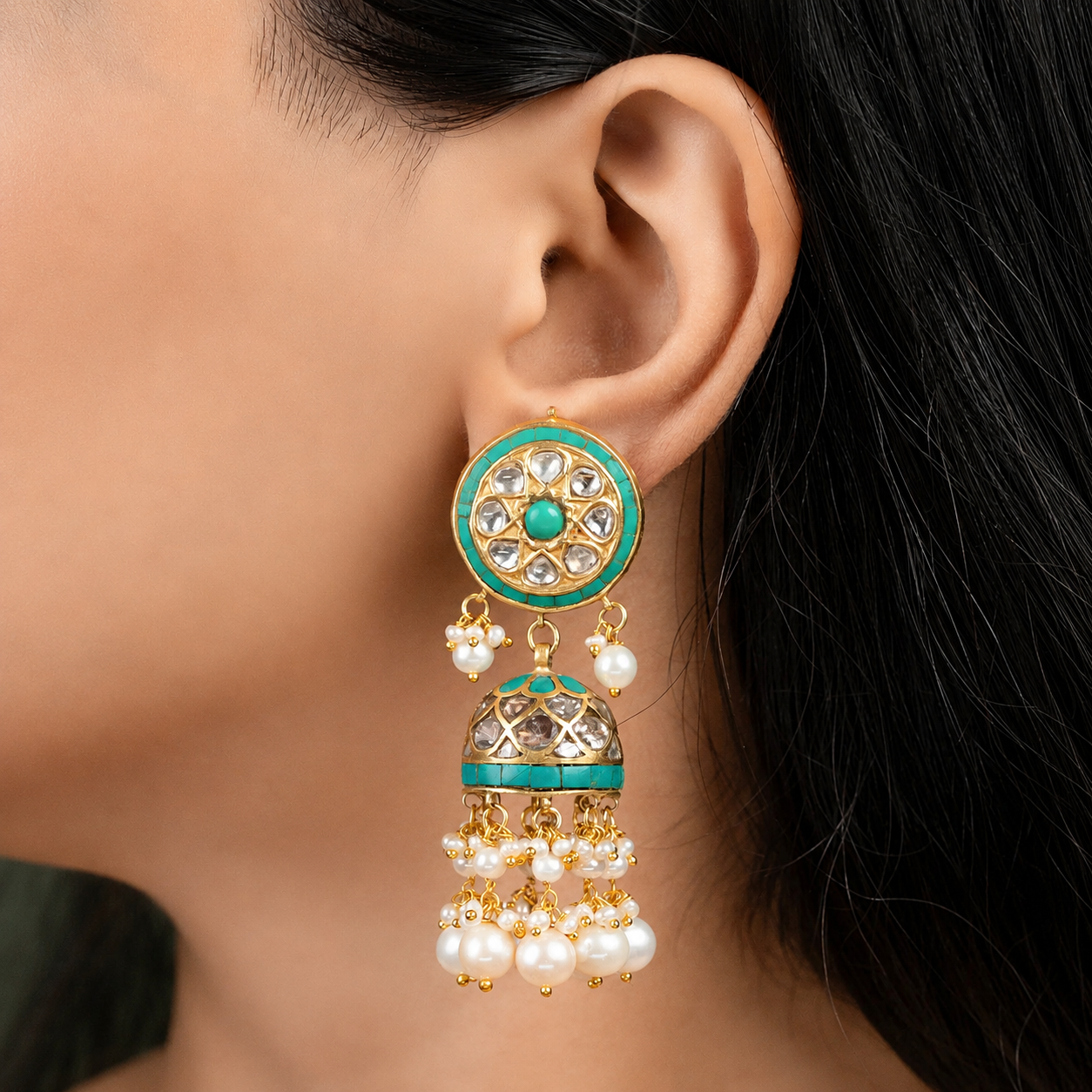
This is particularly important when considering traditional Polki necklaces, Chandbalis, Jhumkas and statement earrings. These designs often involve intricate work and multiple components, making craftsmanship central to both their beauty and wearability.
Know What You Are Buying Before You Invest
Polki can range from delicate everyday pieces to elaborate jewellery created for weddings and major celebrations. Because materials, craftsmanship, and design complexity can vary significantly, understanding exactly what you are purchasing is essential.
Before buying, look at the stated gold purity and the materials used. Understand the stone details, the craftsmanship, and the care requirements. If documentation or certification is applicable to the specific piece, review what is provided and ask questions if anything is unclear.
It is also important to understand that the price of Polki jewellery is not determined by the diamonds alone. Gold content, gemstones, craftsmanship, design complexity, and other construction details can all influence the final price.
Polki Jewellery Can Be Traditional or Surprisingly Modern
If you think Polki belongs exclusively with bridal lehengas and heavily embroidered sarees, it may be time to look at it differently.
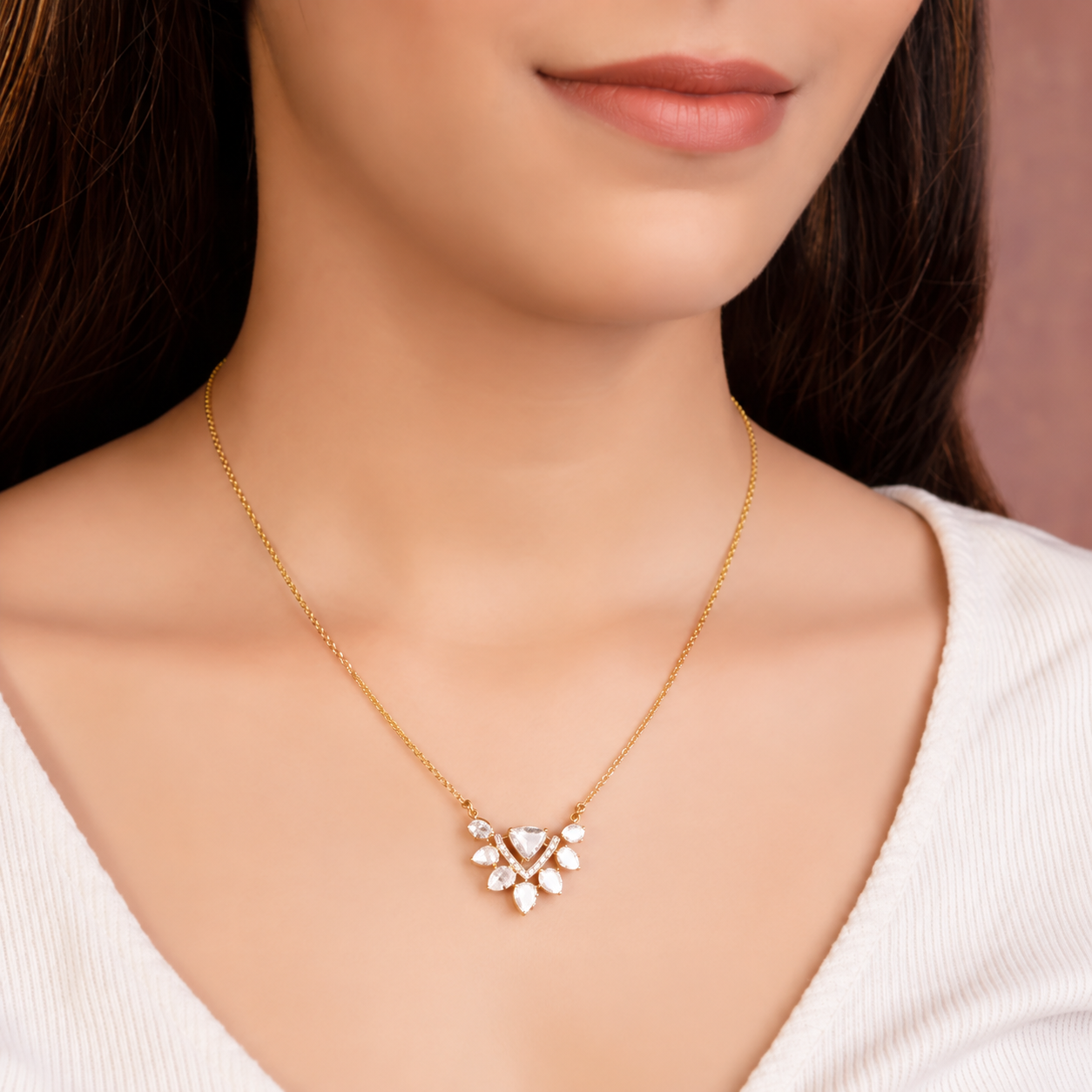
One of the most exciting things about contemporary Polki is its ability to move between worlds. A pair of refined Polki studs can look completely natural with a crisp shirt. A delicate pendant can sit beautifully against a minimalist dress. A Polki ring can be paired with slim gold bands for a contemporary stack.
Even traditional silhouettes can feel modern when the proportions are considered carefully. A smaller Jhumka with a simple kurta can look understated and fresh, while a statement Chandbali can become the focal point of a clean, contemporary saree look.
How to Choose Your First Polki Jewellery Piece?
Your first Polki piece does not have to be the most elaborate one in the collection. In fact, starting with something that naturally fits your existing wardrobe can make the experience much more rewarding.
Think about what you already wear. If earrings are your everyday essential, delicate Polki studs or small drops could become an effortless introduction. If you love necklaces, a fine Polki pendant can bring a subtle heritage element to your everyday wardrobe. If rings are your signature, a distinctive Polki ring can offer that little moment of luxury every time you look at your hands.
Then consider how you want the jewellery to make you feel. Are you looking for something understated and quietly luxurious, or do you want a piece that immediately becomes the centre of attention? Do you prefer traditional silhouettes, or are you drawn to contemporary interpretations of heritage jewellery?
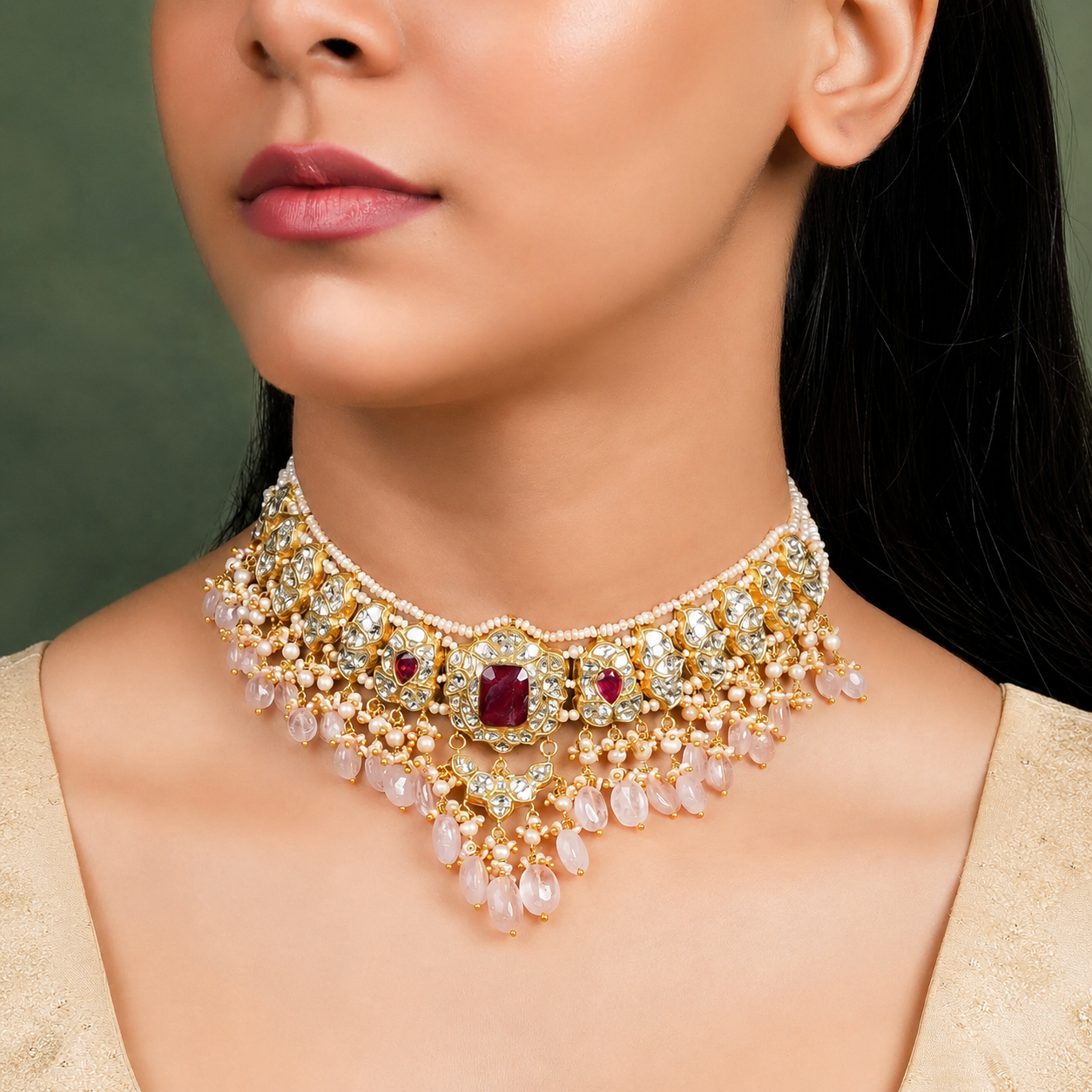
Colour can also guide your choice. Polki paired with emeralds can create a rich green statement, rubies can bring warmth and drama, while pearls can soften the overall look.
How to Style Polki Jewellery in a Modern Wardrobe?
The easiest way to make Polki feel modern is to let it meet clothing that is not traditionally Indian. The contrast can make both the jewellery and the outfit feel more interesting.
Try delicate Polki studs with a tailored blazer and trousers, or wear a fine Polki pendant with a simple silk dress. A Polki bracelet can sit alongside a contemporary watch, while a statement ring can bring an unexpected heritage touch to an otherwise minimalist outfit.
With Indian clothing, think about proportion. A heavily embroidered lehenga may already have plenty of visual detail, so statement earrings can often work better than adding multiple elaborate necklaces. On the other hand, a simple silk saree can provide the perfect backdrop for a dramatic Polki necklace or Chandbali.
Your neckline matters too. Open necklines give pendants and necklaces room to shine, while high necklines often look beautiful with statement earrings. Hairstyles can also change the impact of Polki; pulled-back hair can reveal elaborate earrings, while softer hairstyles can work beautifully with delicate studs and drops.
And don't feel compelled to match every piece. A Polki necklace does not necessarily need matching Polki earrings. Pairing heritage jewellery with contemporary diamonds, fine gold, or pearls can create a more personal and modern jewellery story.
Final Note
Polki is one of those jewellery traditions that becomes more fascinating the closer you look.
Its uncut diamonds bring individuality. Its craftsmanship carries generations of Indian jewellery artistry. Its silhouettes can feel regal, romantic, understated, or distinctly modern depending on how they are designed and worn.
That is why buying Polki should feel like more than choosing another beautiful accessory. It is about understanding what makes the craft special and finding a piece that connects with your own sense of style.
FAQs: Polki Jewellery
What exactly is Polki jewellery?
Polki jewellery traditionally features uncut diamonds set into jewellery, often alongside gold and other gemstones. Its distinctive appearance comes from the natural character of the stones and the craftsmanship used to create the finished piece.
Is Polki real diamond jewellery?
Polki refers to jewellery made using uncut diamonds. However, jewellery terminology can vary, so it is important to check the specific materials and product information provided by the jeweller.
Is Polki jewellery made with real gold?
Polki jewellery can be made using gold, but the exact purity can differ between pieces. Always check the stated gold purity rather than assuming it from the term “Polki.”
How can I tell if Polki jewellery is genuine?
Start by purchasing from a reputable jeweller that provides clear information about the materials, craftsmanship and construction of the piece. Check the stated gold purity, diamond and gemstone details and any applicable documentation.
Can Polki jewellery become an heirloom?
Polki's connection to Indian jewellery heritage makes it particularly suited to jewellery that carries emotional significance across generations.
Is Polki jewellery made with uncut diamonds?
Traditionally, yes. The use of uncut diamonds is central to what is commonly understood as Polki jewellery.
Can Polki jewellery be lightweight?
Yes. Polki is available in many different scales, from elaborate bridal necklaces to delicate studs, pendants, rings and bracelets.
Is Polki jewellery suitable for gifting?
Polki can make a beautiful gift for weddings, anniversaries, birthdays, festive celebrations and personal milestones. Its wide range of designs means you can choose something that reflects the recipient's personality.
Can Polki jewellery be paired with pearls?
Yes. Pearls and Polki can create a beautifully balanced combination. The soft lustre of pearls complements the organic glow of uncut diamonds, while the contrast between the two materials adds depth to the design.
Is Polki jewellery suitable for office wear?
Delicate Polki can work very well for office dressing. Smaller studs, refined hoops, understated pendants, and simple rings can add a heritage touch without making your outfit feel overly formal.