


Chat for Best Price
Unlock exclusive offers & much more
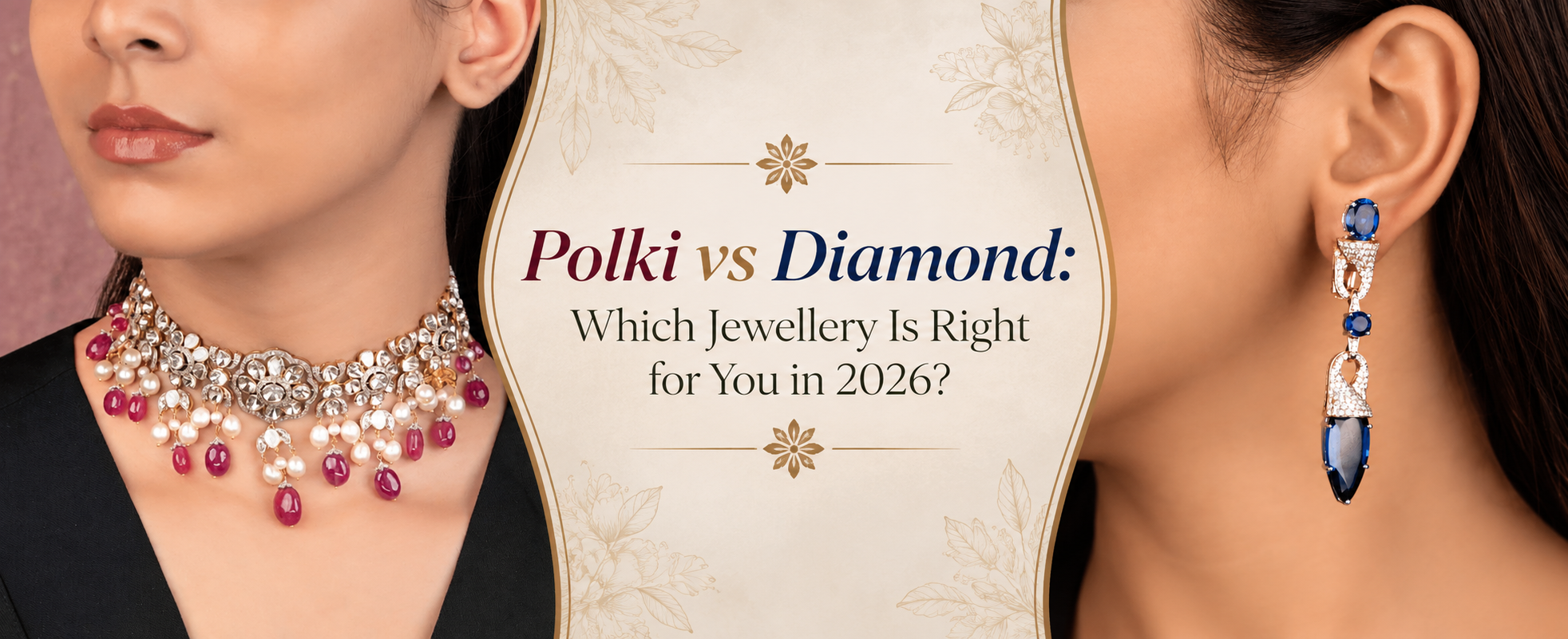
You know you want something special. You have saved the Polki necklace, admired the diamond earrings, and perhaps even asked ChatGPT or Gemini, “Polki or diamond-which one should I buy?” The answers may tell you about sparkle, price and craftsmanship, but there is still one question only you can answer: which one feels like your jewellery?
Polki and diamond jewellery can both be luxurious, timeless and statement-making, but they express luxury differently. Traditional Polki celebrates the natural character of uncut or minimally polished diamonds, while conventional diamond jewellery is designed around the brilliance of precisely cut and faceted stones.
In 2026, the choice has become even more interesting. Polki is moving beyond elaborate bridal sets into contemporary earrings, refined pendants and lighter statement pieces, while diamond jewellery continues to evolve through modern silhouettes and versatile designs. So the decision is no longer simply traditional versus modern.
It is about discovering the kind of luxury you want to wear-and how you want it to become part of your wardrobe.
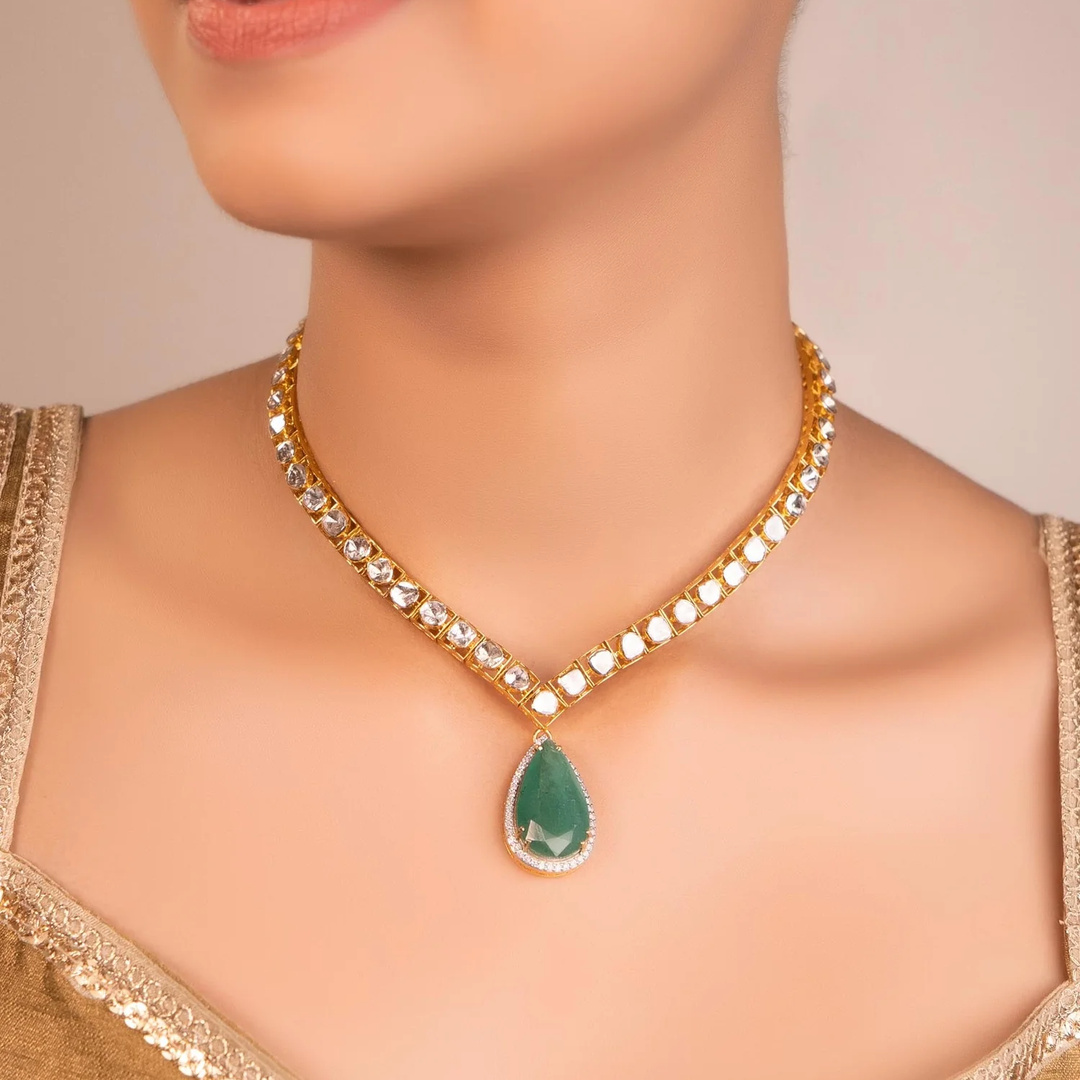
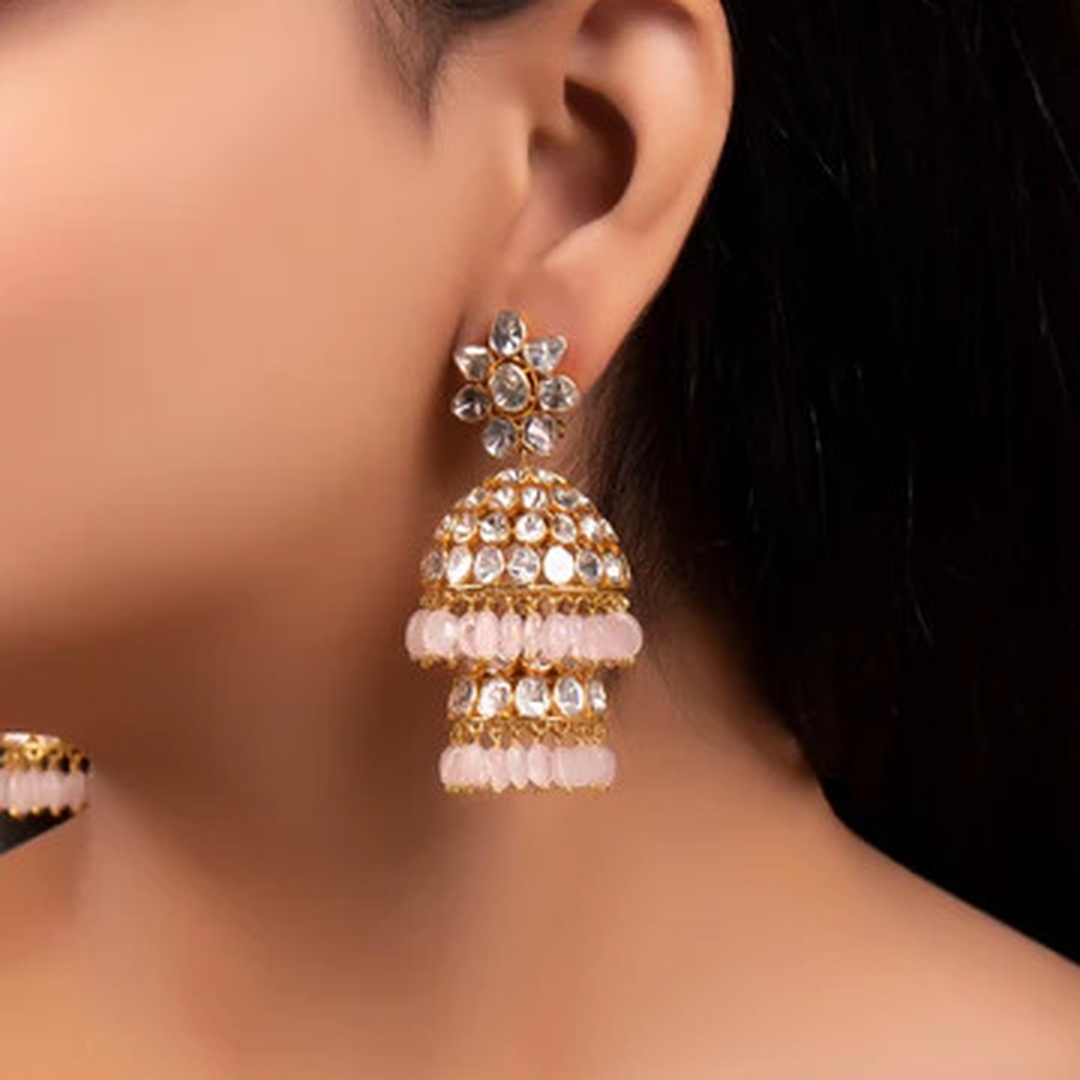
Polki jewellery is known for its use of natural, uncut diamonds. Unlike conventional diamonds that are carefully faceted to maximise brilliance, Polki diamonds retain much of their natural character.
That difference creates a softer, more organic glow. Polki does not necessarily flash in the same sharp way as a brilliant-cut diamond; instead, its beauty comes from the subtle way its surfaces interact with light.
There is also something wonderfully individual about Polki. Natural variations in the stones mean that the jewellery does not always have the uniform appearance associated with precisely cut diamonds. Those variations are part of its charm.
But Polki is about more than the diamond itself. It is deeply connected with Indian jewellery craftsmanship, where uncut diamonds are often surrounded by gold and complemented with emeralds, rubies, pearls and other gemstones.
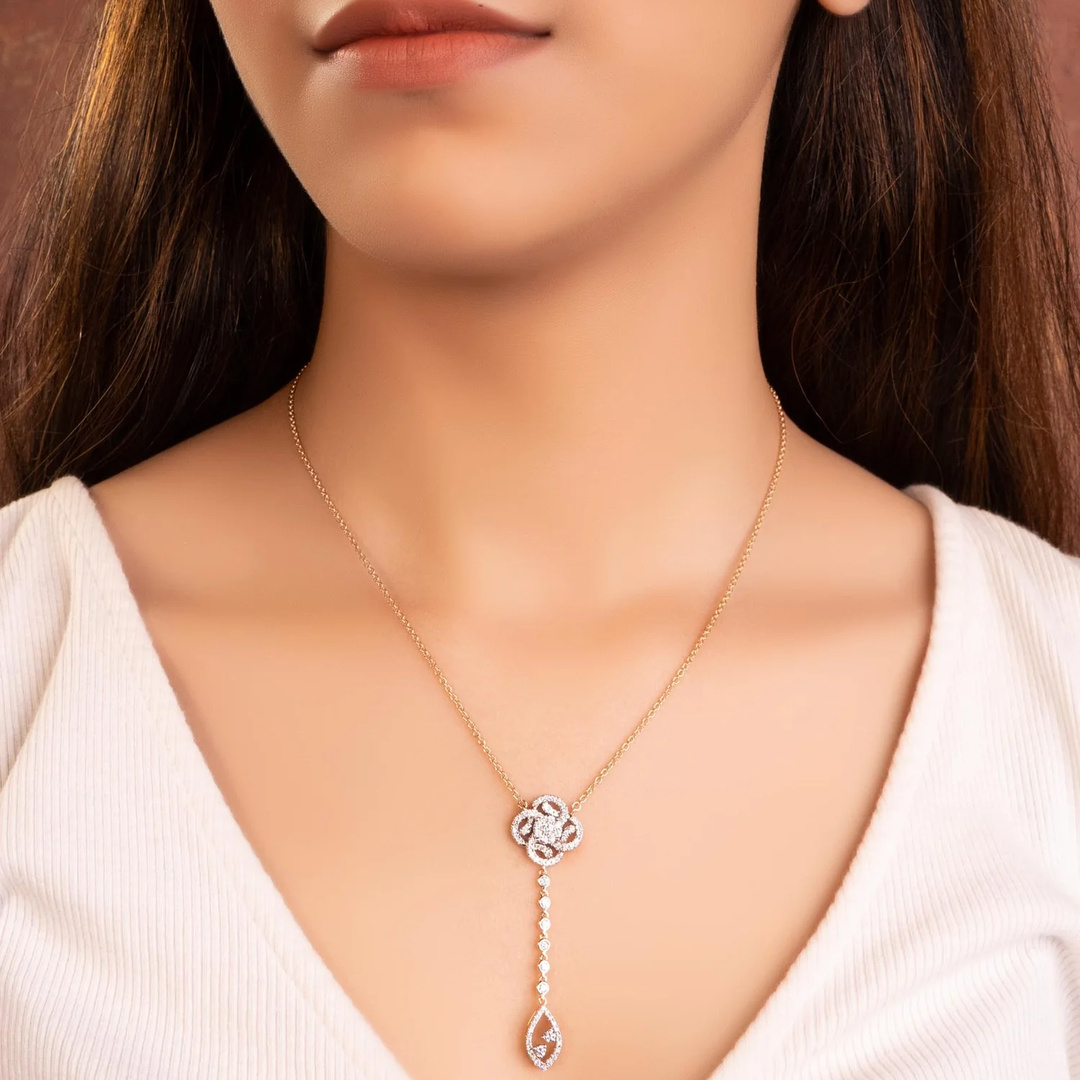
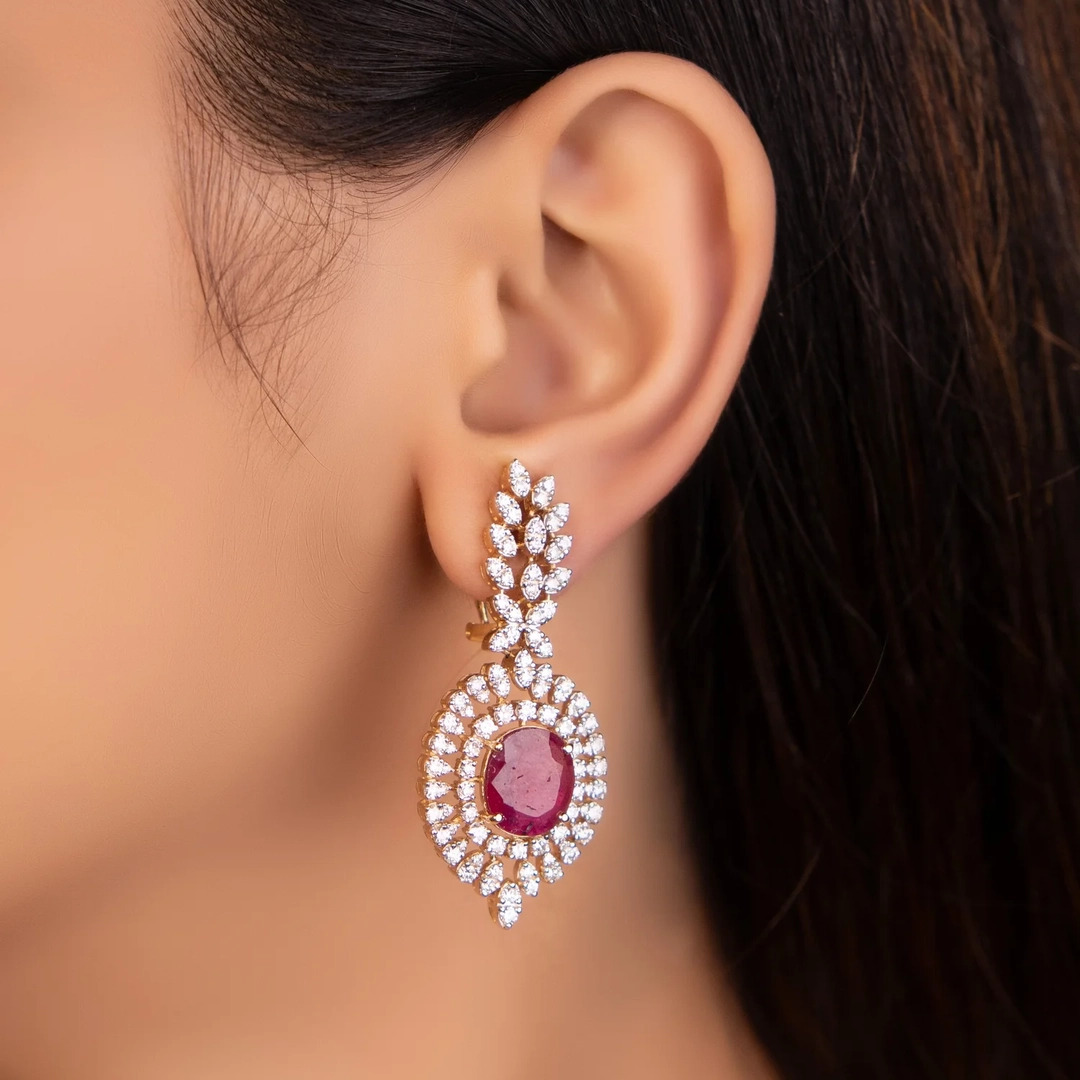
Diamond jewellery takes a different approach to creating its signature sparkle. Diamonds are cut and polished into carefully designed facets that are intended to reflect light and create brilliance.
That precision gives cut diamonds their recognisable appearance: crisp flashes of light, symmetrical shapes and a highly polished finish.
It is also what makes diamond jewellery so versatile. A delicate diamond pendant can add just enough light to a simple saree, while diamond studs can become an everyday signature. For an evening celebration, a statement diamond necklace or ring can take the same idea much further.
Diamond jewellery can also move effortlessly between Indian and Western wardrobes. The same pair of earrings might work with a silk saree one evening and a contemporary dress the next.
In 2026, that versatility matters more than ever. Jewellery is increasingly becoming part of a wardrobe rather than something reserved for a particular ceremony. Women want pieces they can wear to celebrations, dinners, milestones, and even ordinary days when they simply want to feel a little more polished.
Before comparing the two, there is an important distinction to understand: Polki is not the opposite of diamond jewellery. Polki itself uses diamonds. The key difference is primarily how the diamonds are cut or polished, along with the craftsmanship and design tradition surrounding them.
| Feature | Polki Jewellery | Diamond Jewellery |
|---|---|---|
| Diamond character | Traditionally uses natural, uncut, or minimally polished diamonds | Generally uses cut and faceted diamonds |
| Sparkle | Softer, diffused, and organic-looking glow | Crisp, brilliant, and highly reflective sparkle |
| Shape | Often retains natural variations in shape and surface | Precisely shaped and faceted |
| Aesthetic | Regal, heritage-inspired, and artisanal | Polished, refined, and contemporary |
| Craftsmanship | Closely associated with traditional Indian jewellery craftsmanship | Can range from classic to contemporary precision craftsmanship |
| Gemstone styling | Frequently paired with emeralds, rubies, pearls, and other gemstones | Can feature diamonds alone or be combined with coloured gemstones |
| Visual personality | Individual, organic, and old-world | Clean, precise, and luminous |
| Bridal appeal | Particularly strong for traditional and regal bridal looks | Well-suited to contemporary and elegant bridal styling |
| Everyday potential | Lighter Polki designs can work beautifully beyond weddings | Naturally suited to everyday and occasion jewellery |
| Statement potential | Especially striking in elaborate necklaces and statement earrings | Can range from understated staples to dramatic designs |
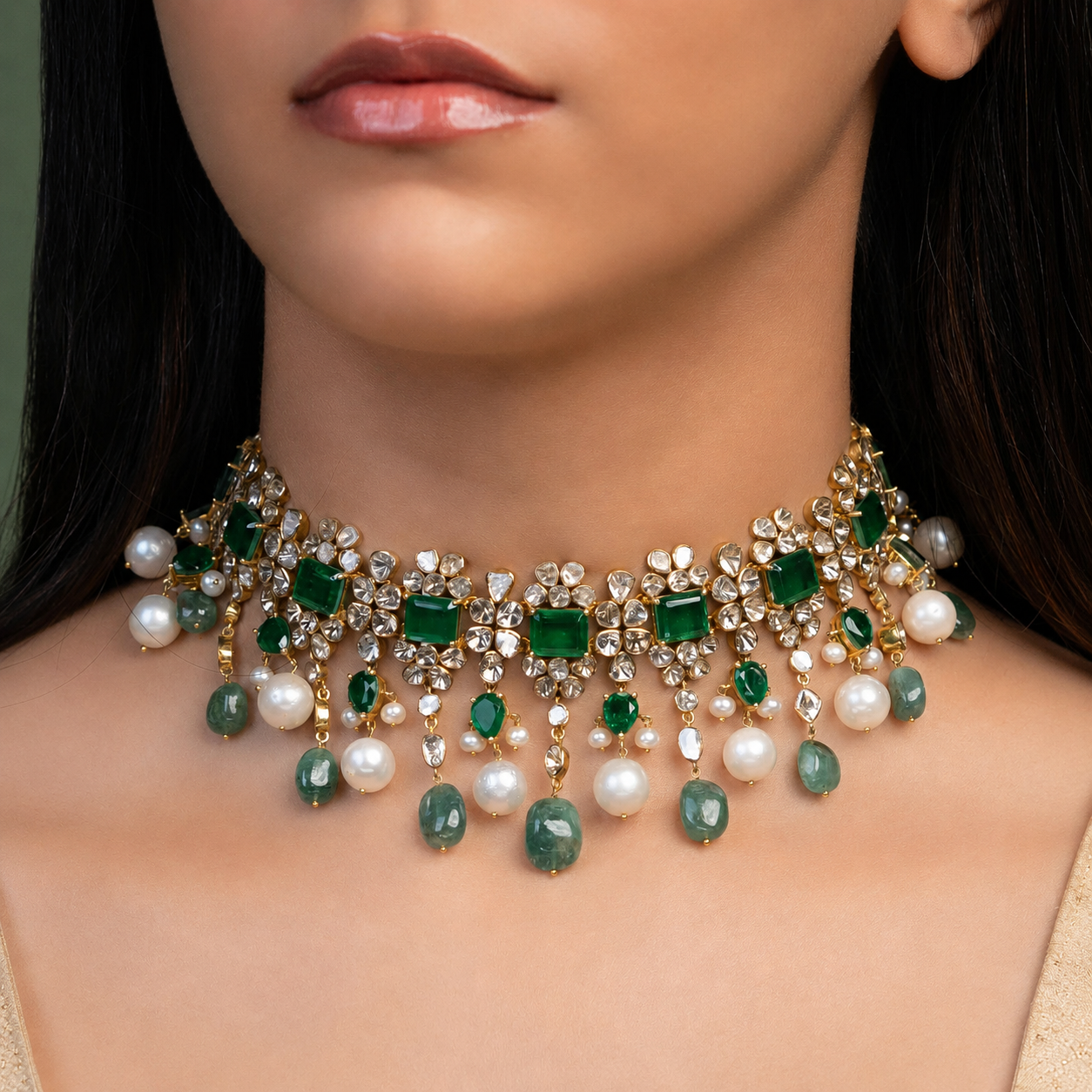
If you are naturally drawn towards heritage, craftsmanship, and jewellery with individuality, Polki may be the piece that catches your attention first.
There is a reason a Polki necklace can completely transform a traditional outfit. Its visual character is rich enough to create a focal point without needing an entire matching set around it.
For a wedding, a Polki choker can frame the neckline of a lehenga beautifully, while a longer Polki necklace can create a more layered, regal effect. If your outfit is already heavily embroidered, choosing one dominant Polki piece instead of competing with every detail can make the look feel more sophisticated.
Polki also becomes interesting when you take it out of its expected setting.
A pair of statement Polki earrings can turn a simple saree into an occasion look without adding a heavy necklace. A Polki ring can bring a touch of heritage to an evening dress. A refined pendant can sit beautifully against a contemporary blouse or minimalist outfit.
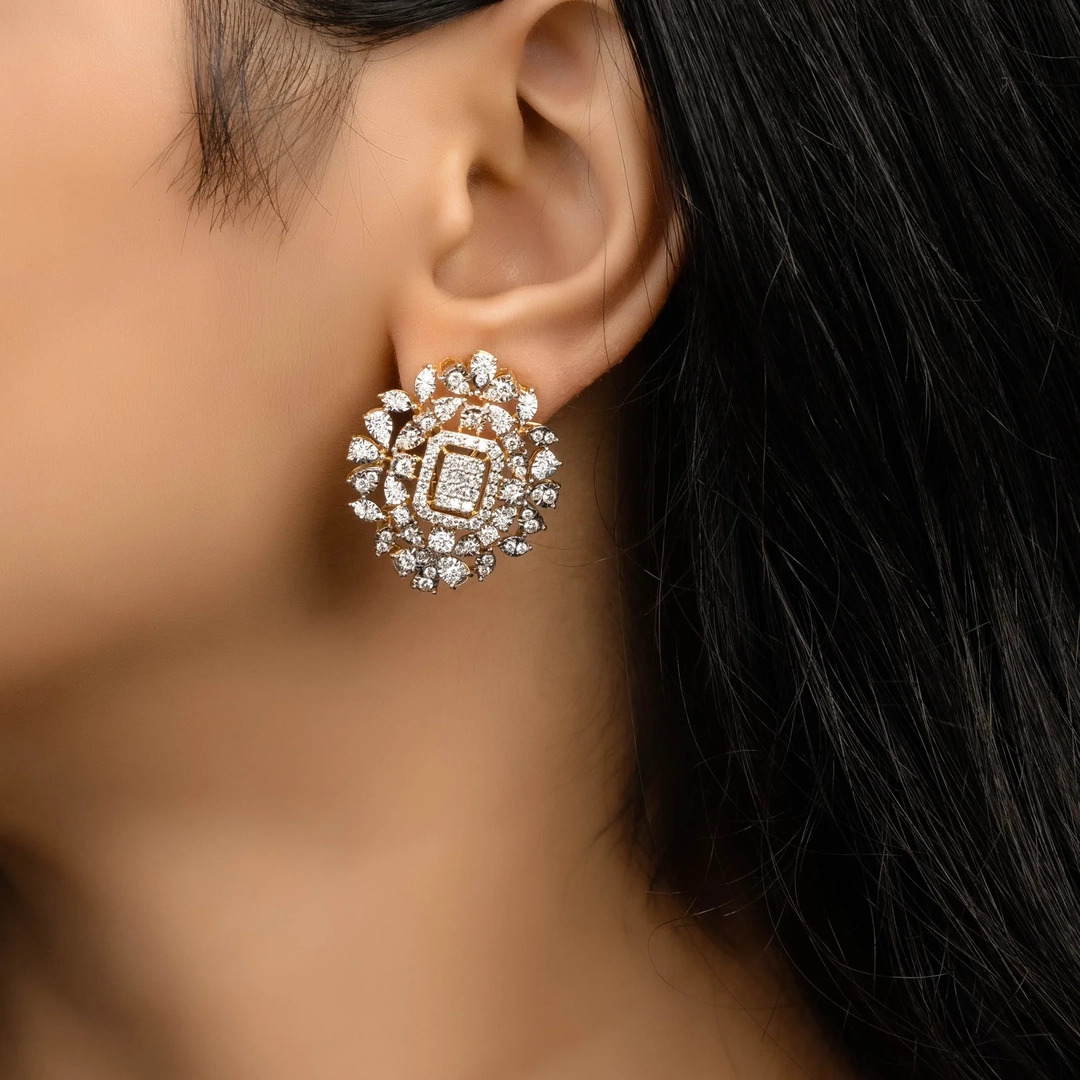
If you prefer brilliance, clean silhouettes, and versatility, conventional diamond jewellery may feel more natural.
A delicate diamond pendant can become the piece you wear without thinking twice. Diamond studs can work with almost anything, while a statement ring can add just enough drama to an evening outfit.
Diamond jewellery is particularly appealing when you want one piece to travel across different parts of your wardrobe. It can feel understated with Indian daywear and glamorous with evening dressing, depending on its design.
But perhaps the most useful way to make the decision is to think about the kind of statement you want.
Polki tends to say heritage, artistry and individuality. It can make an outfit feel richer and more ceremonial, even when the clothing itself is relatively simple.
Diamond jewellery tends to say brilliance, refinement and contemporary luxury. It can polish a look without necessarily becoming its entire story.
Polki and diamond jewellery offer two different ways of experiencing luxury. Polki brings together the natural character of uncut diamonds, Indian craftsmanship, and a distinctly regal presence. Diamond jewellery offers precision, brilliance, and an effortless versatility that can move across occasions.
Neither is automatically better.
The right choice is the one that fits your personality, your wardrobe, and the moments you want to remember.
Maybe that is a Polki choker you wear on your wedding day and rediscover years later with a silk saree. Maybe it is a pair of diamond earrings that quietly become part of your everyday identity. Or perhaps your jewellery collection has room for both-the soft glow of Polki when you want heritage and the brilliant sparkle of diamonds when you want modern refinement.
Not exactly. Polki jewellery uses natural, uncut or minimally polished diamonds, while diamond jewellery generally uses diamonds that have been cut and faceted to maximise brilliance.
Yes, Polki is made using natural diamonds that are unpolished. Since jewellery can vary in materials and construction, it is still important to check the specific product details and authenticity information before purchasing.
Not necessarily. The price of Polki depends on factors such as the diamonds used, gold weight, gemstones, craftsmanship, design complexity, and brand.
Neither is universally better. Polki may suit someone who appreciates heritage craftsmanship, natural character, and a regal aesthetic, while diamond jewellery can be a better fit for someone who prefers crisp brilliance, precision, and versatile modern styling.
Polki has a different kind of sparkle. Because Polki diamonds are uncut, they generally create a softer and more diffused glow rather than the sharper brilliance associated with a precisely faceted diamond.
Polki diamonds retain more of their natural shape and surface because they are not extensively cut and faceted. Diamonds are precisely cut into facets designed to reflect light, which gives them a more uniform and brilliant appearance.
Resale value depends on the individual piece, including its diamond and gold quality, craftsmanship, brand, condition, and market demand. The original retail price should not be treated as a guarantee of future resale value for either Polki or diamond jewellery.
Polki is particularly suited to brides who want a traditional, regal, and heirloom-inspired appearance, especially when paired with rich Indian textiles and coloured gemstones.
Polki generally creates a more traditional regal effect because of its association with uncut diamonds, intricate craftsmanship, and heritage-inspired designs. Diamonds create a different kind of luxury through precise brilliance and a polished contemporary appearance.
Yes. Combining the two can create a sophisticated balance between heritage and modern luxury. A statement Polki necklace with understated diamond earrings, for example, can make the contrast feel deliberate and contemporary rather than mismatched.
Consider your lifestyle, wardrobe, and personal aesthetic rather than choosing based only on price or perceived value. If you want heritage character, individuality, and a softer regal glow, Polki may be right for you; if you prefer brilliant sparkle, clean lines, and everyday versatility, diamond jewellery may be a better fit.
Polki generally has a more natural appearance because the diamonds can retain irregular shapes and characteristics. Cut diamonds have a more precise and symmetrical appearance because they are intentionally shaped and faceted to create specific optical effects.
The right choice depends on the recipient's style and the occasion. A delicate diamond pendant or pair of earrings can make an elegant everyday gift, while a Polki ring, pendant or pair of earrings can be particularly meaningful for someone who appreciates Indian heritage, distinctive craftsmanship and statement jewellery.
Not exactly. An uncut diamond describes a diamond that has not been conventionally fashioned into a faceted cut, while Polki refers more broadly to a traditional Indian jewellery style strongly associated with uncut diamonds and Jadau craftsmanship.
Polki is associated with a jewellery tradition and design language, particularly traditional Indian Jadau craftsmanship, while “uncut diamond” describes the form of the diamond itself. Uncut diamonds can be incorporated into both traditional Polki-inspired jewellery and contemporary designs that don't follow a traditional Polki aesthetic.
Traditional Polki is strongly associated with uncut diamonds, but jewellery terminology can vary between designers and markets.
An uncut diamond is a diamond that has not been fashioned into a conventional faceted cut. It can be a natural diamond in its original or minimally fashioned state, but the term “uncut” by itself does not replace the need to verify a stone's origin and authenticity when making a jewellery purchase.