


Chat for Best Price
Unlock exclusive offers & much more
Your bridal jewellery does more than complete your lehenga. It frames your face, changes the way your neckline looks, adds personality to your bridal silhouette and, quite honestly, can become one of the details you remember most when you look back at your wedding photographs.
And then comes the familiar bridal dilemma: should you wear a choker or go for a long necklace?
A choker sits close to the neck and creates an immediate sense of richness and regal drama. A long necklace, whether a graceful layered necklace or a traditional Rani Haar, draws the eye downward and creates a more elongated, flowing effect. Both can look breathtaking, but they create very different moods.
The answer isn't simply about which one is more traditional or more fashionable. It comes down to your neckline, bridal outfit, jewellery preferences, proportions, and the kind of statement you want your jewellery to make.
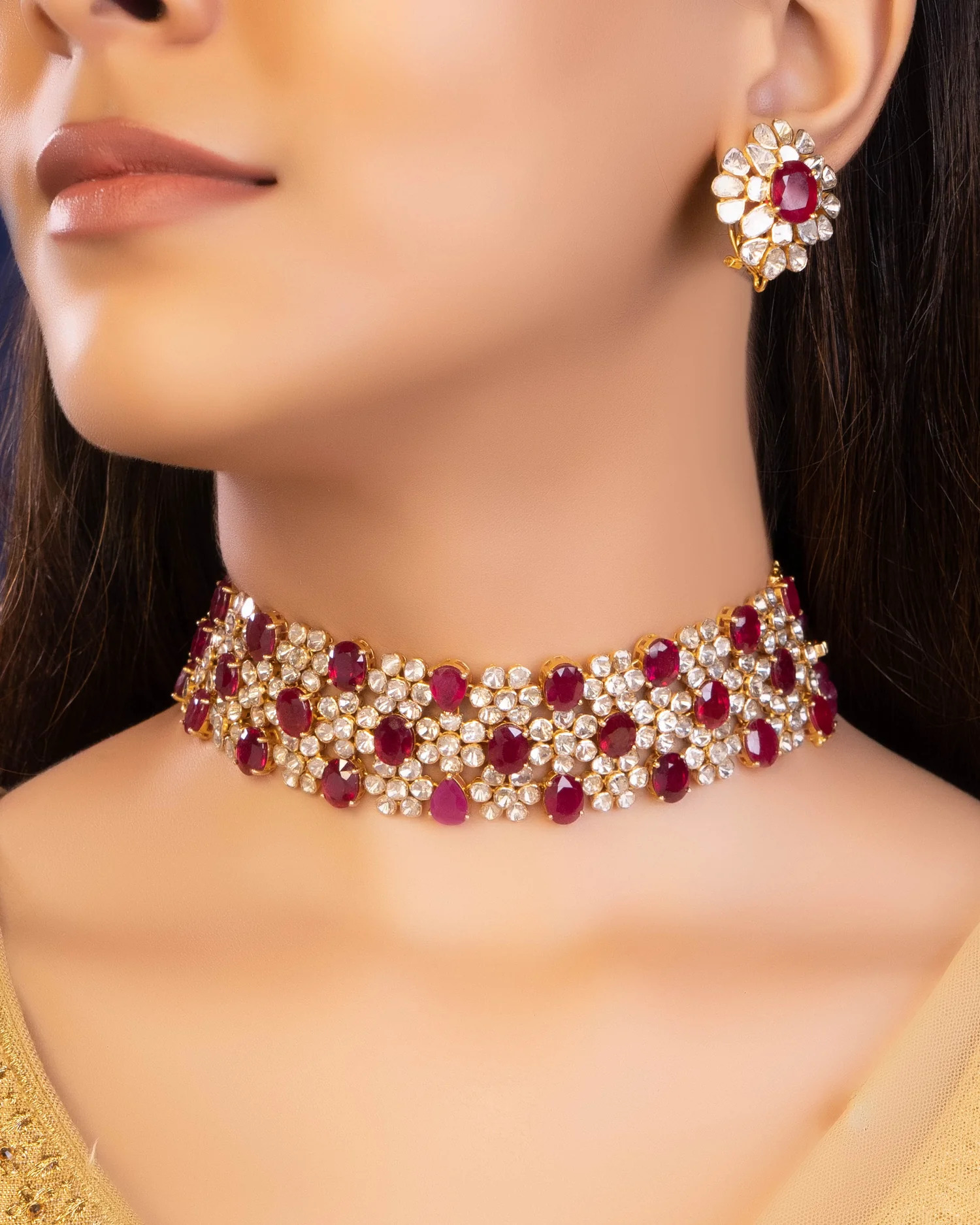
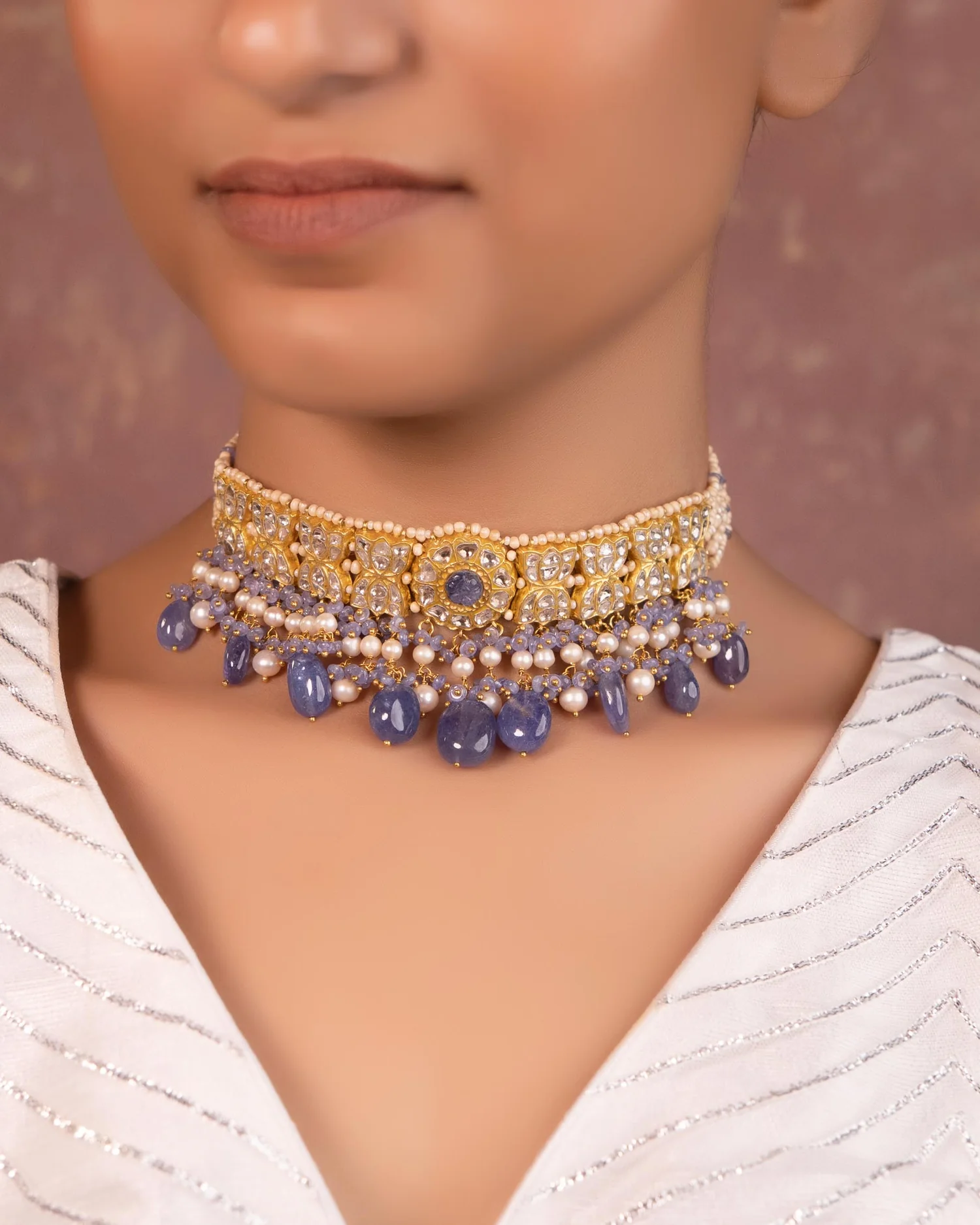
There is something undeniably royal about a bridal choker. Sitting close to the neck, it immediately draws attention towards the face and creates a beautifully framed neckline.
A Polki choker can be especially striking because the natural character of uncut diamonds combines with intricate gold craftsmanship to create a rich, heritage-inspired appearance. Add emeralds, rubies, or pearls, and the effect becomes even more distinctive.
A choker works particularly well when you want your jewellery to feel like an integral part of your bridal silhouette rather than simply an accessory added at the end. It can beautifully complement a heavily embroidered lehenga, especially when the neckline allows the jewellery to sit visibly against the skin.
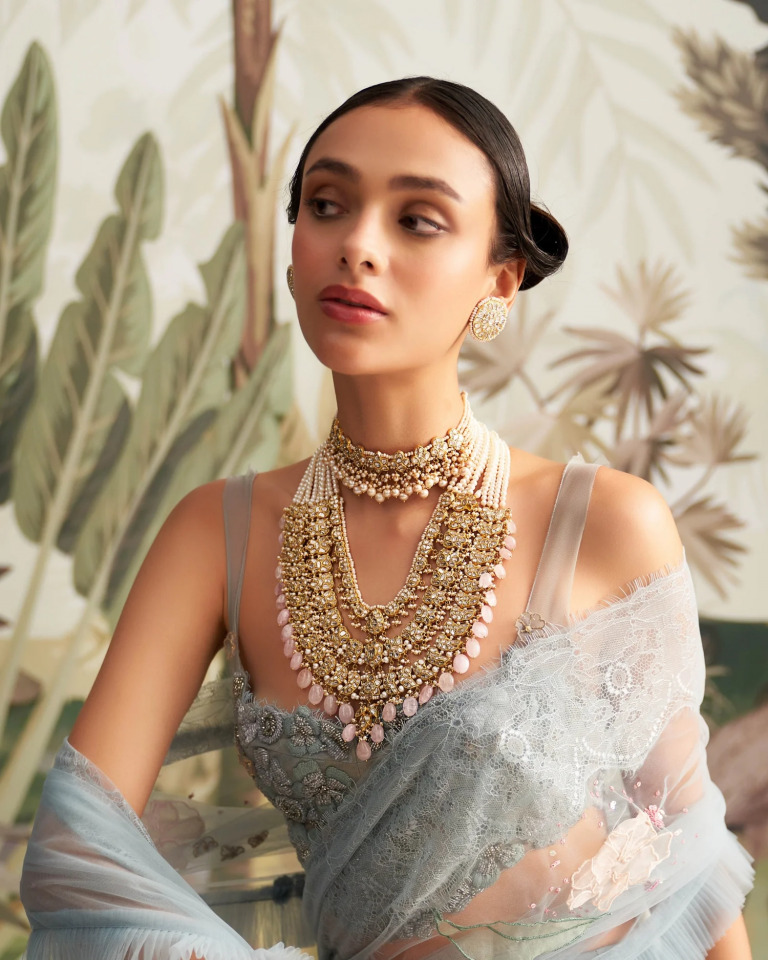
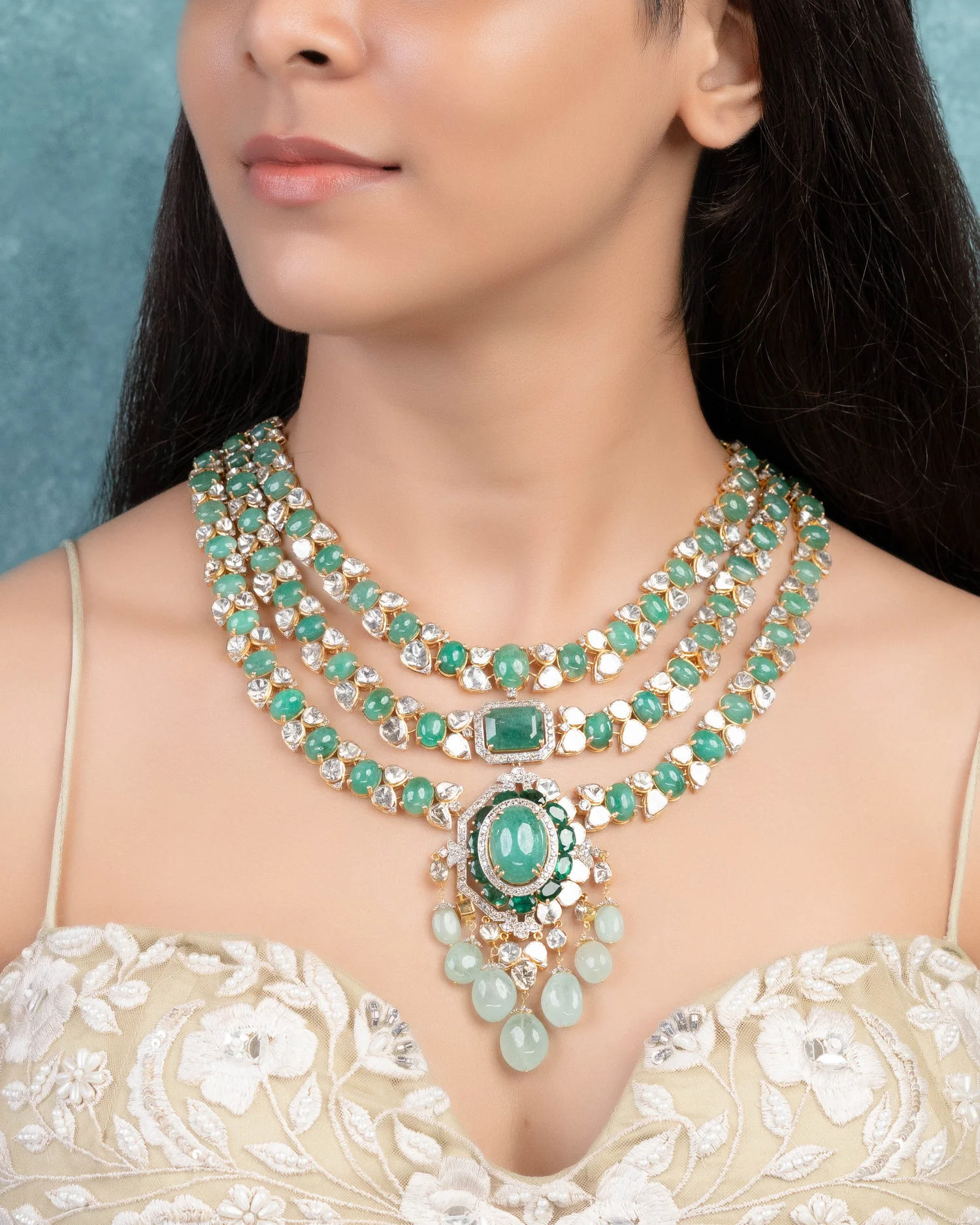
If a choker creates drama around the face, a long necklace creates drama through movement and length.
Long necklaces, layered necklaces, and Rani Haars naturally draw the eye downward, making them particularly beautiful with bridal outfits that have an open or elongated neckline. As the necklace falls over the lehenga or saree, it becomes part of the outfit rather than simply sitting around the neck.
There is also something incredibly graceful about the way a long necklace moves. When you walk towards the mandap, sit for the ceremony, or turn for photographs, the necklace creates another layer of visual movement.
A long Polki necklace can feel majestic with a traditional lehenga, while a longer pearl or gemstone necklace can bring softness and colour to the bridal ensemble. You can also layer different lengths to create depth, allowing each necklace to contribute something different to the final look.
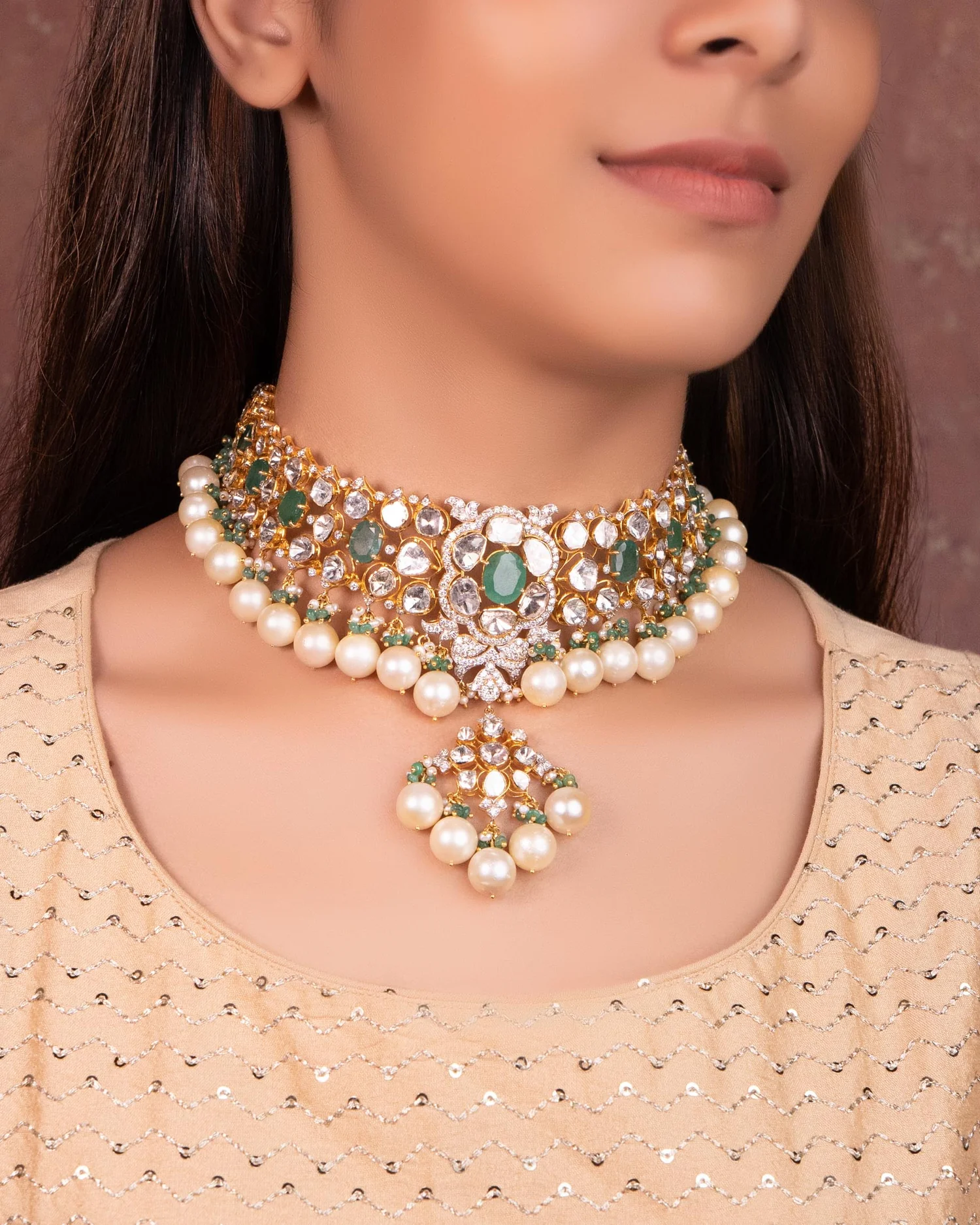
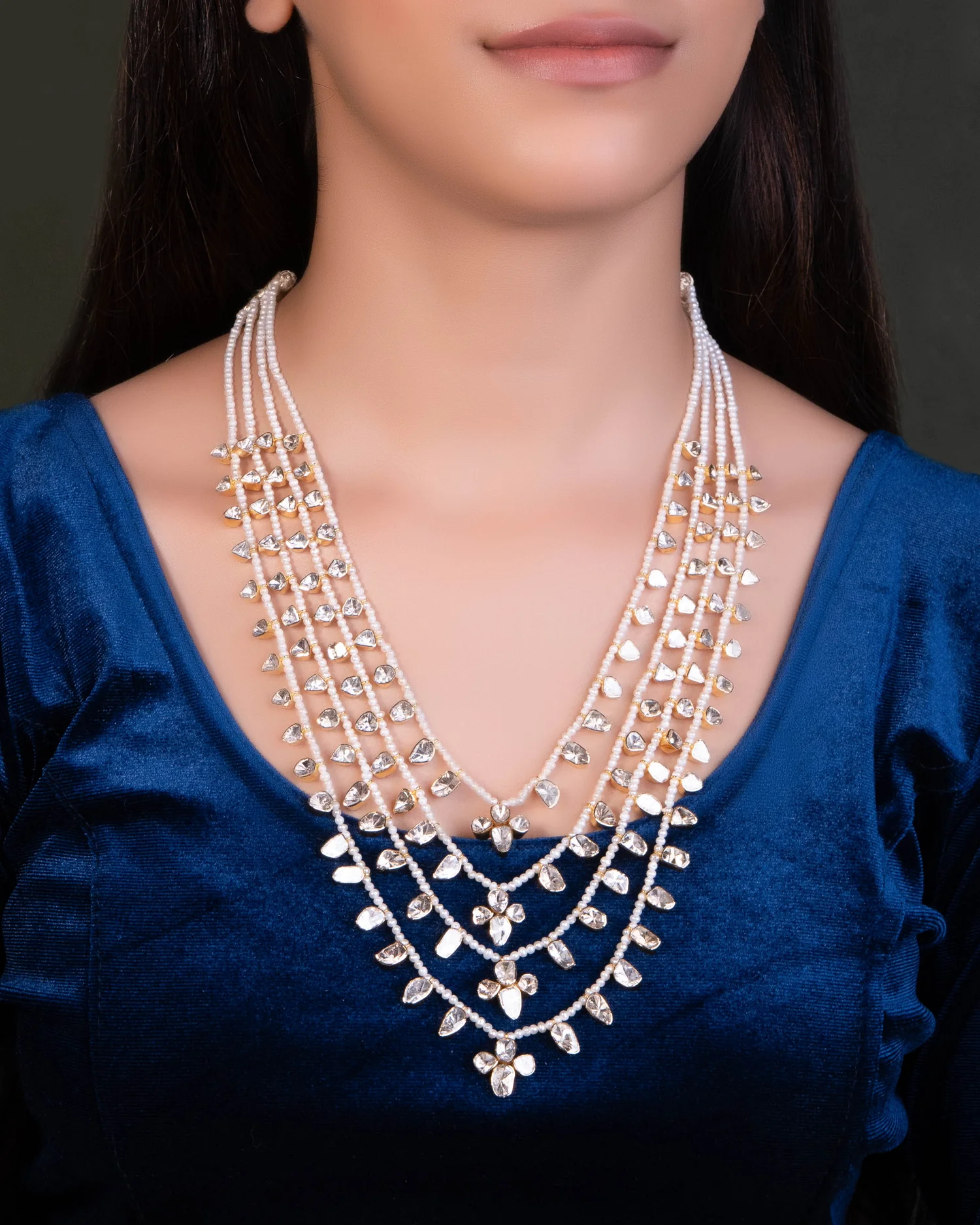
A deep V-neck blouse can work beautifully with a long necklace or a pendant-style necklace because the jewellery follows the natural vertical line of the neckline. A shorter choker can also work, but the proportions need to be considered carefully so that the jewellery does not visually compete with the V shape.
A sweetheart neckline offers plenty of room for a bridal choker. The curved shape of the blouse can complement the rounded silhouette of a close-set necklace, creating a cohesive frame around the décolletage.
With a high or closed neckline, a long necklace can sometimes provide more visual length and prevent the upper half of the outfit from feeling too crowded. Alternatively, you can skip the necklace altogether and let your earrings and maang tikka become the focus.
For a traditional round neckline, both options can work beautifully. A choker creates a compact, regal look, while a longer necklace introduces more vertical movement.
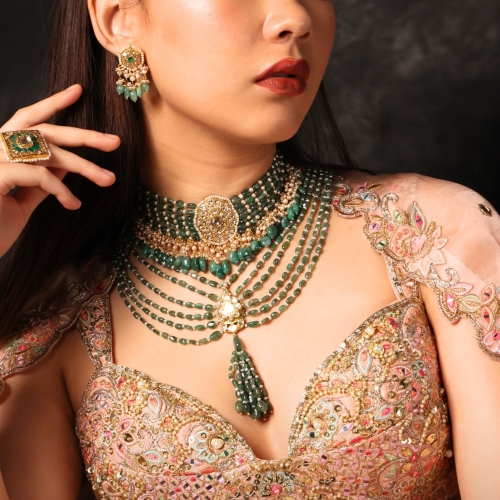
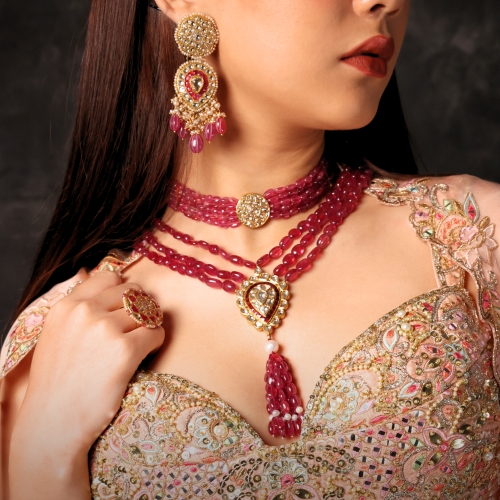
If your bridal style is royal and traditional, a statement Polki choker can immediately create that effect. Layer it with matching earrings and a maang tikka, and the jewellery feels rich without needing an excessive number of pieces.
If your style is soft and romantic, you might prefer a delicate choker, perhaps with pearls or subtle gemstones, combined with refined earrings. This creates bridal luxury without overwhelming your outfit.
If you love a grand, traditional bridal aesthetic, a long necklace or Rani Haar can bring the drama you are looking for. Layering different necklace lengths can create the sense of a traditional heirloom jewellery set while still allowing each piece to have its own identity.
And if you prefer a modern bridal look, consider breaking away from the idea that everything needs to match. A contemporary Polki choker with a delicate diamond necklace, or a statement long necklace with minimal earrings, can create a more fashion-forward interpretation of bridal jewellery.
For a haldi or intimate daytime celebration, a delicate choker can add polish without feeling too formal. You could also choose a lightweight long necklace if your outfit is simple and you want the jewellery to introduce colour and texture.
For a mehendi, playful earrings and a lighter necklace can work beautifully. A contemporary Polki choker can add a touch of heritage while remaining comfortable enough for a function filled with movement and photographs.
For the sangeet, this is your opportunity to embrace a more glamorous look. A statement choker with dramatic earrings can create a strong fashion moment, particularly when paired with a sleek lehenga.
For the wedding ceremony, this is where a layered choker and long necklace combination can become especially beautiful. A Polki choker paired with a longer necklace or Rani Haar creates depth and gives the bridal jewellery a traditional, ceremonial quality.
For the reception, you can completely change direction. If your wedding look was rich and traditional, consider a more refined diamond necklace or a contemporary long necklace with a modern gown or saree.
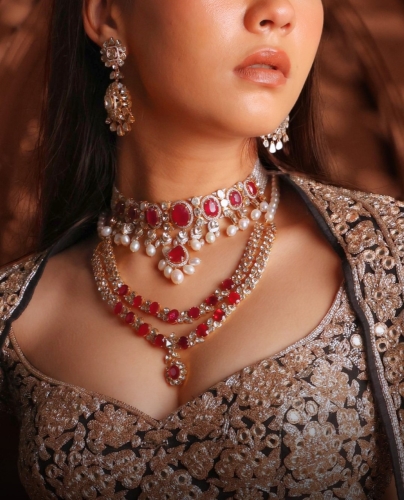
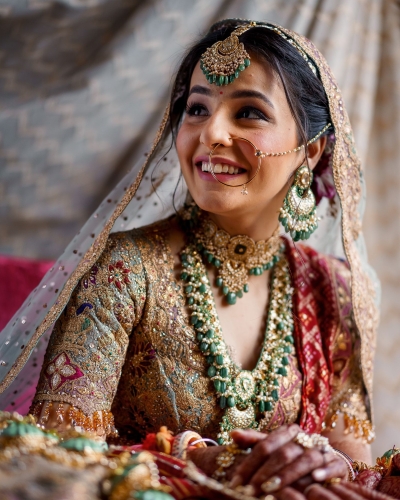
The secret is creating visual hierarchy. Your choker can establish the main frame around the face, while the longer necklace creates length and movement below it. When the two pieces complement each other without being completely identical, the result can feel much more sophisticated.
A Polki choker paired with a longer Polki necklace can create a traditional bridal effect. For a more contemporary interpretation, you could combine a detailed choker with a simpler long necklace or introduce pearls to soften the overall look.
Pay attention to the space between the necklaces. If both pieces sit at almost exactly the same length, they can visually merge into one heavy layer. Different lengths create separation and allow each design to be appreciated.
Your earrings also matter. When the necklace combination is elaborate, you may want to choose earrings that complement rather than compete with the layers.
So, choker or long necklace?
Perhaps the better question is: what do you want your bridal jewellery to say?
A choker brings the jewellery close to the face, creating a regal and immediate statement. A long necklace brings movement, length and grandeur to the silhouette. Wearing both can create the layered richness associated with traditional bridal jewellery, while choosing just one can create a more focused and contemporary statement.
There is no single formula for the perfect bridal necklace. Your wedding jewellery should feel connected to your outfit, your personal style and the emotions of the occasion.
Both can create a beautiful bridal look, but they create different effects. A choker sits close to the neck and draws attention towards the face, creating a regal and compact silhouette.
A Polki choker is one of the most natural choices for a traditional Indian bridal look, especially when paired with a lehenga or saree that has rich embroidery.
Chokers work particularly well with bridal lehengas and sarees that have a defined neckline, allowing the jewellery to sit beautifully against the skin. They are especially striking with sweetheart, square, scoop, and moderately deep necklines.
Long necklaces and Rani Haars are especially beautiful with outfits where you want to create length and movement. They pair naturally with bridal lehengas, sarees, and blouses with deeper or more open necklines.
A long necklace is often an excellent choice for a deep V-neck because its shape naturally follows the vertical line created by the neckline. A pendant-style necklace or long Polki necklace can emphasise the V without visually fighting against it.
A traditional choker can sometimes feel visually crowded against a high-neck blouse, particularly when the blouse itself is heavily embroidered. Instead, consider a longer necklace that falls below the neckline and creates separation between the fabric and jewellery.
Both can look exceptionally regal, but they create different kinds of drama. A choker gives a bride a structured, close-to-the-neck statement that feels especially luxurious and traditional, while a long necklace or Rani Haar creates movement, length, and a more elaborate sense of grandeur.
The best earrings depend on how elaborate your choker is. With a heavily detailed Polki choker, consider elegant jhumkas, chandbalis, or statement drops that complement its motifs without competing for attention.