


Chat for Best Price
Unlock exclusive offers & much more
When buying a diamond - whether for a statement ring, a bridal choker, or a timeless pair of earrings - one question always lingers: What truly matters more - clarity or colour?
Both shape how a diamond looks and feels. One defines its purity, the other defines its tone. But here’s the secret: the “perfect” diamond isn’t the most flawless one - it’s the one that looks radiant to your eyes and your heart.
At Tyaani, where craftsmanship meets emotion, we believe understanding the balance between clarity and colour helps you find a diamond that doesn’t just sparkle - it speaks to your individuality. Let’s explore this delicate dance between purity and hue, and help you choose the diamond that feels just right.
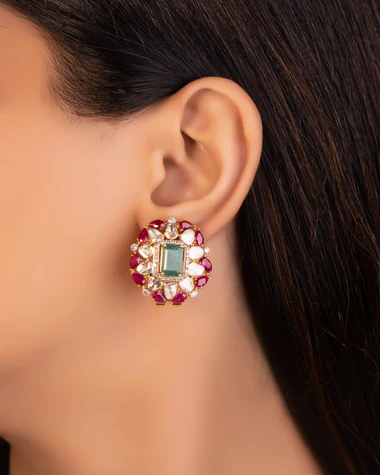
Colour in a diamond refers to the natural tint present in the stone - usually shades of white, yellow, or brown. The less colour a diamond has, the higher its grade on the GIA colour scale, which ranges from D (colourless) to Z (light yellow/brown).
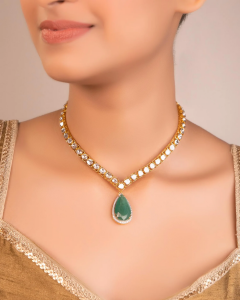
Clarity measures how free a diamond is from natural inclusions (tiny internal marks) or blemishes (surface imperfections). These are nature’s birthmarks - unique to every diamond.
While clarity doesn’t drastically affect sparkle unless inclusions are large or central, it does influence transparency - how pure and “clean” the diamond appears.
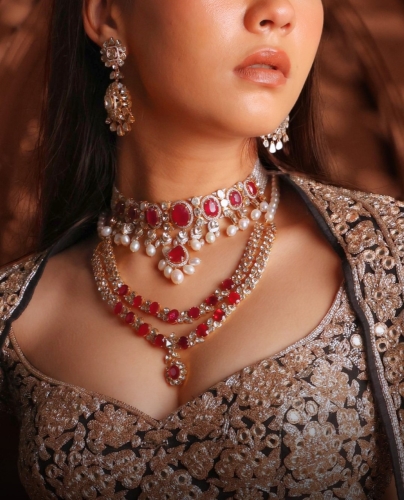
Colour and clarity don’t exist in isolation - they interact. A diamond’s overall beauty depends on how both complement each other.
In essence, beauty isn’t just scientific - it’s perceptual. The right mix of colour, clarity, cut, and setting defines how the diamond feels on you.
If you’re sensitive to how a diamond “looks” in different lighting or love crisp white brilliance, colour may matter more.
When to Prioritize Colour
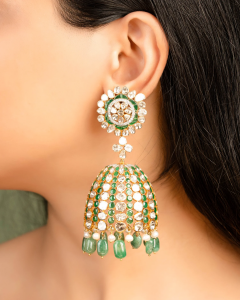
If you love diamonds with depth, transparency, and fire, clarity takes center stage.
When to Prioritize Clarity
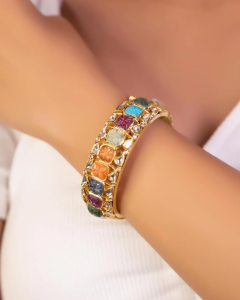
Your jewellery’s setting can dramatically change how both colour and clarity appear.
Similarly, closed settings (as in Polki jewellery) emphasize inner glow over transparency, while open settings enhance sparkle and clarity.
When it comes to diamonds, there’s no single “rule.” It’s not about choosing between clarity or colour - it’s about finding balance and emotion. At Tyaani, we don’t just curate stones; we curate feelings. Whether it’s the raw glow of Polki, the radiance of a near-colourless diamond, or the brilliance of a VVS solitaire - each is chosen for its ability to make you feel luminous.
Neither is universally more important; it depends on your preference and setting. For icy brilliance, prioritize colour. For purity and transparency, choose clarity.
For engagement rings, colour is often more noticeable than clarity, especially in white
metals. However, a balance - like a G–H colour with VS clarity - offers exceptional beauty and value.
Not directly. Sparkle depends more on the cut, but slight tints can influence how the light reflects. Colourless diamonds tend to appear brighter in cooler-toned metals.
VS2 or SI1 clarity diamonds appear flawless without magnification, offering strong value without compromising beauty.
Yes. Yellow and rose gold settings naturally warm the diamond, making slight tints (G–J) appear whiter and softer
A G VS2 diamond strikes the perfect balance - near-colourless, eye-clean, and radiant - making it one of Tyaani’s preferred choices.
No. Polkis are uncut, natural diamonds that don’t undergo standardized grading. Their inclusions and irregularities are part of their charm and authenticity.
Larger diamonds reveal imperfections more easily. Ideally, opt for higher clarity (VS or better) while maintaining a balanced colour grade (F–H).
Store lights often use focused LEDs to enhance sparkle, while natural daylight reveals true colour and clarity. Always view diamonds under neutral lighting before purchasing.
2026 celebrates individuality - champagne, blush, and warm white diamonds are trending for their natural, personality-driven charm, perfectly reflected in Tyaani’s heritage-modern creations.