


Chat for Best Price
Unlock exclusive offers & much more
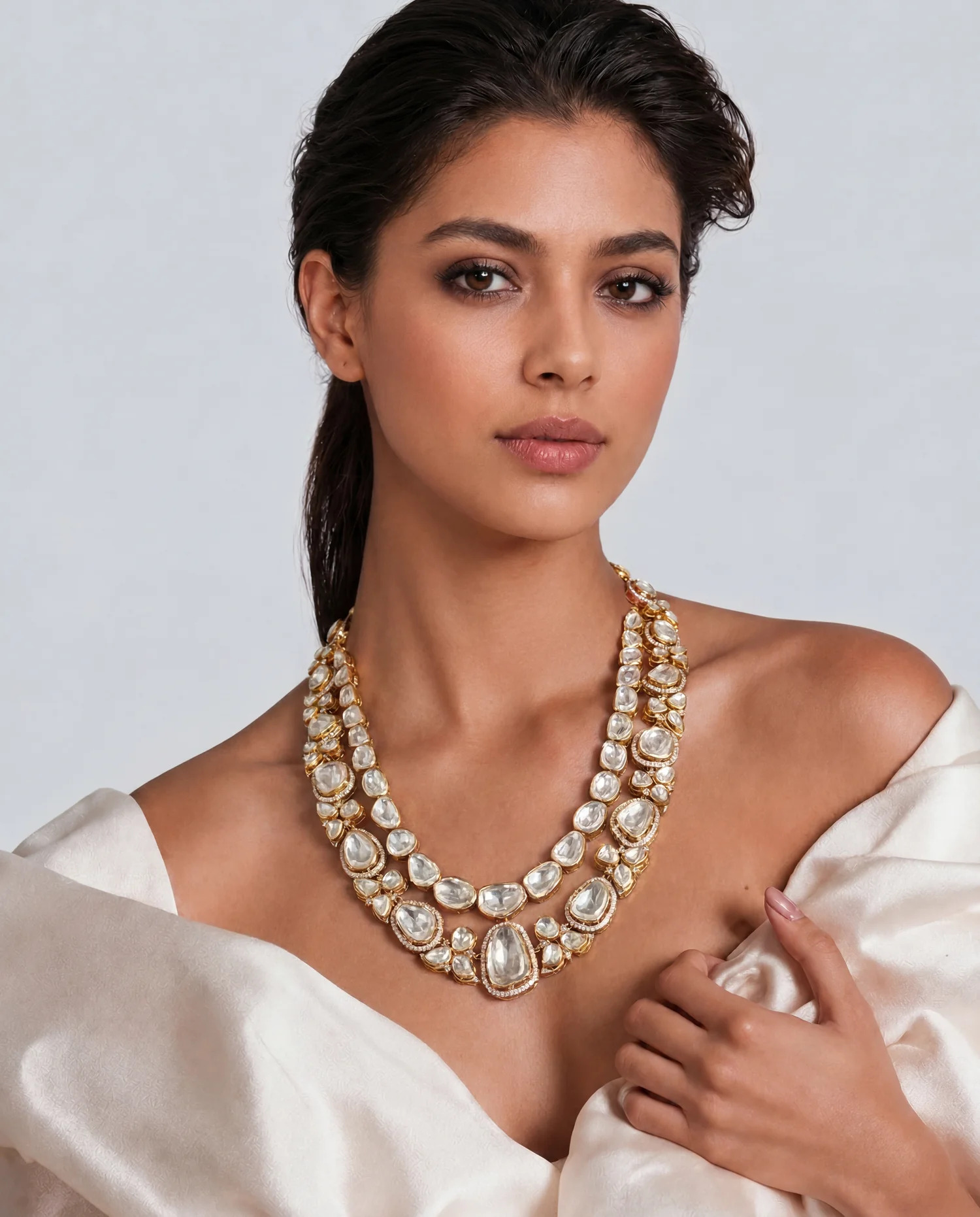
Polki jewellery has a beauty that does not always reveal itself through sparkle alone. Look closely, and you begin to notice the individuality of the stones, the richness of the gold, the intricacy of the setting, and the craftsmanship that brings everything together. But because Polki has become increasingly popular, knowing what you are actually buying matters just as much as falling in love with the design.
For someone shopping for a Polki ring, necklace, pair of earrings, or bridal set, the word “Polki” on a product page is not enough. Traditional Polki is associated with uncut or minimally processed diamonds, but terminology can vary across jewellers, and contemporary designs can use different combinations of stones and materials. Understanding the jewellery before you purchase it allows you to appreciate its beauty with greater confidence.
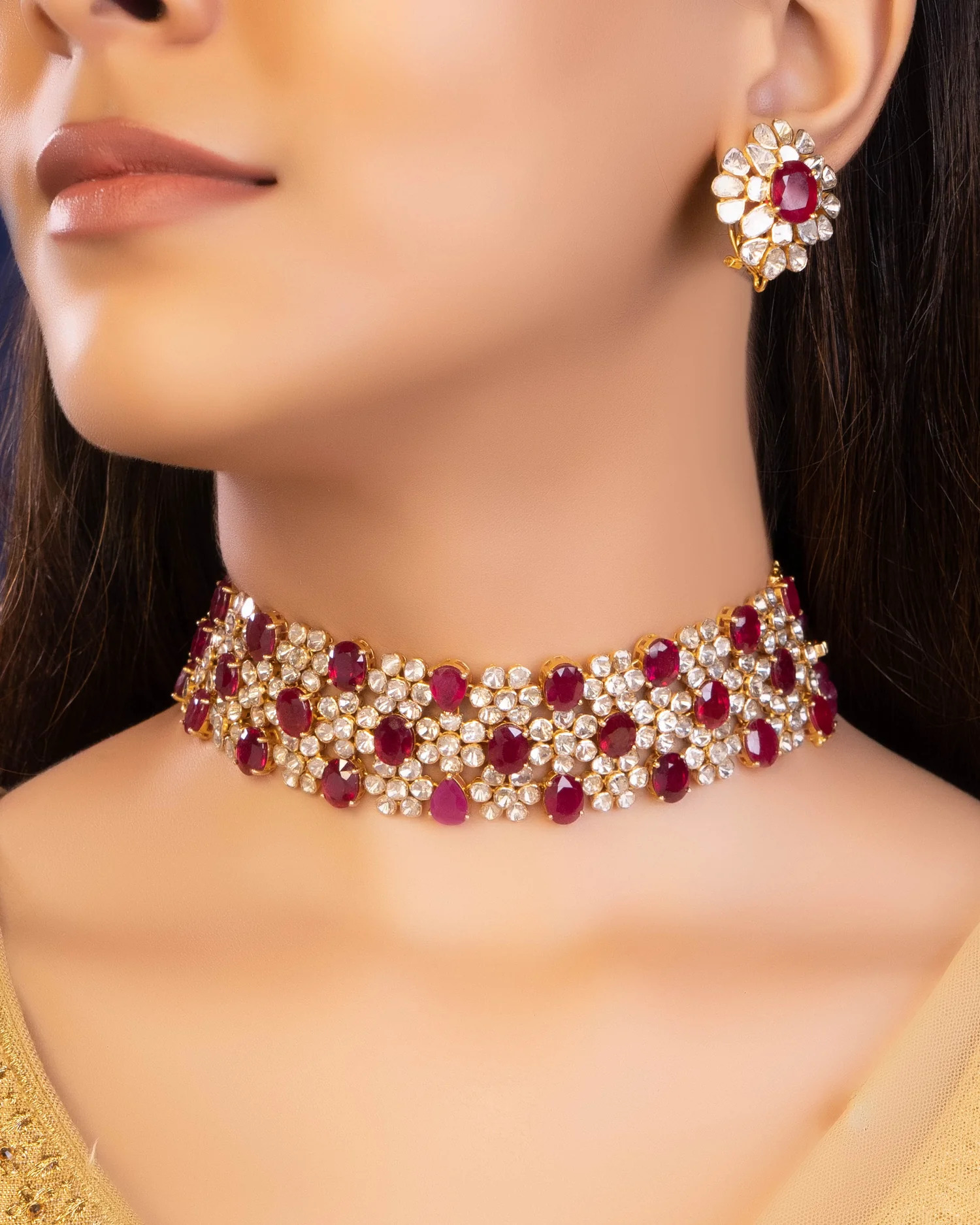
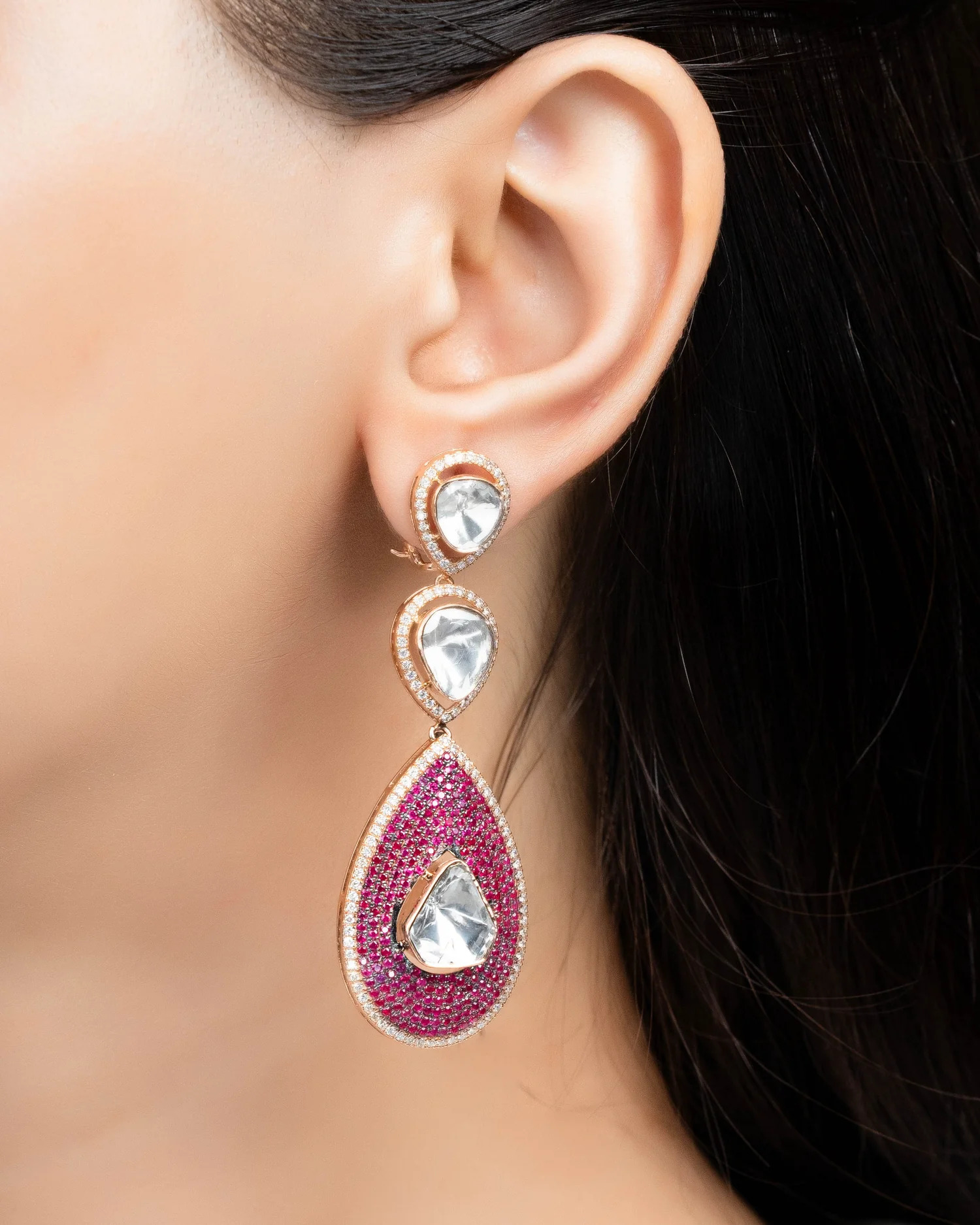
The first thing to understand is that genuine Polki and imitation Polki are not necessarily distinguished by how elaborate or beautiful the jewellery looks. Imitation pieces can be designed to closely resemble the visual language of Polki, using materials that mimic the appearance of diamonds, gold, and traditional settings.
Real Polki is associated with natural diamonds that are uncut or minimally processed, allowing more of their original character to remain visible. These diamonds can have variations in shape and appearance, and their interaction with light is generally different from that of highly faceted brilliant-cut diamonds.
Imitation Polki, on the other hand, may use artificial or simulated stones and alternative metals or finishes to recreate the look of traditional Polki jewellery. The piece may still be attractive, but its material composition, craftsmanship, and value can be very different.
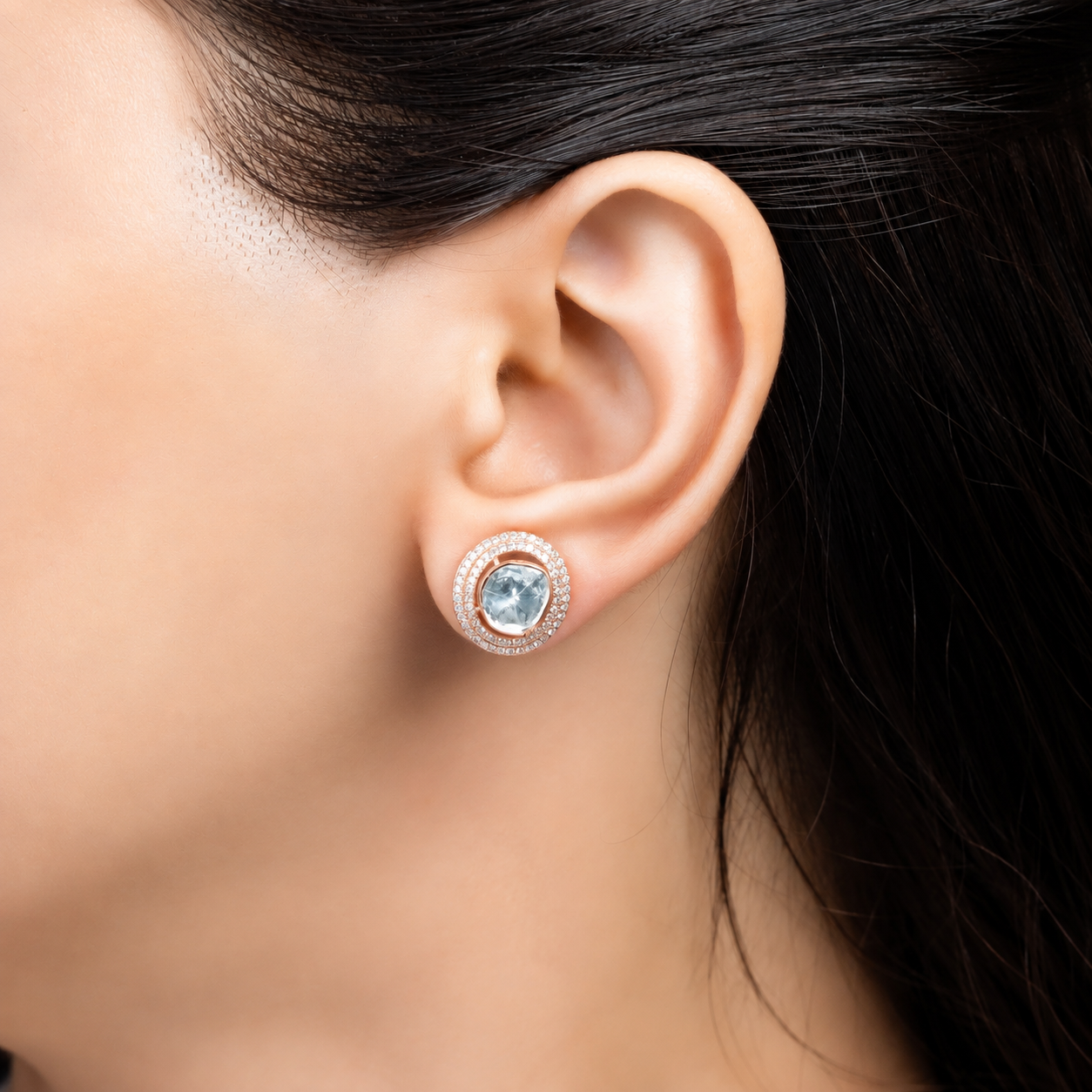
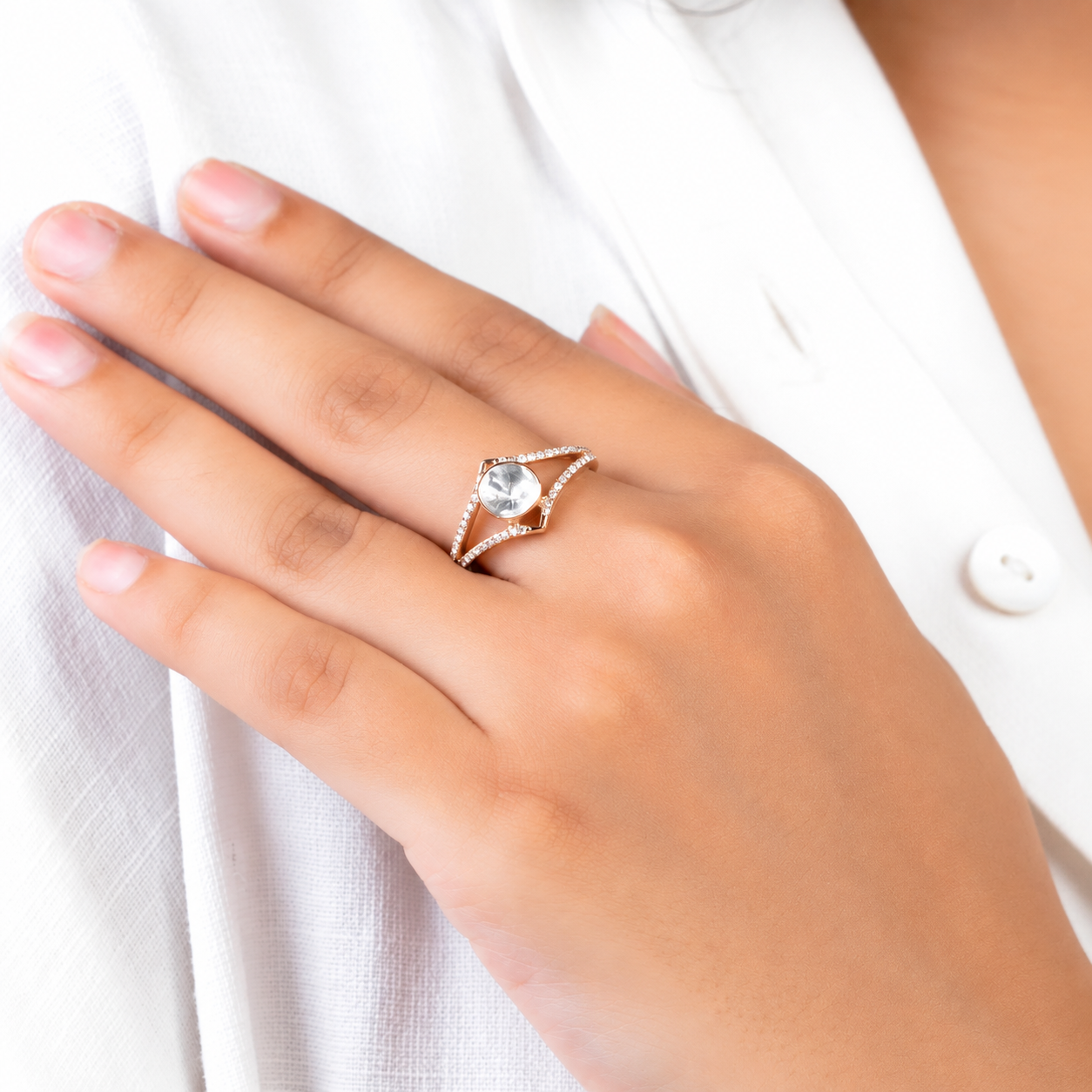
Before looking at the design, understand what is actually inside it. Traditionally, Polki is associated with natural, uncut diamonds. However, contemporary jewellery terminology can vary, so it is important not to assume that every piece labelled “Polki” contains exactly the same type of diamond.
Ask the jeweller directly whether the stones are natural diamonds, uncut diamonds, or diamond simulants. If the jewellery combines different types of stones, ask which stones are used in which parts of the design.
One common misconception is that genuine Polki should sparkle exactly like a conventional diamond. That is not necessarily the case.
A real Polki diamond has a different visual character from a precisely faceted brilliant-cut diamond. Because it retains more of its natural form, its interaction with light can appear softer, warmer, and less uniformly brilliant. Instead of one intense flash, you may notice subtle variations across the stones.
Polki is as much about craftsmanship as it is about the stones. When you look at a genuine, well-crafted piece, pay attention to how the diamonds sit within their settings, how the gold frames the stones, and how the overall design has been finished.
Look closely at the details rather than judging the jewellery from a distance. Intricate borders, balanced stone placement, and carefully finished goldwork can contribute significantly to the character of a Polki piece.
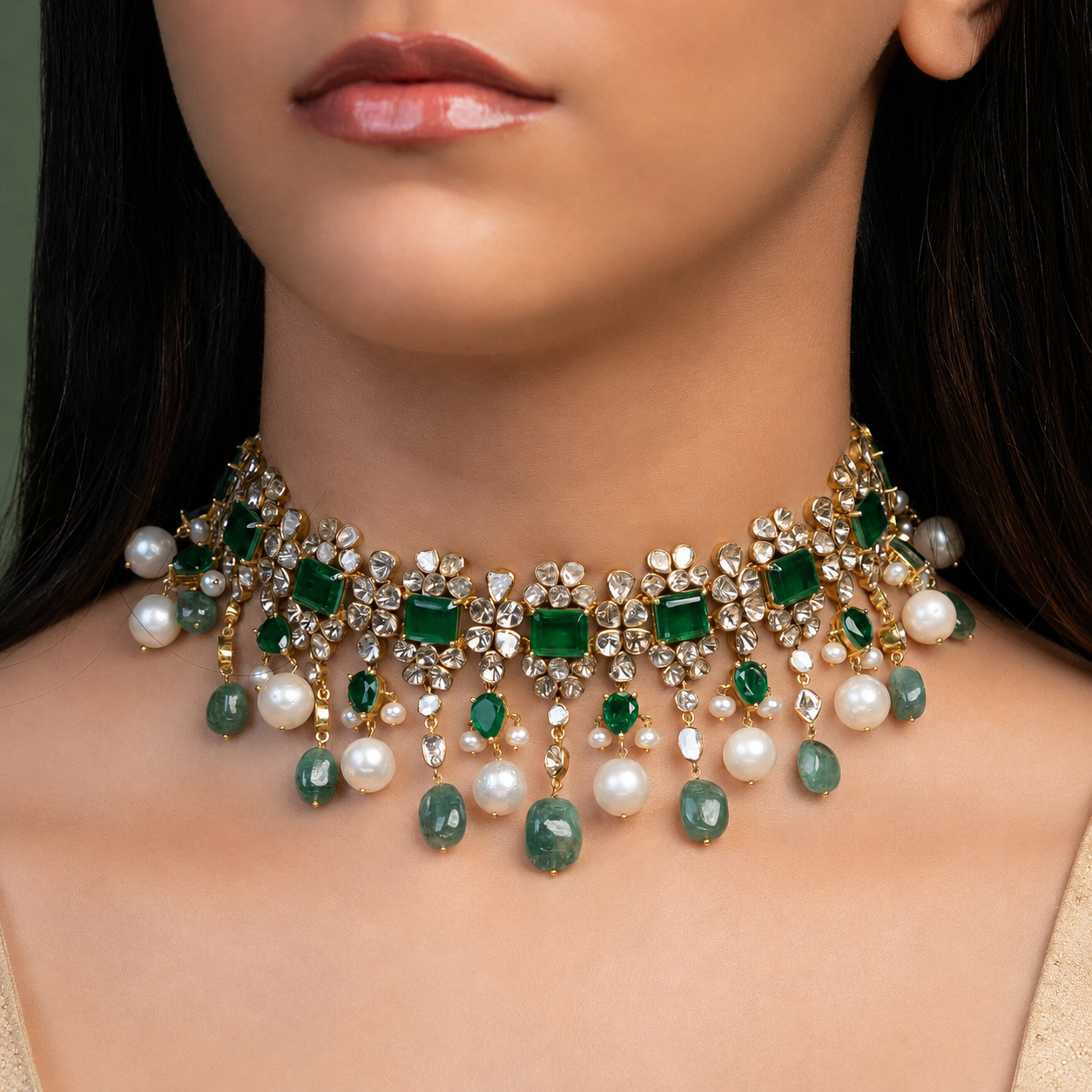
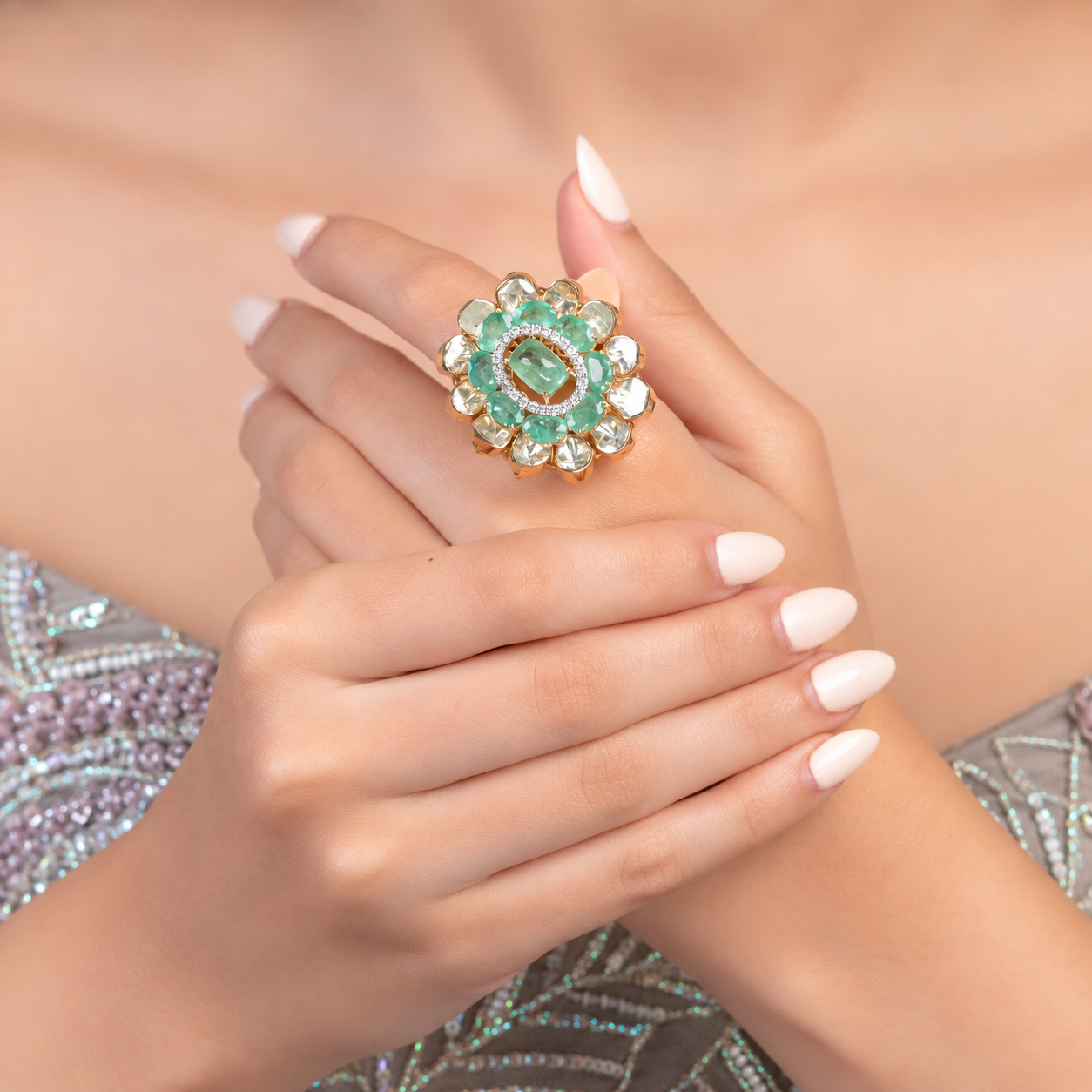
The metal is an important part of any fine jewellery purchase. When buying Polki, ask what metal has been used, what its purity is, and what documentation accompanies the piece.
In India, buyers may encounter Polki jewellery crafted in different gold purities, including 18K and 22K, depending on the design and jewellery house. There is no universal rule that every Polki piece must use one particular gold purity, so the important thing is to understand the specifications of the individual piece.
A reputable jewellery experience should make it easy for you to understand what you are purchasing. Do not hesitate to ask questions about the diamonds, gemstones, gold purity, treatments, and construction of the piece.
This is especially relevant because the term “Polki” can be used broadly in the marketplace. A knowledgeable jeweller should be able to explain what makes the particular piece Polki, what stones it contains, and how the design has been crafted.
Documentation can help establish what you are purchasing and provide important information about the jewellery. Depending on the piece and jeweller, this may include details about the diamonds, gemstones, gold purity, and other relevant specifications.
Do not assume that every Polki piece will have exactly the same type of certificate. Documentation requirements can vary depending on the jewellery and the materials involved. What matters is that the jeweller clearly communicates the relevant details and provides appropriate documentation for the purchase.
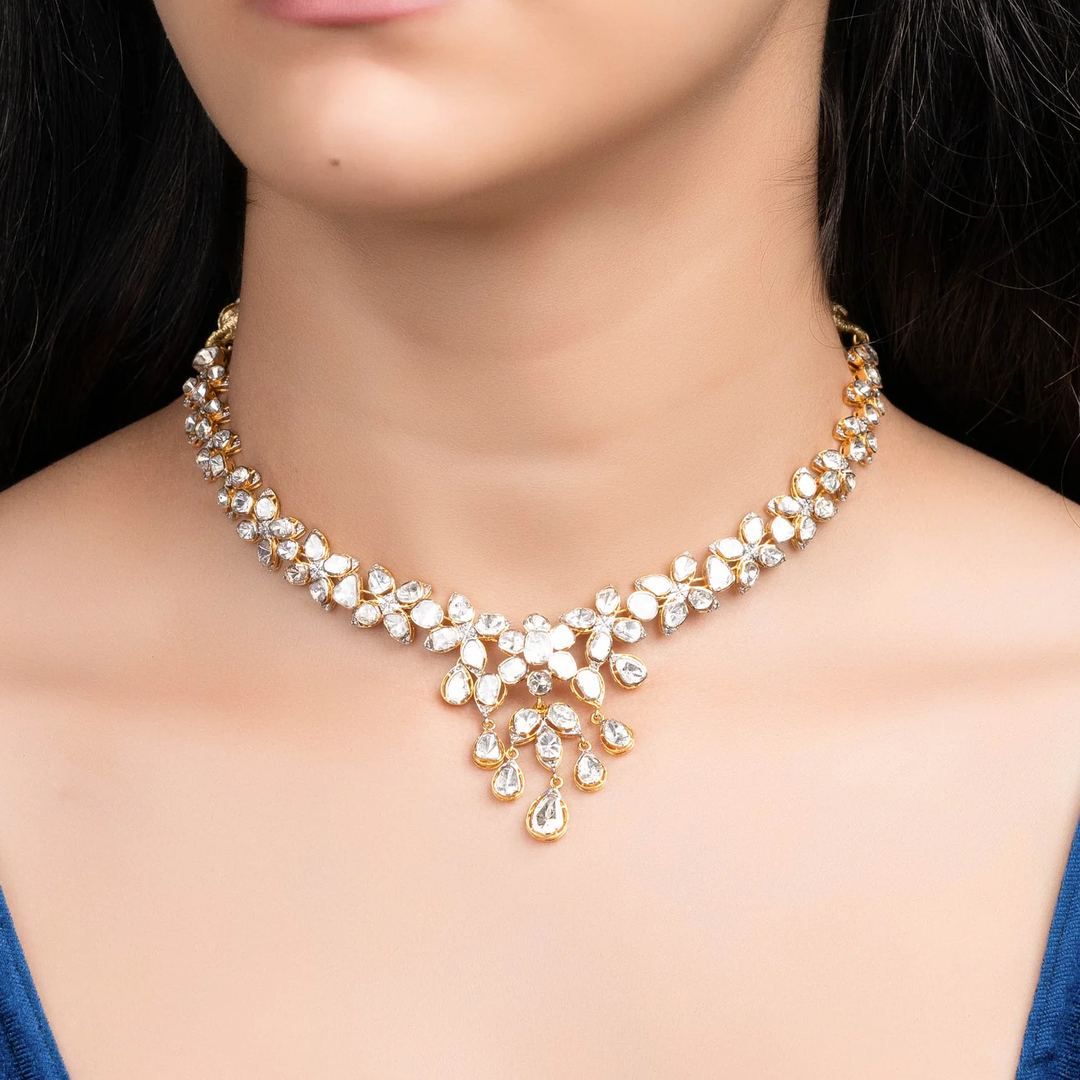
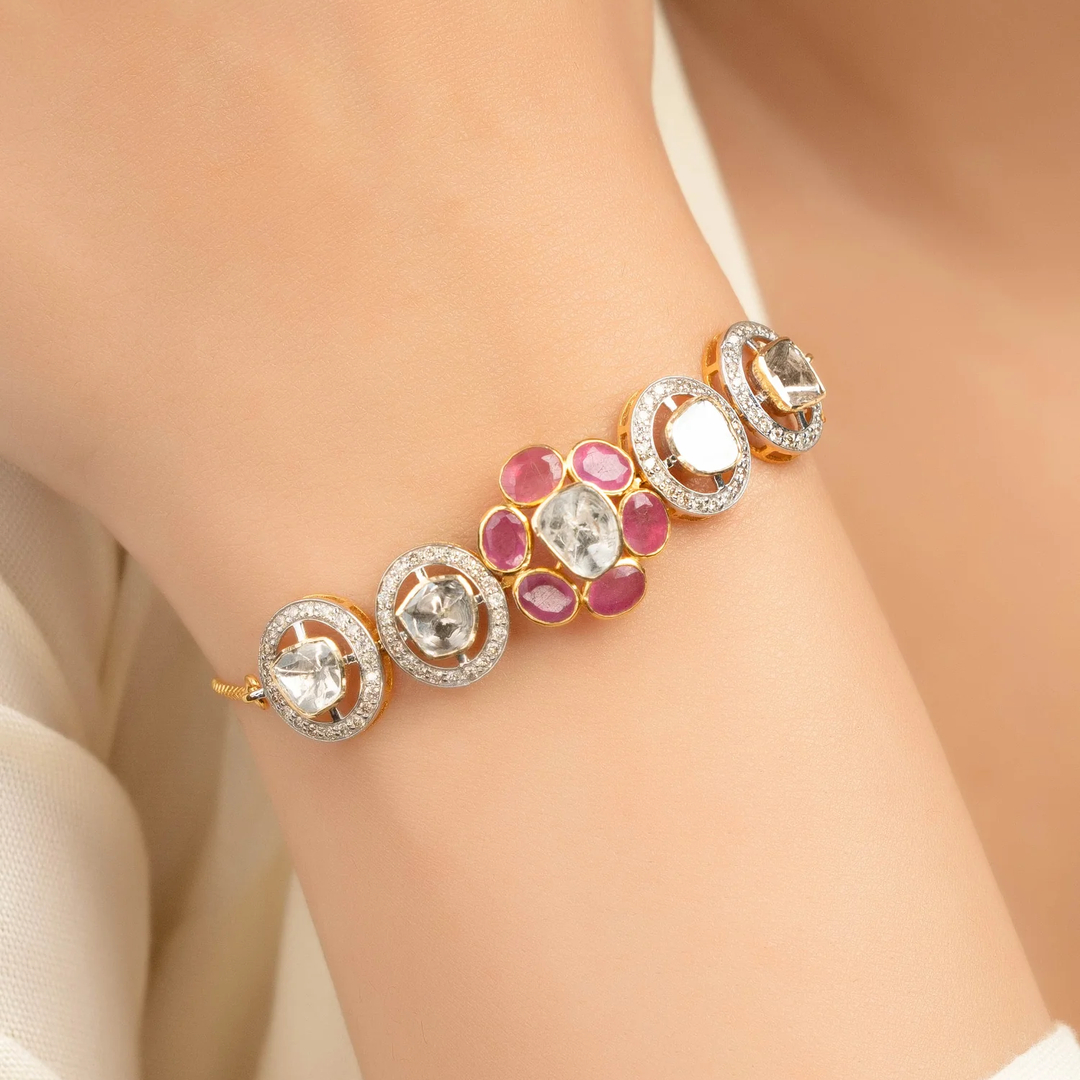
Perhaps the simplest way to reduce uncertainty is to consider the reputation and transparency of the jeweller. A beautiful product photograph cannot tell you everything about the diamond, metal, or craftsmanship behind a piece.
Look for a jewellery house that clearly describes its materials, provides relevant purchase documentation, and is willing to answer questions about its products. Transparent communication is particularly important when purchasing high-value jewellery online, where you cannot physically examine the piece before making a decision.
For a heritage-inspired jewellery style such as Polki, the relationship with the jeweller can be part of the experience itself.
You can learn to recognise certain visual characteristics associated with Polki, but appearance alone cannot reliably prove that a piece is genuine.
The natural variations of Polki diamonds can provide clues. You may notice differences in shape, surface, and light reflection that distinguish them from highly symmetrical, faceted diamonds. The surrounding goldwork and traditional setting can also contribute to the recognisable Polki aesthetic.
However, imitation stones can be manufactured to resemble many of these visual qualities. Conversely, genuine Polki jewellery can vary considerably in appearance depending on the stones, design and craftsmanship.
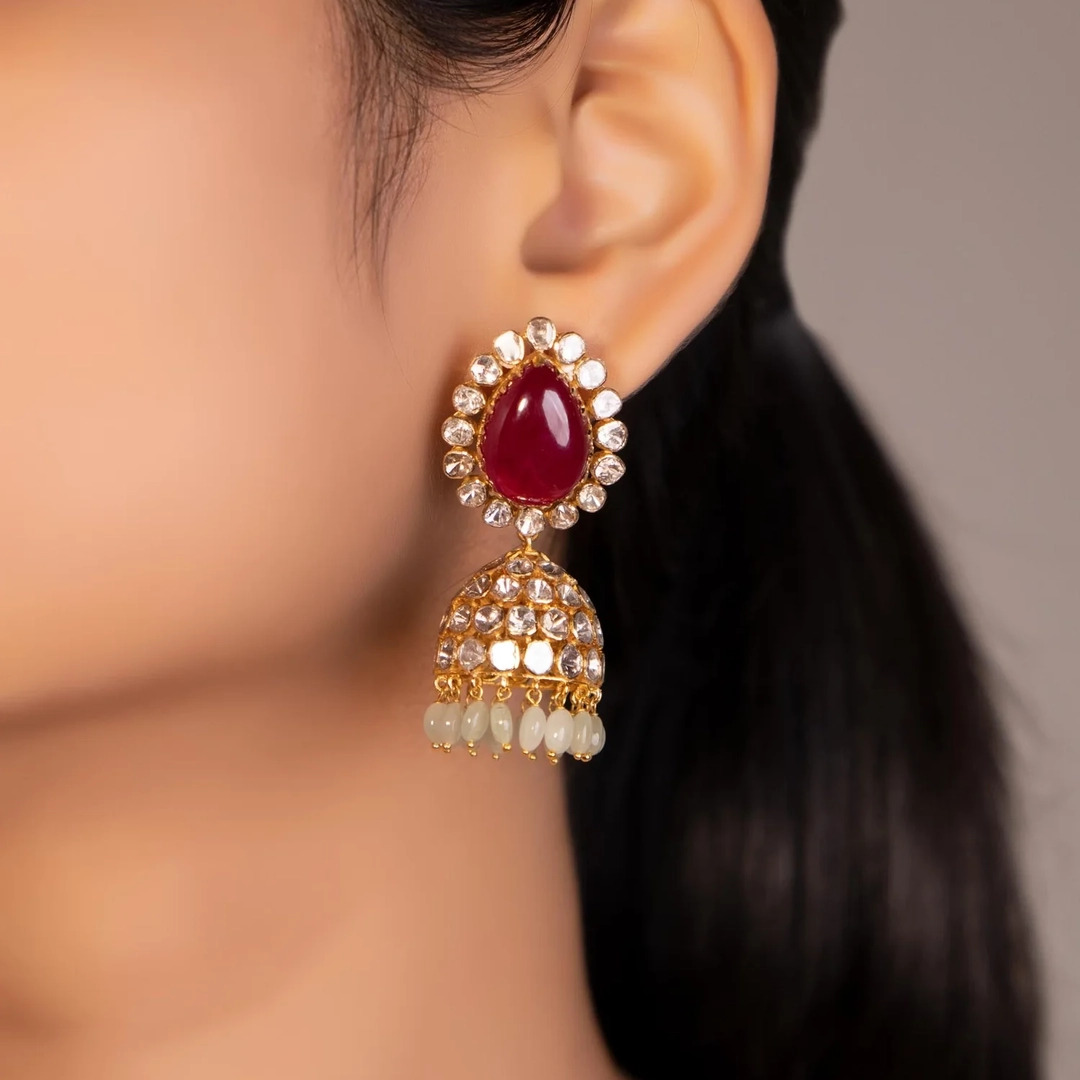
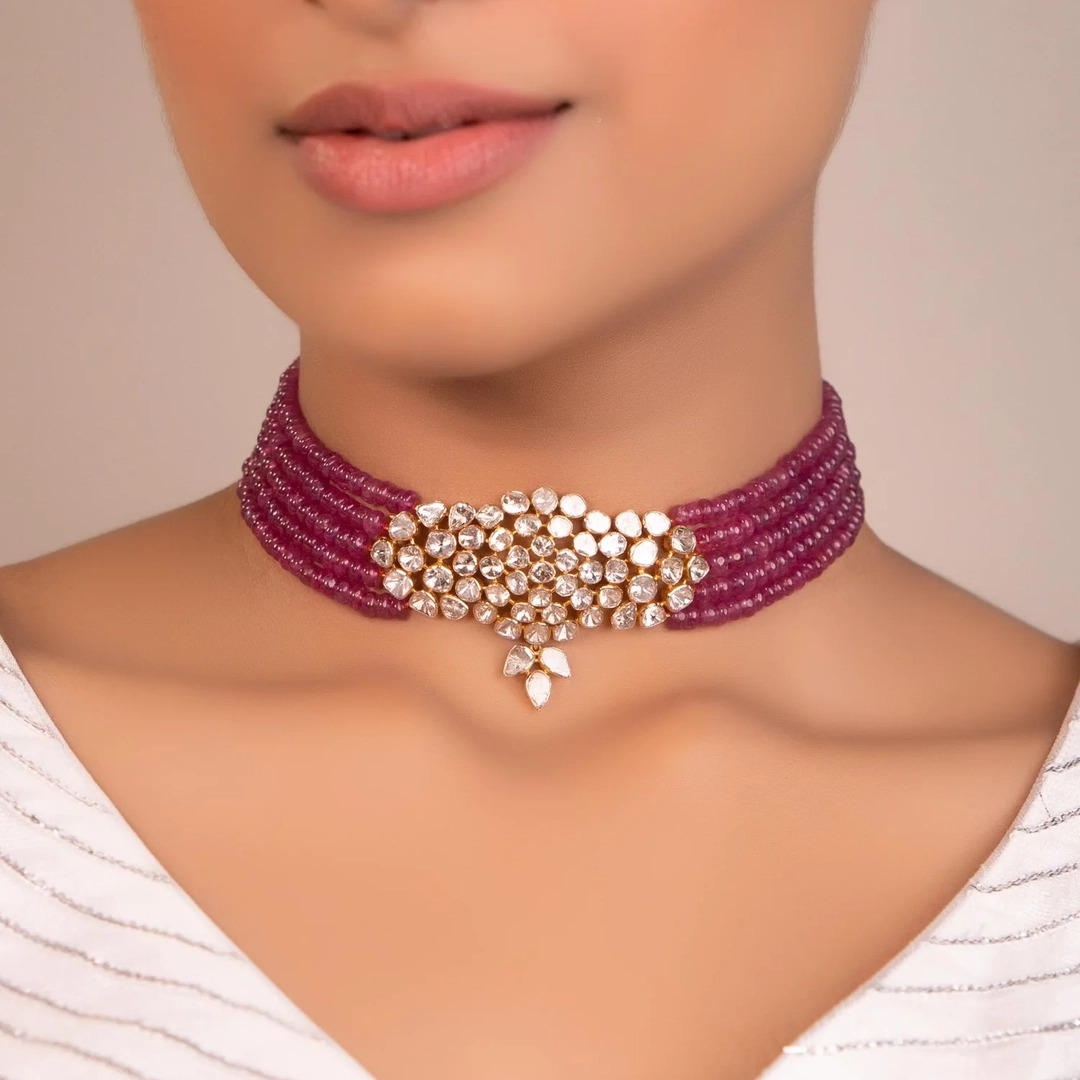
Buying Polki should begin with curiosity rather than simply searching for the piece that looks the most impressive. Start by understanding what kind of Polki you want and how you imagine wearing it. A heavily detailed necklace may be perfect for bridal celebrations, while a refined ring or pair of earrings can become part of a much more versatile jewellery wardrobe.
Once you find a design you love, look beyond the photograph or first impression. Read the product information carefully and understand the diamonds, gemstones, metal, and craftsmanship involved. Ask questions wherever the description is unclear, particularly if the piece represents a significant investment.
It is also worth considering the design's longevity. Polki has a natural connection to traditional Indian jewellery, but that does not mean your piece needs to be reserved for traditional occasions. A beautifully proportioned ring can look striking with a saree today and a tailored dress years later.
Identifying genuine Polki jewellery is not about memorising one visual trick or searching for a single sign of authenticity. It is about understanding the diamonds, gold, craftsmanship, documentation, and jeweller behind the piece.
Once you understand these details, you can appreciate Polki for what makes it special. Its beauty does not depend on perfectly uniform stones or the sharpest possible sparkle.
And when you find a Polki piece that genuinely speaks to you, styling it becomes part of the fun. Wear it with your bridal lehenga, let it elevate a festive saree, or pair it unexpectedly with contemporary clothing.
Yes, jewellery marketed using the visual style of Polki can potentially be made with imitation or simulated stones. This is why buyers should ask specifically what type of diamonds or stones have been used in the individual piece.
Not necessarily. Traditional Polki diamonds can have natural variations in shape and appearance because they are uncut or minimally processed, but the overall look depends on the individual stones and the design.
Ask the jeweller about the gold purity and look for applicable hallmarking or purity markings. The invoice should also clearly state the relevant metal details.
Documentation varies depending on the jewellery piece, materials, and jeweller. A significant purchase should come with clear information about the relevant materials and specifications, and any applicable certificates or documentation should be provided.
The price of Polki jewellery can vary significantly depending on factors such as the diamonds and gemstones used, gold purity and weight, craftsmanship, design complexity, and the reputation of the jewellery house.
Yes. Polki jewellery can be crafted using different gold purities, including 18K and 22K, depending on the design and jewellery house. The choice can influence the colour, characteristics, and construction of the piece.